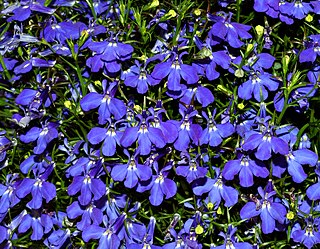
Lobelia is a genus of flowering plants comprising 415 species, with a subcosmopolitan distribution primarily in tropical to warm temperate regions of the world, a few species extending into cooler temperate regions. They are known generally as lobelias.
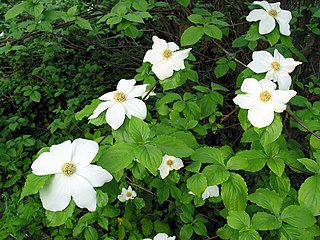
Cornus nuttallii, the Pacific dogwood,western dogwood, or mountain dogwood, is a species of dogwood tree native to western North America.
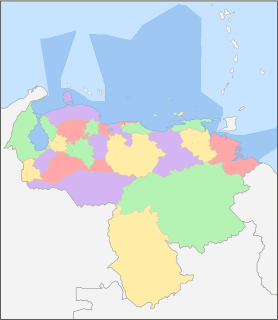
The Bolivarian Republic of Venezuela is a federation made up of twenty-three states, a Capital District and the Federal Dependencies, which consist of many islands and islets on the Caribbean Sea. Venezuela also claims the Guayana Esequiba territory which comprises six districts in the independent nation of Guyana.
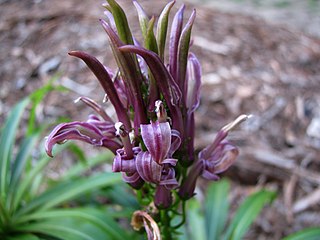
The Hawaiian lobelioids are a group of flowering plants in the bellflower family, Campanulaceae, subfamily Lobelioideae, all of which are endemic to the Hawaiian Islands. This is the largest plant radiation in the Hawaiian Islands, and indeed the largest on any island archipelago, with over 125 species. The six genera involved can be broadly separated based on growth habit: Clermontia are typically branched shrubs or small trees, up to 7 metres (23 ft) tall, with fleshy fruits; Cyanea and Delissea are typically unbranched or branching only at the base, with a cluster of relatively broad leaves at the apex and fleshy fruits; Lobelia and Trematolobelia have long thin leaves down a single, non-woody stem and capsular fruits with wind-dispersed seeds; and the peculiar Brighamia have a short, thick stem with a dense cluster of broad leaves, elongate white flowers, and capsular fruits. The relationships among the genera and sections remains unsettled as of April 2022.
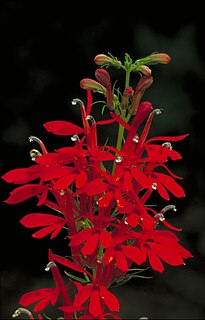
Lobelia cardinalis, the cardinal flower, is a species of flowering plant in the bellflower family Campanulaceae native to the Americas, from southeastern Canada south through the eastern and southwestern United States, Mexico and Central America to northern Colombia.

Helianthus nuttallii, or Nuttall's sunflower, is a species of sunflower native to northern, central, and western North America, from Newfoundland west to British Columbia, south to Missouri, New Mexico, and California.
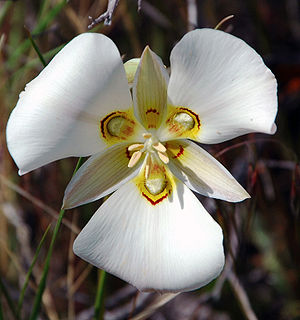
Calochortus nuttallii, also known as the sego lily, is a bulbous perennial plant that is endemic to the Western United States. It is the state flower of Utah.

Lobelia erinus is a species of flowering plant in the bellflower family Campanulaceae, native to southern Africa.

Lobelia dortmanna, Dortmann's cardinalflower or water lobelia, is a species of flowering plant in the bellflower family Campanulaceae. This stoloniferous herbaceous perennial aquatic plant with basal leaf-rosettes and flower stalks grows to 0.7–2 m (2.3–6.6 ft) tall. The flowers are 1–2 cm long, with a five-lobed white to pale pink or pale blue corolla, produced in groups of one to ten on an erect raceme held above the water surface. The fruit is a capsule 5–10 mm long and 3–5 mm wide, containing numerous small seeds.

The mountain cottontail or Nuttall's cottontail is a species of mammal in the family Leporidae. It is found in Canada and the United States.
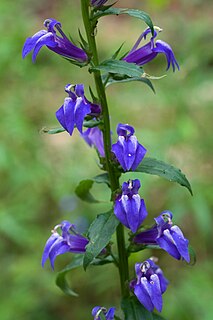
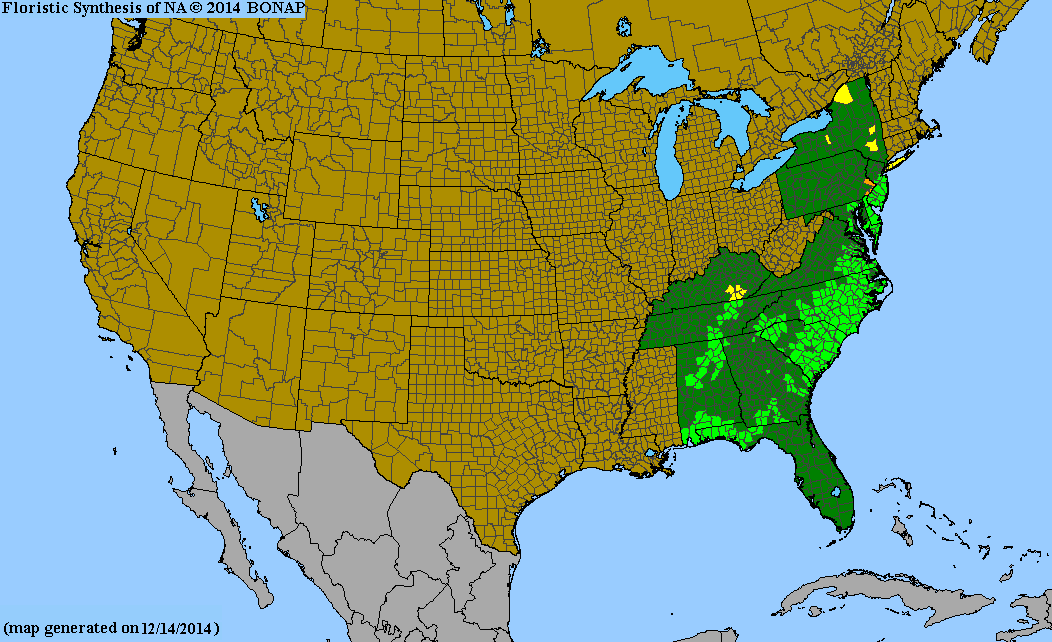
Lobelia siphilitica, the great blue lobelia, great lobelia, or blue cardinal flower, is a plant species within the family Campanulaceae. It is an herbaceous perennial dicot native to eastern and central Canada and United States. There are two recognized varieties of Lobelia siphilitica, Var. siphilitica and Var. ludoviciana. Blooming from August to October, it is short-lived, lasting only for a few years.

Lobelia kalmii is a species of flowering plant with a distribution primarily across Canada and the northern United States in temperate and boreal regions. It was formerly known as Lobelia strictiflora (Rydb.) It is commonly known as Kalm's lobelia, Ontario lobelia and Brook lobelia.

Lobelia urens, commonly known as heath lobelia or acrid lobelia is a species of flowering plant in the bellflower family. It is predominantly native to western Europe but can also be found in northern Morocco and in the island of Madeira off Northwest Africa.

Lobelia heterophylla is a blue to purple flowered herb found in Southern Australia. The specific epithet refers to the variety of leaf forms found on individual plants. The species was first described by Jacques Labillardière in his seminal work on Australian flora, Novae Hollandiae Plantarum Specimen. L. heterophylla has a wide distribution, due to its ability to inhabit a variety of soil types. The habit of the herbaceous plant is erect, up to 0.6 metres, with flowers appearing from August or October to December, or January to February. The flower whorl is deeply cleft, its colour range of blue, scarlet or purple is well known and it is considered to be a desirable specimen for use in gardens. The plant is commonly referred to as wing-seeded lobelia and Australian blue creeper. The species was featured and illustrated by Joseph Paxton in 1838.

Lobelia gattingeri is a species of flowering plant in the bellflower family commonly called Gattinger's lobelia. It is endemic to calcareous cedar glades and barrens. It has a small range, native only to middle Tennessee, northern Alabama, and one site in the Pennyroyal Plain of Kentucky.

Lobelia anceps, commonly known as angled lobelia, is a small herbaceous plant in the family Campanulaceae it grows in several states of Australia, New Zealand, South America and South Africa. It is a small, perennial herb with blue to purple flowers.
Lobelia gibbosa, commonly known as tall lobelia, is a small herbaceous plant in the family Campanulaceae native to Western Australia.

Lobelia tenuior, commonly known as slender lobelia, is a small herbaceous plant in the family Campanulaceae native to Western Australia.
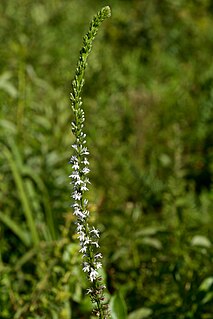
Lobelia spicata, commonly called the pale spiked lobelia, is a flowering plant in the bellflower family.