Plot
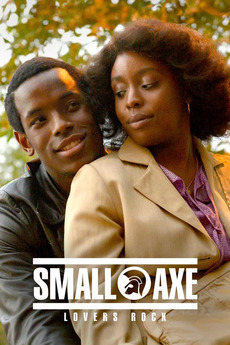
Lover's Rock (2020) opens by capturing the preparation's necessary to turn a typical West London two-story home into the setting for a house party. There is significant commotion: couches and furniture are wrapped and taken outside, rugs are rolled, and individuals complain of heavy lifting. Soon it becomes clear that a party will unfold: reggae is blasted on large speakers rolled in from vans and the kitchen is filled with women singing and prepping food.
8 minutes into the film we are introduced to Martha (played by Amarah-Jae St. Aubyn) as she sneaks out of her second floor window to attend the traditional basement blues party in London. [2] Night falls, and Martha meets up with her friend Patty (played by Shaniqua Okwok) to catch a local bus that will run by the party. The two cheer to "freedom!" and agree that "you just can't wear church shoes to blues dance." The bus is full of people, guests and locals alike, blasting reggae. The excitement is contrasted by a lone man who holds a large, wooden cross outside of the bus window. Martha's smile fades upon seeing him, before she turns her head back to the thrill of the night.
The two girls arrive at the house party and are ushered in by the bouncer while the men behind them are asked to pay a cover charge to enter. The party is in full swing when they enter: guests chatting, reggae blasting and people dancing. Martha and Patty join the buzzing dance floor, filled with men and women alike moving in unison to well known songs and dances.
As the night continues, people ebb and flow through the party. Men and women meet and mingle and Martha is approached by a quiet, young, and intentional man named Franklyn (played by Michael Ward). He moves calmly through the party in contrast to some boisterous friends of his. Martha and Franklyn continue to find each other throughout the night, bumping into each other on the way to the bathroom and flirting in hallways. As the songs chug on and people move outside, the air of the night becomes increasingly intimate; men and women pair up and share private moments to the beat of the music, pressed against the walls of the booming house. The house is a moment tucked away in time, a private reggae filled world of its own.
At some point when the two girls are separated, Patty decides to leave unannounced. This is a pivotal moment as Martha is faced with the autonomy of navigating the rest of her night and foraging connections alone. Upon realizing her departure, Martha runs out the front door calling Patty's name. Now in the street, a group of young white men holler monkey noises at her. It is only a brief moment before the bouncer shoos them off, but it stands in contrast to the fun energy Martha and Patty experienced just moments before together at the party.
An important party scene is captured as the music slows and the DJ leads a group sing-along of Janet Kay's "Silly Games." The energy of the room is brought to life as strangers and friends alike join in to the a cappella. McQueen explains his choice of song, "The song tells the narrative of our two love interests in the picture. It's a beautiful yearning, but also, it’s everyone’s journey. Everybody wants that moment, to be free to be you.” [3]
Tucked into the thrill of the night, a dark vulnerable moment emerges. Bammy, a man who forcefully approached Martha at the beginning of the film, has followed another young woman throughout the night and invites her outside. The moment begins as playful, but soon turns aggressive. Martha runs after the woman, recognizing her screams for help, and with Franklyn's aid, intervenes, pulling the girl away. The moment of tension sharply contrasts the warmth of the music still flowing out of the glowing full house's open windows.
Later in the night, Martha's cousin unexpectedly arrives at the party, trying to insist that it is too late and they must return home. Their disagreement escalates as Martha refuses and tries to reclaims her independence from him. Other guests get involved and ultimately dismiss him from the party, allowing Martha to resume her night.
As dawn breaks, Martha and Franklyn tandem bike through the quiet morning streets. They stop briefly at Franklyn's repair shop, sharing a passionate kiss before an interruption from his boss. He reprimands Franklyn, "Frank, this isn't a knocking shop. You do not bring your Doris in here," British slang for a woman [4] , and drawing attention to Martha's out-of-place presence. The two part ways and on "scouts honor" they promise to call that night. On her journey home, Martha again sees the man with the large, wooden cross.
Martha returns home the same way she left, sneaking through her bedroom window alone 12 hours later. As she crawls through, dropping her dancing shoes on the wooden floor, the morning sunlight illuminates the nailed cross on her wall, bringing the night to a close. Moments after she is safely returned to bed, her mother pounds on her door to awaken her for church. The party has come to an end and its guests must return to reality.
Themes
"Lovers rock" was the name of a musical genre popular around the mid-1970s in London, but its influences were transatlantic, as were its reaches. [10] The film is named after the genre and plays some of the most popular songs throughout the movie, such as "Silly Games" by Janet Kay. The genre, which coupled the heavy reggae basslines popular in Jamaican music and the soft-soul vocal harmonies originating in Chicago and Philadelphia's R&B scenes, forged unique spaces of freedom common in young Black people of the time whose families were immigrants. [10] [11] This musical influence across space and between diaspora communities represented what Paul Gilroy theorized as the "Black Atlantic", a culture that exists outside of nation-state boundaries. [12]
The politics of Lovers Rock are deeply tied to its musical and cultural setting, reflecting the sociopolitical climate of 1970s Britain. During this period, Black British communities faced systemic racism, economic marginalization, and police hostility, exemplified by events like the 1976 Notting Hill Carnival riots. [13] Amid these challenges, Lovers Rock emerged as both a soundtrack to and a sanctuary for Black joy and resistance, providing spaces for connection and cultural preservation. [14] The film portrays these dynamics through its depiction of a reggae house party, where sensuality and intimacy coexist with the ever-present external threats, symbolized by police sirens and moments of racial tension outside the party. [15] Music becomes a tool of defiance, with its deeply personal and communal elements offering refuge from oppression.
The film also highlights the nuanced role of Black women within this space, navigating both desire and autonomy in a society that often sought to limit their agency. [16] As scholar Carolyn Cooper suggests in Sound Clash: Jamaican Dancehall Culture at Large, [17] Black female performers and audiences of Lovers Rock challenged the expectations placed on their bodies and voices, using the music to articulate both their sensual and political identities. Lovers Rock reflects this duality, portraying Black women not only as objects of desire but also as active participants shaping the social and cultural environment of the party [18]