Kid Icarus, known in Japan as Light Mythology: Palutena's Mirror, is an action platform video game for the Family Computer Disk System in Japan and the Nintendo Entertainment System in Europe and North America. It was released in Japan in December 1986, in Europe in February 1987, and in North America in July 1987.

The Super Nintendo Entertainment System (SNES), also known as the Super NES or Super Nintendo, is a 16-bit home video game console developed by Nintendo that was released in 1990 in Japan and South Korea, 1991 in North America, 1992 in Europe and Australasia (Oceania), and 1993 in South America. In Japan, the system is called the Super Famicom (SFC). In South Korea, it is known as the Super Comboy and was distributed by Hyundai Electronics. The system was released in Brazil on August 30, 1993, by Playtronic. Although each version is essentially the same, several forms of regional lockout prevent the different cartridges from being compatible with one another.
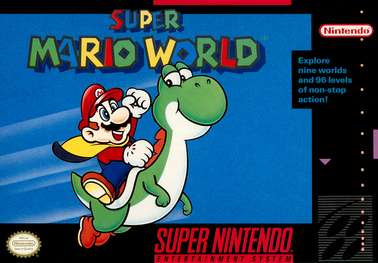
Super Mario World is a 1990 platform game developed and published by Nintendo for the Super Nintendo Entertainment System (SNES). The story follows Mario's quest to save Princess Toadstool and Dinosaur Land from the series antagonist Bowser and his minions, the Koopalings. The gameplay is similar to that of earlier Super Mario games: Players control Mario or his brother Luigi through a series of levels in which the goal is to reach the flagpole at the end. Super Mario World introduced Yoshi, a dinosaur who can eat enemies and gain abilities by eating the shells of Koopa Troopas.

The Sega Master System (SMS) is a third-generation 8-bit home video game console manufactured by Sega. It was originally a remodeled export version of the Sega Mark III, the third iteration of the SG-1000 series of consoles, which was released in Japan in 1985 and featured enhanced graphical capabilities over its predecessors. The Master System launched in North America in 1986, followed by Europe in 1987, and Brazil in 1989. A Japanese version of the Master System was also launched in 1987, which features a few enhancements over the export models : a built-in FM audio chip, a rapid-fire switch, and a dedicated port for the 3D glasses. A cost-reduced model known as the Master System II was released in 1990 in North America and Europe.

Solar Jetman: Hunt for the Golden Warpship is a multi-directional shooter video game developed by Zippo Games and Rare and published by Tradewest in North America and by Nintendo in Europe. It was released in North America on 14 October 1990 and in Europe on 26 September 1991 for the Nintendo Entertainment System. The game is the third installment of the Jetman series and was later re-released by Nintendo for their NES-based PlayChoice-10 arcade system in the United States in 1990.

R.C. Pro-Am is a racing video game developed by Rare. It was released for the Nintendo Entertainment System (NES) by Nintendo for North America in March 1988, and then in Europe on April 15 of the same year. Presented in an overhead isometric perspective, a single player races a radio-controlled car around a series of tracks. The objective of each track is to qualify for the next race by placing in the top three racers. Players collect items to improve performance, and they must avoid a variety of hazards such as rain puddles and oil slicks. It is an example of a racing game which features vehicular combat, in which racers can use missiles and bombs to temporarily disable opposing vehicles. Originally titled Pro Am Racing, R.C. Pro-Am was also ported to the Sega Genesis in 1992 as Championship Pro-Am, an enhanced remake with enhanced graphics and additional features. R.C. Pro-Am was followed by two sequels: Super R.C. Pro-Am in 1991, and R.C. Pro-Am II in 1992.

Top Gear is a racing video game for the Super NES, published by Kemco and developed by Gremlin Graphics in 1992. The objective of the game is to become the fastest driver in the world by racing other drivers across several nations. The franchise is unrelated to the TV series of the same name.

Factor 5 GmbH is an independent software and video game developer. The company was co-founded by five former Rainbow Arts employees in 1987 in Cologne, Germany, which served as the inspiration behind the studio's name.

Super Castlevania IV is a 1991 platform game developed and published by Konami. Released originally for the Super Nintendo Entertainment System, it has been re-released multiple times, including for the Super NES Classic Edition.

Turrican is a 1990 video game developed by Manfred Trenz. It was developed for the Commodore 64 by Rainbow Arts, and was ported to other systems later. In addition to concept design and character creation, Trenz programmed Turrican on the Commodore 64. A sequel, Turrican II: The Final Fight, followed in 1991 for the Commodore 64 and other platforms.

Axelay is a 1992 scrolling shooter video game developed and published by Konami of Japan for the Super Nintendo Entertainment System. Taro Kudo primarily composed the game's soundtrack.

Turrican II: The Final Fight is the second game of the Turrican series. The game, developed by Factor 5 was released in 1991 for the Commodore Amiga. This version was finished before the C64 version, but Manfred Trenz cites the C64 version as the original design. Turrican II was also released for the CDTV, Atari ST, Amstrad CPC and ZX Spectrum, and later for DOS, and also for the Mega Drive/Genesis and Game Boy rebranded as Universal Soldier.

Slalom is a skiing video game in which the player races in a series of downhill slalom runs while navigating past flags and obstacles before time expires. It was developed by Rare and first released by Nintendo for the Nintendo VS. System in 1986. It was then released for the Nintendo Entertainment System (NES) in North America in March 1987 and in Europe later that year. The game was developed by Tim and Chris Stamper and its music was composed by David Wise.
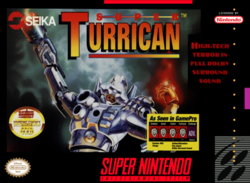
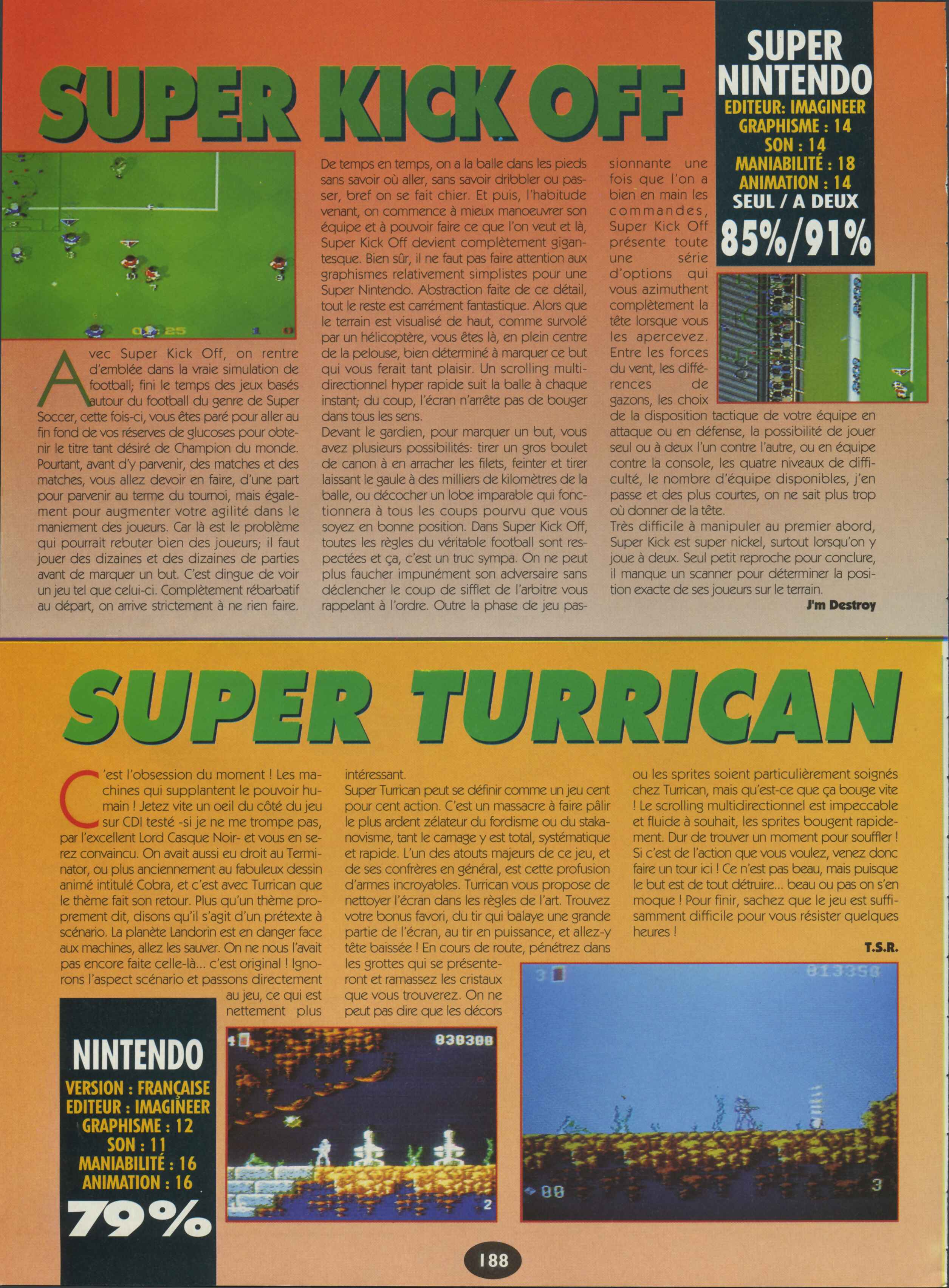
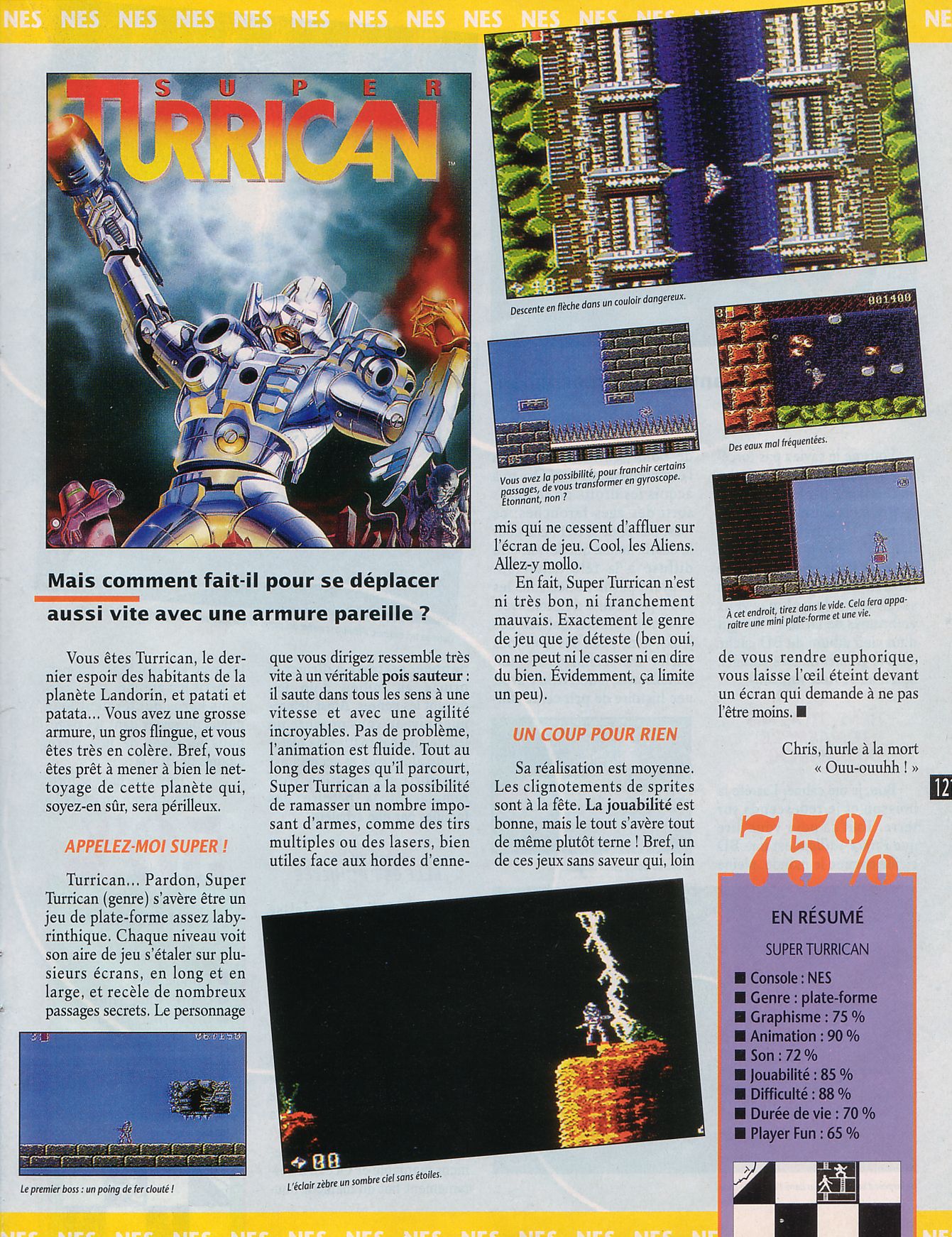
Super Turrican is the fifth video game in the Turrican series for the SNES released in 1993. Super Turrican was also released on the Virtual Console in Europe and Australia on February 29, 2008, and in North America on March 3, 2008.
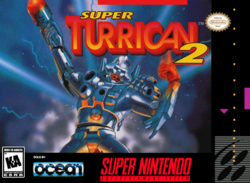
Super Turrican 2 is a 16-bit shooter game for the Super Nintendo Entertainment System, developed by Factor 5 and marketed by Ocean Software in 1995. Part of the Turrican series, it is the sequel to Super Turrican for the same platform.

The Nintendo Entertainment System (NES) is an 8-bit third-generation home video game console produced, released, and marketed by Nintendo. It is a remodelled export version of the company's Family Computer (FC) platform in Japan, commonly known as the Famicom, which was launched on July 15, 1983. The NES was launched in a test market of New York City on October 18, 1985, followed by Los Angeles as a second test market in February 1986, followed by Chicago and San Francisco, then other top 12 American markets, followed by a full launch across North America and some countries in Europe in September 1986, followed by Australia and other countries in Europe in 1987. Brazil saw only unlicensed clones until the official local release in 1993. The console's South Korean release was packaged as the Hyundai Comboy and distributed by Hyundai Electronics.
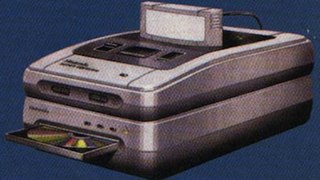
The Super NES CD-ROM System, known as Super Famicom CD-ROM Adapter in Japan, is an unreleased video game peripheral for the Super Nintendo Entertainment System (SNES). The add-on built upon the functionality of the cartridge-based SNES by adding support for a CD-ROM-based format known as Super Disc.
The RetroN is a series of video game consoles created and developed by Hyperkin which allows users to play old video games from consoles, such as the Nintendo Entertainment System and the Super NES. Since the release of the RetroN 5, they have been connected via HDMI. The latest in the series, RetroN 5, was released in 2014.

The Analogue Super Nt is an FPGA-based aftermarket Super Nintendo Entertainment System (SNES) and Super Famicom (SFC) designed and manufactured by Seattle-based company Analogue, Inc. The Super Nt was designed for Nintendo's 16-bit console era. It is compatible with the original SNES and SFC game cartridges. It features 1080p HDMI, digital audio, and the original SNES/SFC-style controller ports. Kevin Horton engineered Super Nt to run in an Altera Cyclone V with 100% accuracy and also provided extra features like the possibility to scale the original 240p video output to different resolutions up to 1080p 60 Hz. Phil Fish, the designer of Fez, designed the Super Nt's user interface. Squarepusher composed the audio to the system's startup. Unlike previous Analogue products, the Super Nt's enclosure is manufactured from ABS plastic to streamline manufacture and reduce costs.