The legal status of transgender people varies greatly around the world. Some countries have enacted laws protecting the rights of transgender individuals, but others have criminalized their gender identity or expression. In many cases, transgender individuals face discrimination in employment, housing, healthcare, and other areas of life.

Transphobia consists of negative attitudes, feelings, or actions towards transgender people or transness in general. Transphobia can include fear, aversion, hatred, violence or anger towards people who do not conform to social gender roles. Transphobia is a type of prejudice and discrimination, similar to racism, sexism, or ableism, and it is closely associated with homophobia. Transgender people of color can experience many different forms of discrimination simultaneously.
The Employment Non-Discrimination Act (ENDA) is legislation proposed in the United States Congress that would prohibit discrimination in hiring and employment on the basis of sexual orientation or, depending on the version of the bill, gender identity, by employers with at least 15 employees.

Violence against transgender people includes emotional, physical, sexual, or verbal violence targeted towards transgender people. The term has also been applied to hate speech directed at transgender people and at depictions of transgender people in the media that reinforce negative stereotypes about them. Trans and non-binary gender adolescents can experience bashing in the form of bullying and harassment. When compared to their cisgender peers, trans and non-binary gender youth are at increased risk for victimisation, which has been shown to increase their risk of substance abuse.

In the United States, public opinion and jurisprudence on lesbian, gay, bisexual, and transgender (LGBT) rights have developed significantly since the late 1980s. In 1961, beginning with Illinois, states began to decriminalize same-sex sexual activity, and in 2003, through Lawrence v. Texas, all remaining laws against same-sex sexual activity were invalidated. In 2004, beginning with Massachusetts, states began to offer same-sex marriage, and in 2015, through Obergefell v. Hodges, all states were required to offer it. In many states and municipalities, LGBT Americans are explicitly protected from discrimination in employment, housing, and access to public accommodations. Many LGBT rights in the United States have been established by the United States Supreme Court, which invalidated state laws banning protected class recognition based upon homosexuality, struck down sodomy laws nationwide, struck down Section 3 of the Defense of Marriage Act, made same-sex marriage legal nationwide, and prohibited employment discrimination against gay and transgender employees. LGBT-related anti-discrimination laws regarding housing and private and public services varies by state. Twenty-three states plus Washington, D.C., Guam, and Puerto Rico outlaw discrimination based on sexual orientation, and twenty-two states plus Washington, D.C., outlaw discrimination based on gender identity or expression. Family law also varies by state. Adoption of children by same-sex married couples is legal nationwide since Obergefell v. Hodges.
In the United States, the rights of transgender people vary considerably by jurisdiction. In recent decades, there has been an expansion of federal, state, and local laws and rulings to protect transgender Americans; however, many rights remain unprotected, and some rights are being eroded. Since 2020, there has been a national movement by conservative/right-wing politicians and organizations to target transgender rights. There has been a steady increase in the number of anti-transgender bills introduced each year, especially in Republican-led states.
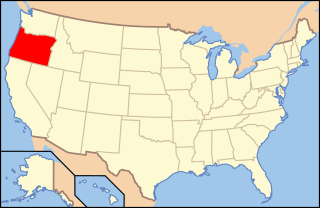
Lesbian, gay, bisexual, and transgender (LGBT) people in the U.S. state of Oregon have the same legal rights as non-LGBT people. Same-sex sexual activity is legal in Oregon, and same-sex marriage has been legal in the state since May 2014 when a federal judge declared the state's ban on such marriages unconstitutional. Previously, same-sex couples could only access domestic partnerships, which guaranteed most of the rights of marriage. Additionally, same-sex couples are allowed to jointly adopt, and discrimination based on sexual orientation and gender identity in the areas of employment, housing and public accommodations is outlawed in the state under the Oregon Equality Act, enacted in 2008. Conversion therapy on minors is also illegal.

Lesbian, gay, bisexual, and transgender (LGBT) people in Texas have some protections in state law but may face legal and social challenges not faced by others. Same-sex sexual activity was decriminalized in Texas in 2003 by the Lawrence v. Texas ruling. On June 26, 2015, the Supreme Court of the United States ruled bans on same-sex marriage to be unconstitutional in Obergefell v. Hodges.

Lesbian, gay, bisexual, and transgender (LGBT) persons in the U.S. state of Oklahoma may face some legal challenges not experienced by non-LGBT residents. Same-sex sexual activity is legal in Oklahoma as a result of the U.S. Supreme Court decision in Lawrence v. Texas, although the state legislature has not repealed its sodomy laws. Both same-sex marriage and adoption by same-sex couples have been permitted since October 2014. State statutes do not prohibit discrimination based on sexual orientation or gender identity; however, the U.S. Supreme Court's ruling in Bostock v. Clayton County established that employment discrimination against LGBT people is illegal. This practice may still continue, as Oklahoma is an at-will employment state and it is still legal to fire an employee without requiring the employer to disclose any reason.
Transgender disenfranchisement is the prevention by bureaucratic, institutional and social barriers, of transgender individuals from voting or participating in other aspects of civic life. Transgender people may be disenfranchised if the sex indicated on their identification documents does not match their gender presentation, and they may be unable to update necessary identity documents because some governments require individuals to undergo sex reassignment surgery first, which many cannot afford, are not medical candidates for, or do not want.

LGBT employment discrimination in the United States is illegal under Title VII of the Civil Rights Act of 1964; employment discrimination on the basis of sexual orientation or gender identity is encompassed by the law's prohibition of employment discrimination on the basis of sex. Prior to the landmark cases Bostock v. Clayton County and R.G. & G.R. Harris Funeral Homes Inc. v. Equal Employment Opportunity Commission (2020), employment protections for LGBT people were patchwork; several states and localities explicitly prohibit harassment and bias in employment decisions on the basis of sexual orientation and/or gender identity, although some only cover public employees. Prior to the Bostock decision, the Equal Employment Opportunity Commission (EEOC) interpreted Title VII to cover LGBT employees; the EEOC determined that transgender employees were protected under Title VII in 2012, and extended the protection to encompass sexual orientation in 2015.
Discrimination against non-binary people, people who do not identify exclusively as male or female, may occur in social, legal, or medical contexts.
Transgender inequality is the unequal protection received by transgender people in work, school, and society in general. Transgender people regularly face transphobic harassment. Ultimately, one of the largest reasons that transgender people face inequality is due to a lack of public understanding of transgender people.
Transgender Awareness Week, observed November 13 to November 19, is a one-week celebration leading up to the Transgender Day of Remembrance (TDoR), which memorializes victims of transphobic violence. TDoR occurs annually on November 20, when transgender advocates raise awareness of the transgender community through education and advocacy activities.
Sexual encounters in private between two adults are legal. Although homosexuality was decriminalized, LGBT Dominicans still endure discrimination and violence due to their sexual orientation and/or gender identity. In a 2014 poll, almost three quarters, 73%, of people in the Dominican Republic alone have said that members of the LGBT community have experienced some sort of violence or discrimination. Members of the LGBT Community in the Dominican Republic are victims of hate crimes, extortion by the police, and discrimination when it comes to resources and employment services. They also face discrimination when seeking treatment from health care systems. Between 2006 and August 2015, there have been 32 reports of possible hate crimes against transgender people.:5

In the U.S. Virgin Islands, Lesbian, gay, bisexual, and transgender (LGBT) rights have evolved substantially in recent years. Same-sex sexual activity has been legal since 1985. The region also provides explicit legal protections against discrimination for LGBT residents since December 2022. Following the Supreme Court's ruling in Obergefell v. Hodges on June 26, 2015, which found the denial of marriage rights to same-sex couples unconstitutional, same-sex marriage became legal in the islands.
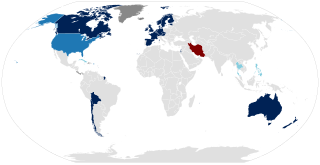
Not all armed forces have policies explicitly permitting LGBT personnel. Generally speaking, Western European militaries show a greater tendency toward inclusion of LGBT individuals. As of January 2021, 21 countries allow transgender military personnel to serve openly: Australia, Austria, Belgium, Bolivia, Brazil, Canada, Chile, Czechia, Denmark, Estonia, Finland, France, Germany, Ireland, Israel, the Netherlands, New Zealand, Norway, Spain, Sweden, and the United Kingdom. Cuba and Thailand reportedly allowed transgender service in a limited capacity. In 1974, the Netherlands was the first country to allow transgender military personnel. The United States has allowed transgender personnel to serve in the military under varying conditions since President Joe Biden signed an executive order that allowed them to do so.
Title IX of the United States Education Amendments of 1972 prohibits discrimination "on the basis of sex" in educational programs and activities that receive financial assistance from the federal government. The Obama administration interpreted Title IX to cover discrimination on the basis of assigned sex, gender identity, and transgender status. The Trump administration determined that the question of access to sex-segregated facilities should be left to the states and local school districts to decide. The validity of the executive's position is being tested in the federal courts.
This article addresses the legal and regulatory history of transgender and transsexual people in the United States including case law and governmental regulatory action affecting their legal status and privileges, at the federal, state, municipal, and local level, and including military justice as well.
The Massachusetts Gender Identity Anti-Discrimination Initiative is a state-wide referendum passed by Massachusetts voters in the 6 November 2018 mid-term election that prohibits discrimination in public accommodations on the basis of gender identity. The vote upholds language which was already present in the state anti-discrimination statute, defeating an attempt to veto it by public referendum. It is the first state-wide anti-discrimination statute passed by referendum supporting transgender rights in the United States.


