
Biomedical engineering (BME) or medical engineering is the application of engineering principles and design concepts to medicine and biology for healthcare purposes. BME is also traditionally known as "bioengineering", but this term has come to also refer to biological engineering. This field seeks to close the gap between engineering and medicine, combining the design and problem-solving skills of engineering with medical biological sciences to advance health care treatment, including diagnosis, monitoring, and therapy. Also included under the scope of a biomedical engineer is the management of current medical equipment in hospitals while adhering to relevant industry standards. This involves making equipment recommendations, procurement, routine testing, and preventive maintenance, a role also known as a Biomedical Equipment Technician (BMET) or as clinical engineering.

The University of Toronto Faculty of Dentistry is a dental school located in Toronto, Ontario, Canada. It is one of the ten dental schools in Canada. It is the largest dental school in Canada with a range of undergraduate and graduate level programs with a total enrollment in the range of 560. The faculty is located at the heart of Downtown Toronto's Discovery District, a neighbourhood with a high concentration of hospitals and research institutes, just south of the University of Toronto's St. George campus. In 2014, the Faculty of Dentistry joined the Toronto Addis Ababa Academic Collaboration (TAAAC), providing support in building capacity for oral health in Ethiopia by creating collaborative teaching opportunities.

The Temerty Faculty of Medicine is the medical school of the University of Toronto. Founded in 1843, the faculty is based in Downtown Toronto and is one of Canada's oldest institutions of medical studies, being known for the discovery of insulin, stem cells and the site of the first single and double lung transplants in the world.

The University of Texas Health Science Center at Houston (UTHealth) is a public academic health science center in Houston, Texas. It was created in 1972 by The University of Texas System Board of Regents. It is located in the Texas Medical Center, the largest medical center in the world. It is composed of six schools: McGovern Medical School, The University of Texas MD Anderson Cancer Center UTHealth Graduate School of Biomedical Sciences, UTHealth School of Dentistry, Cizik School of Nursing, UTHealth School of Biomedical Informatics and UTHealth School of Public Health.
Tokyo Medical and Dental University is a Japanese national university located in Bunkyō, Tokyo, Japan. Established in 1928, it was the first national school of dentistry in Japan. TMDU is one of top 9 Designated National University and selected as a Top Type university of Top Global University Project by the Japanese government, and offers baccalaureate and graduate degrees in medicine, dentistry, and related fields. The university ranked 217th in the world and 7th in Japan in 2010.

The McMaster Faculty of Health Sciences is one of six faculties at McMaster University in Hamilton, Ontario, Canada. The faculty was established in 1974 to oversee the School of Nursing, the School of Medicine, and Graduate programs in health sciences. Today, the Faculty of Health Sciences oversees 5,000 students, 770 full-time faculty, more than 1,800 part-time faculty, and 28 Canada Research Chairs. The faculty is well known for running the most competitive medical and undergraduate program in Canada. The MD program at McMaster University Medical School receives 5000 applications for 203 positions. The BHSc program at McMaster University receives over 3500 applications for 160 positions annually and was ranked the most competitive undergraduate program in Canada by Yahoo Finance in 2016. The faculty was ranked 25th in the world in the 2015 Times Higher Education World Rankings in the Clinical, Pre-Clinical and Health category.
Edward Llewellyn-Thomas was an English scientist, university professor and, writing as Edward Llewellyn, a science fiction author. Llewellyn-Thomas published sixty scientific articles on psychology and eye movement over the course of his life. Active in the field of pharmacology, he took interest in the ethical development of biomedical science. His Douglas Convolution science fiction series concerns the breakdown of civilization after most of a generation is born sterile as a side effect of a widely used anti-cancer medication.

The Faculty of Dentistry is one of the constituent faculties of McGill University. It became established as a constituent of McGill University in 1904 as the McGill Dental School, a department in the McGill University Faculty of Medicine until becoming its own faculty in 1920. The faculty is closely affiliated with the Montreal General Hospital, Jewish General Hospital, Montreal Children's Hospital, and McGill University Faculty of Medicine.

The Weldon School of Biomedical Engineering is Purdue University's school of biomedical engineering. The school offers an undergraduate B.S. degree and M.S. and Ph.D. graduate degrees as well as an integrated M.D./Ph.D. degree.
Peter W. Zandstra, Ph. D., FRSC, is I’Anson Professor of Tissue Engineering, and a Canada Research Chair in Stem Cell Bioengineering at the University of Toronto Institute of Biomedical Engineering.
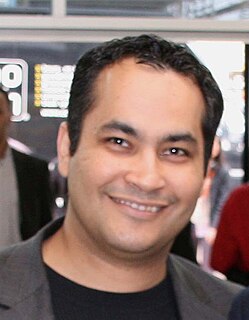
Ali Khademhosseini is the Director and CEO of the Terasaki Institute and former Professor at the University of California-Los Angeles where he held a multi-departmental professorship in Bioengineering, Radiology, Chemical, and Biomolecular Engineering and the Director of Center for Minimally Invasive Therapeutics (C-MIT). From 2005 to 2017, he was a Professor at Harvard Medical School, and the Wyss Institute for Biologically Inspired Engineering. His studies have been cited over 84,000 times. Khademhosseini is best known for developing hydrogels for tissue engineering and bioprinting.

Cato T. Laurencin, M.D., Ph.D., is an American engineer, physician, scientist, innovator and a University Professor of the University of Connecticut.

Linda Gay Griffith is an American biological engineer, and Professor of Biological Engineering and Mechanical Engineering at Massachusetts Institute of Technology, where she also directs the Center for Gynepathology Research.

Gordana Vunjak-Novakovic is a Serbian American biomedical engineer. She is a University Professor at Columbia University, as well as the Mikati Foundation Professor of Biomedical Engineering and Medical Sciences. She also heads the laboratory for Stem Cells and Tissue Engineering at Columbia University. She is part of the faculty at the Irving Comprehensive Cancer Center and the Center for Human Development, both found at Columbia University. She is also an honorary professor at the Faculty of Technology and Metallurgy at the University of Belgrade, an honorary professor at the University of Novi Sad, and an adjunct professor at the Department of Biomedical Engineering at Tufts University.
Martin L. Yarmush is an American scientist, physician, and engineer known for his work in biotechnology and bioengineering. After spending 4 years as a Principal Research Associate in Chemical Engineering at MIT, in 1988 he joined Rutgers University, where he currently holds the Paul and Mary Monroe Endowed Chair in Science and Engineering and serves as Distinguished Professor of Biomedical Engineering. Yarmush is the founding director of the Center for Engineering in Medicine & Surgery (CEMS) at Massachusetts General Hospital. He is also a Lecturer in Surgery and Bioengineering at Harvard Medical School.

Jeffrey Karp is a Canadian biomedical engineer working as a Professor of Medicine at Harvard Medical School, Brigham and Women's Hospital, and the principal faculty at the Harvard Stem Cell Institute and Affiliate Faculty at the Massachusetts Institute of Technology through the Harvard–MIT Division of Health Sciences and Technology. He is also an affiliate faculty at the Broad Institute.
Ravi V. Bellamkonda is a biomedical engineer and provost of Emory University.

Akhilesh K. Gaharwar is an Indian academic and an associate professor in the Department of Biomedical Engineering at Texas A&M University. The goal of his lab is to understand the cell-nanomaterials interactions and to develop nanoengineered strategies for modulating stem cell behavior for repair and regeneration of damaged tissue.
Vivek A. Kumar is an American scientist, innovator and entrepreneur. He is faculty at the New Jersey Institute of Technology (NJIT) and the Rutgers School of Dental Medicine; he is also the Dhiraj Shah Faculty Fellow at the NJIT Albert Dorman Honors College. At NJIT, he is the director of the KumarLab for Biomaterial Drug Discovery, Delivery, and Development Lab.
Christine E. Schmidt is an American biomedical engineer. As a professor at the University of Florida, Schmidt was inducted into the Florida Inventors Hall of Fame for her creation of the Avance Nerve Graft which has "improved the lives of numerous patients suffering from peripheral nerve damage."


