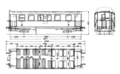
| BCL Bay09; CL Bay 09/21 BCL Bay 13a; CL Bay 13a/21 BCL Bay 14; CL Bay 14/21 | |
|---|---|
| BCL Bay 09 drawing (1913 KBSB fleet register) | |
| In service | 1909–1960s |
| Manufacturer | MAN / |
| Constructed | 1909 / 1913 / 1914 |
| Number built | 30 |
| Design code | BCL / CL |
| Fleet numbers | 20 072 to 20 089 20 094 to 20 105 |
| Specifications | |
| Car length |
|
| Width | 3,000 mm (9 ft 10+1⁄8 in) |
| Height | 3,637 mm (11 ft 11+1⁄4 in) |
| Floor height | 1,265 mm (4 ft 1+3⁄4 in) |
| Wheelbase | 6,000 or 6,600 mm (19 ft 8+1⁄4 in or 21 ft 7+7⁄8 in) |
| Weight | 13,500 or 12,700 kg (29,800 or 28,000 lb) empty |
| UIC classification | 2 |
| Braking system(s) | Screw brake / Westinghouse air |
| Coupling system | VDEV screw couplings |
| Headlight type | Gas or kerosene lamps |
| Track gauge | 1,435 mm (4 ft 8+1⁄2 in) |
| Seating |
|
| Stock type | Lokalbahn coach with open gangway |
The Class BCL Bay 09 were open coaches for branch line services with the Royal Bavarian State Railways (K.Bay.Sts.B.) that were built in the early 20th century. They included those coaches listed in the 1913 fleet register under design sheet nos. 521, 6055.2 and 6055.3. As a result of remodelling they were reclassified according to the DRG’s 1930 engineering drawing register as classes CL Bay 09/21, BCL Bay 13a, CL Bay 13a/21, BCL Bay 14 and CL Bay 14/21.
With the growth of the Bavarian branch line network known as Lokalbahnen , there was a need for suitable coaches for local passenger services. Between 1909 and 1929, coaches were procured that had the characteristics of normal passenger coaches on mainline railways. In contrast to other local railway coaches, these were suitable for military transport.
In the period 1909–1929, 411 wagons in classes BL, BCL, CL, DL and PPostL were procured. [1] They all had a standard floor plan, open end-platforms with Dixi gates on the steps and gangways secured only by an iron railing. Large window panes were installed instead of the composite windows that had been usual up to that point. Of the coaches built to Design Sheet 521, 18 were procured in two batches, in 1909 and 1911, from SE in Nuremberg and Rathgeber in Munich.
The whereabouts of four coaches could not be clarified in 1945 after the end of the Second World War. The rest of the coaches went into the Deutsche Bundesbahn, where they were used until the 1960s.
The underframe of the coach was made entirely of rivetted steel profiles. The outer side beams were U-shaped with outward facing flanges. The crossbeams were also made of U-profiles and not cranked. The wagons had screw couplings of the VDEV type. The drawbar ran the length of the coach and was spring-loaded in the middle. The coaches had slotted cylinder buffers with an installation length of 650 millimetres, the buffer plates had a diameter of 370 millimetres. The platform was shortened for the wagons built to Sheets 6055.2 and 6055.3, resulting in a shorter length over buffers.
The coaches had riveted half-timbered axle holders of VDEV design. The axles were housed in sliding axle bearings. The spoked wheels were of the Bavarian Type 38 design. The suspension springs were 1,764 mm long with a cross-section of 96 x 13 mm. They were eleven leaves thick. Because of the long wheelbase of 6,000 millimetres, VDEV radial axles were used.
In addition to a hand-operated screw brake located on one of the platforms at the end of the coach, the coaches also had air brakes of the Westinghouse type.
The coach body had a wooden framework covered with sheet metal on the outside and wood panels on the inside. The joints of the sheets were sealed by cover strips. The roof was gently rounded and flush with the side walls. It extended in a hood over the open end-platforms. The coaches in the first delivery series had steps of Lokalbahn branch line design with a folding last step. The remaining delivery series were equipped with main line coach steps.
This class of coach was originally intended for both 2nd and 3rd class passengers and had a total of 48 seats and a toilet. The 2nd class seats were upholstered, the 3rd class seats were wooden slat benches, typical of the class. 20 standing places were designated for the two end-platforms. The end-platforms of coaches built to Sheet 6055.3 and 6055.3 were shortened from 1,000 mm to 900 mm. This also reduced the length over buffers from 1,224 mm to 1,2024 mm.
Lighting was provided by paraffin lamps and heating by steam. The coaches were ventilated by static roof vents and sash windows.
The cars of the first two delivery series from 1909 and 1911 were converted to CL Bay 09/21 in 1921 except for two units. The upholstered seats in 2nd class were replaced by wooden slatted benches. The Lokalbahn steps were replaced by those used on main lines.
Here are sketches of the different variants of the vehicle type for comparison.
| Manufacturing data | Coach numbers [2] by epoch; coach class | Running gear | Facilities | Additional information | |||||||||||||||||||
|---|---|---|---|---|---|---|---|---|---|---|---|---|---|---|---|---|---|---|---|---|---|---|---|
| Year built | Manu- facturer | from 1909 (1907) | Rep. (1919) | DR (from 1923) | DRG (from 1930) | DRG post-rebuild | Retired | Last home stn. [3] | Brakes | No. of axles | Radial axle | Ltg. | Htg. | No. of toilets | No. of seats by class | Sign holders | Remarks | ||||||
| Sheet No. 521 | BCL | BCL Bay 09 | CL Bay 09/21 | (see Legend) | (see Legend) | 1st | 2nd | 3rd | 4th | (see Legend) | |||||||||||||
| 1909 | Rathgeber | 20 072 | 9 212 Mü | 9 791 Mü | 03/1955 | Freilassing | Pl, Wsbr | 2 | V | P | D | 1 | 16 0 | 32 48 | |||||||||
| 20 073 | 9 213 Mü | 9 792 Mü | ??/1945 | Munich | |||||||||||||||||||
| 20 074 | 9 214 Mü | 9 793 Mü | ??/1945 | Simbach | |||||||||||||||||||
| 20 075 | 9 215 Mü | 9 794 Mü | 07/1955 | Mühldorf | |||||||||||||||||||
| 20 076 | 9 216 Mü | 9 795 Mü | 02/1958 | Altomünster | |||||||||||||||||||
| 20 077 | 9 211 Au | 9 785 Au | 06/1959 | Freilassing | |||||||||||||||||||
| 20 078 | 9 212 Au | 9 786 Au | 12/1962 | Freilassing | |||||||||||||||||||
| 20 079 | 9 186 Lu | 9 824 Lu | 11/1960 | Karlsruhe | to the former Palatinate Railway | ||||||||||||||||||
| 20 080 | 9 187 Lu | 9 825 Lu | 09/1960 | Kaiserslautern | to the former Palatinate Railway | ||||||||||||||||||
| 20 081 | 9 213 Au | 9 787 Au | 10/1961 | Freilassing | |||||||||||||||||||
| 20 082 | 9 203 Wür | 9 803 Nür | 08/1956 | Nuremberg | |||||||||||||||||||
| 20 083 | 9 204 Wür | 9 804 Nür | 05/1955 | Mellrichstadt | |||||||||||||||||||
| 20 084 | 9 254 Reg | 9 814 Reg | 08/1959 | Plattling | |||||||||||||||||||
| 20 085 | 9 255 Reg | 9 815 Reg | 09/1955 | Schwandorf | |||||||||||||||||||
| 20 086 | 9 254 Reg | 9 814 Reg | 08/1959 | Plattling | |||||||||||||||||||
| Sheet No. 521 | BCL | BCL Bay 09 | BCL Bay 09 | CL Bay 09/21 | (see Legend) | (see Legend) | 1st | 2nd | 3rd | 4th | (see Legend) | ||||||||||||
| 1911 | MAN | 20 087 | 9 325 Mü | 9 859 Mü | 08/1961 | Munich | Pl, Wsbr | 2 | V | P | D | 1 | 16 0 | 32 48 | |||||||||
| 20 088 | 9 122 Nür | 9 851 Nür | 04/1951 | Rothenb.o.T. | |||||||||||||||||||
| 20 089 | 9 123 Nür | 9 852 Nür | xx/1935 | Lohr | |||||||||||||||||||
| Sheet No. 6055.2 | BCL | BCL Bay 13a | BCL Bay 13a | CL Bay 13a/21 | (see Legend) | (see Legend) | 1st | 2nd | 3rd | 4th | (see Legend) | ||||||||||||
| 1913 | Rathgeber | 20 094 Nü | 9 281 Nür | 9 940 Reg | 06/1957 | Augsburg | Pl, Wsbr | 2 | V | P | D | 1 | 16 0 | 32 48 | |||||||||
| 20 095 Nü | 9 282 Nür | 9 940 Reg | 02/1950 | Regensburg. | Unserviceable (Altschadwagen) | ||||||||||||||||||
| 20 096 Nü | 9 283 Nür | 9 842 Reg | 04/1960 | Hof | |||||||||||||||||||
| 20 097 Wü | 9 111 Nür | 9 928 Nür | 10/1946 | Nuremberg | |||||||||||||||||||
| 20 098 Wü | 9 112 Nür | 9 929 Nür | 02/1956 | Nuremberg | |||||||||||||||||||
| Sheet No. 6055.3 | BCL | BCL Bay 14 | BCL Bay 14 | CL Bay 14/21 | (see Legend) | (see Legend) | 1st | 2nd | 3rd | 4th | (see Legend) | ||||||||||||
| 1914 | MAN | 20 099 Re | 9 256 Reg | 9 975 Reg | ??/1945 | Selb Stadt | Pl, Wsbr | 2 | V | P | D | 1 | 16 0 | 32 48 | |||||||||
| 20 100 Re | 9 117 Reg | 9 976 Reg | 11/1959 | Hof. | |||||||||||||||||||
| 20 101 Nü | 9 284 Nür | 9 621 Nür | 01/1960 | Erlangen | |||||||||||||||||||
| 20 102 Nü | 9 285 Nür | 9 962 Nür | ??/1945 | Ludwigstadt | |||||||||||||||||||
| 20 103 Au | 9 214 Au | 9 945 Au | 05/1961 | Munich? | |||||||||||||||||||
| 20 104 Au | 9 215 Au | 9 946 Au | ??/1945 | Schongau | |||||||||||||||||||
| 20 105 Wü | 9 205 Wür | 9 963 Wür | 03/1947 | Nuremberg | Unserviceable (Altschadwagen) | ||||||||||||||||||
| Legend: brakes (Br.) | Manual brake types | BrH = brakeman's cabin , Pl = manual brake on the platform, Fsbr = open seat brake [lower-alpha 1] | |||||||||||||||||||||
| Air brakes | Hnbr = Henri brake, Hsbr = Henri rapid-acting brake, Kp. = Knorr brake, Sbr. = Schleifer brake, Ssbr = Schleifer rapid-acting brake, Wbr = Westinghouse brake, Wsbr = Westinghouse rapid-acting brake | ||||||||||||||||||||||
| Vacuum brakes | Hbr = Hardy brake, Ahbr = Automatic Hardy vacuum brake | ||||||||||||||||||||||
| Legend: lighting (Ltg.) | Types of lighting | P = paraffin lamps, G = gas lamps, Gg = gas mantle lamps, El = electric lights | |||||||||||||||||||||
| Legend: heating | Types of heating | O = stove heating, D = steam heating, Pr. = briquette heating, L = only steam heating | |||||||||||||||||||||
| Legend: sign holders | for crossing into | AT = Austria, IT = Italy, CH = Switzerland, FR = France, BE = Belgium | |||||||||||||||||||||
The following coaches were also built for the Lokalbahn branch line network:
The different railway companies in Germany have used various schemes to classify their rolling stock.
The Bavarian Class Gt 2×4/4 engine of the Royal Bavarian State Railways, was a heavy goods train tank locomotive of the Mallet type. It was later designated the DRG Class 96 by the DRG, DB and DR.
The Bavarian Class GtL 4/4 engines were superheated steam locomotives in service with the Royal Bavarian State Railways for duties on branch lines (Lokalbahnen).
A Krauss-Helmholtz bogie (Krauss-Helmholtz-Lenkgestell) is a mechanism used on steam locomotives and some electric locomotives to improve curve running.
The Class 98.11 steam locomotives of the Deutsche Reichsbahn were rebuilds of the Bavarian Class GtL 4/4.
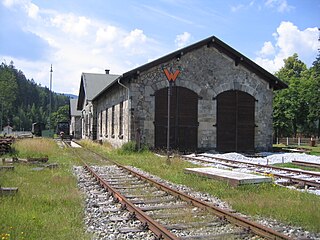
The Bavarian Localbahn Society, with its headquarters in Tegernsee, is a society that is concerned with the history of the railways in Bavaria. Localbahn means 'branch line' and is mainly used in southern Germany and Austria in lieu of the usual term Nebenbahn. The BLV's objectives are the operation of historic trains and the collection of historically valuable railway items from Bavaria.
Bavarian branch lines comprised nearly half the total railway network in Bavaria, a state in the southeastern Germany that was a kingdom in the days of the German Empire. The construction era for branch lines lasted from 1872, when the first route, from Siegelsdorf to Langenzenn, was opened, to 1930, when the last section of the branch from Gößweinstein to Behringersmühle went operational.
The German term Verbandsbauart describes both a type of goods wagon as well as a type of tram.
The Bavarian engines with railway numbers 87 and 88 were superheated steam locomotives with the Localbahn AG (LAG). They were the last two engines that the LAG procured because shortly after their delivery in 1937, the company was finally nationalised. The locomotives were largely similar in their design to the TAG 7 locomotive, that had been developed in 1936 by Krauss-Maffei for the Tegernsee Railway AG. TAG 7 were the last branch line (Lokalbahn) locomotives to be designed and built in Bavaria. Unlike the two LAG engines, TAG 7 survived, first as the operating reserve for the Tegernseebahn and later as a museum locomotive. It is maintained by the Bavarian Localbahn Society and regularly used for museum trips around Munich.
The steam railbuses of Bavarian Class MCCi were built between 1906–1908 for the Royal Bavarian State Railways for suburban services in the Munich area. Seven units were produced, the coach bodies being manufactured by MAN and the engines by Maffei.
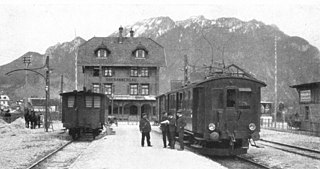
A Lokalbahn or Localbahn is a secondary railway line worked by local trains serving rural areas, typically in Austria and the south German states of Bavaria and Baden-Württemberg. Lokalbahnen appeared at the end of the 19th century before the use of cars became widespread.
The Landshut–Rottenburg railway was a German branch line in the southern state of Bavaria. It was a stub line, about 27.5 kilometres long, from Landshut to Rottenburg an der Laaber, and was known by the locals as the Rottenburger Bockerl. Although the line is now closed, there is a plan to establish a museum railway on the remaining section from Landshut to Unterneuhausen.
The Ammergau Railway or Ammergaubahn is a single-tracked, electrified railway line in Bavaria in southern Germany. It runs from Murnau to Oberammergau, its latter stages following the valley of the river Ammer from which it derives its name. This stub line to Oberammergau branches off at Murnau from the Munich–Garmisch-Partenkirchen main line.
The Royal Saxon State Railway designated four-coupled tank locomotives for passenger train service as class IV T (four-T), and the Deutsche Reichsbahn subsequently grouped these locomotives into DRG Class 71.3 in 1925.
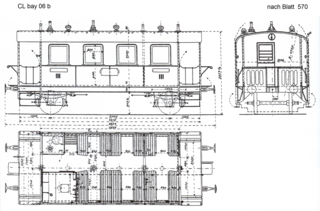
The Bavarian CL Bay 06b was a short open coach for branch line services with the Royal Bavarian State Railways (k.Bay.Sts.B.). It was listed in their 1913 fleet register under Design Sheet No. 570.
The PwPost Bay 06 was a combined mail and luggage van designed for Lokalbahn branch line train services with the Royal Bavarian State Railways in the early 20th century. It was built to their Design Sheet Number 606.
The GwL class vans of the Royal Bavarian State Railways were goods vans built for branch lines in the Kingdom of Bavaria in the late 19th and early 20th centuries.
The CL Bay 11a and CL Bay 14a were a class of open coach built for the Bavarian branch lines (Lokalbahn in the early 20th century. They were listed under Design Sheet 554 in the 1913 Fleet Register of the Royal Bavarian State Railways. In the engineering register of the Deutsche Reichsbahn they were listed as the Class CL Bay 14II under Sheet No. 6056.3.
{{citation}}: CS1 maint: date and year (link){{citation}}: CS1 maint: date and year (link){{citation}}: CS1 maint: date and year (link)