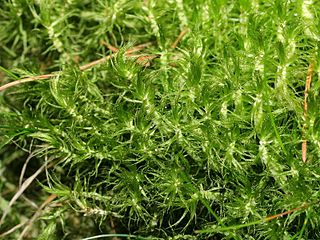
Dicranum is a genus of mosses, also called wind-blown mosses or fork mosses. These mosses form in densely packed clumps. Stems may fork, but do not branch. In general, upright stems will be single but packed together. Dicranum is distributed globally. In North America these are commonly found in Jack pine or Red pine stands.

Pogonatum is a genus of mosses — commonly called spike moss — which contains approximately 70 species that cover a cosmopolitan distribution. It can be seen mostly in Asian countries with a tropical climate.

Ditrichum is a genus of haplolepideous mosses (Dicranidae) in the family Ditrichaceae.

Schistidium is a plant genus in the moss family Grimmiaceae.

Tortula is a genus of mosses in the family Pottiaceae.
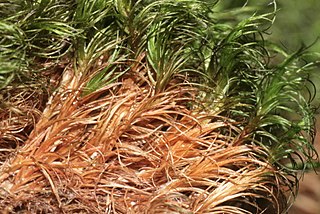
Campylopus is a genus of 180 species of haplolepideous mosses (Dicranidae) in the family Leucobryaceae. The name comes from the Greek campylos, meaning curved, and pous, meaning foot, referring to the setae which curve downwards.

Taxiphyllum is a genus of mosses in the family Hypnaceae.

Thuidium is a genus of moss in the family Thuidiaceae. The name comes from the genus Thuja and the Latin suffix -idium, meaning diminutive. This is due to its resemblance to small cedar trees.

George Newton Best was an American bryologist, expert on moss taxonomy, and second president of the Sullivant Moss Society.

Pohlia is a genus of mosses in the family Mniaceae, found on all continents including Antarctica. Some of its species are native to multiple continents. The center of diversity is the Northern Hemisphere.
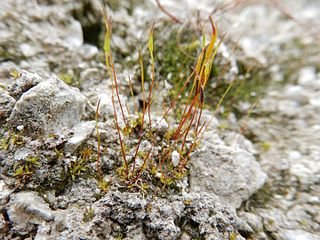
Aloina is a genus of mosses belonging to the family Pottiaceae first described by Nils Conrad Kindberg. It has a cosmopolitan distribution.

Plagiothecium is a genus of moss belonging to the family Plagiotheciaceae. It has a cosmopolitan distribution.

Rhynchostegium is a genus of pleurocarpous mosses belonging to the family Brachytheciaceae. The genus has a cosmopolitan distribution across different climatological regions except the polar regions, mostly in tropic to north temperate regions. The genus contains both aquatic and terrestrial species. The genus was named for their rostrate opercula. The type species of this genus is Rhynchostegium confertum (Dicks.) Schimp.
Campylium is a genus of mosses belonging to the family Amblystegiaceae.

Kindbergia is a genus of mosses belonging to the family Brachytheciaceae.
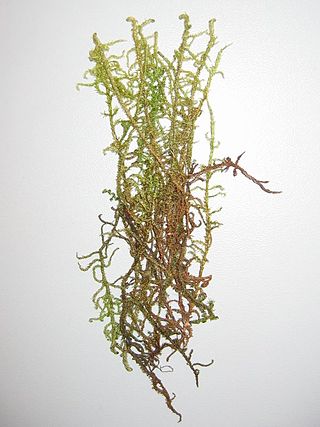
Drepanocladus is a genus of mosses belonging to the family Amblystegiaceae. It has a cosmopolitan distribution
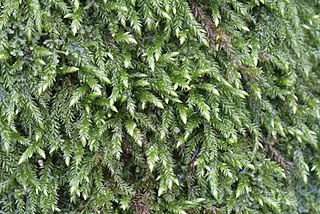
Isothecium is a genus of mosses belonging to the family Lembophyllaceae. The genus has a cosmopolitan distribution.
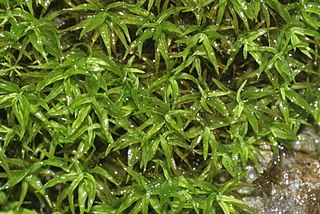
Trichostomum is a genus of mosses belonging to the family Pottiaceae.

Scleropodium is a genus of mosses belonging to the family Brachytheciaceae. The genus has an almost cosmopolitan distribution.

Pylaisia is a genus of mosses belonging to the family Pylaisiaceae.


