
Klaus Schulze was a German electronic music pioneer, composer and musician. He also used the alias Richard Wahnfried and was a member of the Krautrock bands Tangerine Dream, Ash Ra Tempel, and the Cosmic Jokers before launching a solo career consisting of more than 60 albums released across six decades.

Masanori Takahashi, professionally known as Kitarō (喜多郎), is a Japanese musician, composer, record producer, and arranger noted for his electronic-instrumental music, and is often associated with and regarded as one of the most prominent musical acts of new-age music. He won the Grammy Award for Best New Age Album for Thinking of You (1999), with a record 16 nominations in the same category. He received a Golden Globe Award for the original score to Heaven & Earth (1993).
Popol Vuh were a German musical collective founded by keyboardist Florian Fricke in 1969 together with Frank Fiedler, Holger Trülzsch (percussion), and Bettina Fricke. The band took its name from the Mayan manuscript containing the mythology of highland Guatemala's K'iche' people. During the next two decades the membership often alternated, most notably including Djong Yun, Renate Knaup, Conny Veit, Daniel Fichelscher, Klaus Wiese, and Robert Eliscu.

Timewind is the fifth album by Klaus Schulze. It was originally released in 1975, and in 2006 was the twenty-second Schulze album reissued by Revisited Records. It is Schulze's first solo album to use a sequencer.
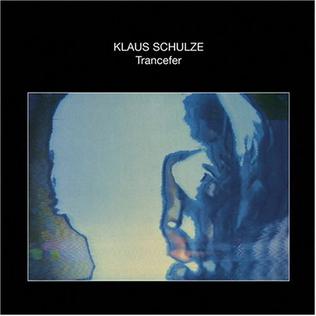
Trancefer is the fourteenth album by Klaus Schulze. It was originally released in 1981, and in 2006 was the twenty-third Schulze album reissued by Revisited Records. With the original total running time of 37 minutes and 23 seconds, it was the shortest album in Schulze's canon until the 2006 reissue doubled its running time by including alternate versions of the main tracks.

Cyborg is the second album by Klaus Schulze. It was originally released in 1973, and in 2006 was the nineteenth Schulze album reissued by Revisited Records.

Blackdance is the third album by Klaus Schulze. It was originally released in 1974, and in 2007 was the twenty-fifth Schulze album reissued by Revisited Records. For the first time Schulze uses "real" synthesizers and a singer. "Voices of Syn" features Ernst Walter Siemon on vocals. Due to packaging and print errors on later releases, Blackdance was considered Schulze's fourth album for decades, until Klaus D. Müller, Schulze's biographer and publicity manager, discovered from searching through his personal diaries that Picture Music, thought to be the third album, was recorded after Blackdance. Despite this, the reissue labels Blackdance as Schulze's fourth album.

Audentity is the fifteenth album by Klaus Schulze. It was originally released in 1983, and in 2005 was the eleventh Schulze album reissued by Revisited Records. The reissue of Audentity is one of two instances of a Klaus Schulze reissue featuring a track order changed from that of the original release.
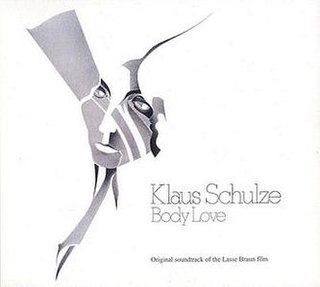
Body Love is the seventh album by Klaus Schulze. It was originally released in 1977, and in 2005 was the ninth Schulze album reissued by Revisited Records. It is the original soundtrack for the porno film of the same name directed by Lasse Braun.

Mirage is the eighth album by Klaus Schulze. It was originally released in 1977, and in 2005, was the first Schulze album reissued by Revisited Records. Mirage is subtitled "Eine elektronische Winterlandschaft" and is dedicated to Hans Dieter Schulze.
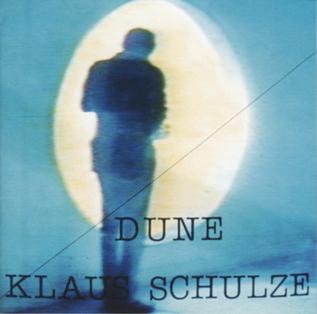
Dune is the eleventh album by Klaus Schulze. It was originally released in 1979, and in 2005 was the tenth Schulze album reissued by Revisited Records. "Shadows of Ignorance" features Arthur Brown on vocals, half-singing/half-chanting a long poem written by Schulze.
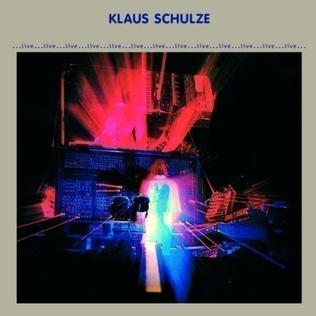
...Live... is the twelfth album by Klaus Schulze. It was originally released in 1980, and in 2007 was the twenty-sixth Schulze album reissued by Revisited Records. The album contains recordings from concerts in Berlin in 1976, and Amsterdam and Paris in 1979. The CD version of "Sense" has been extended from the original LP and now includes a lengthy introduction which did not feature in the original release. "Dymagic" includes a vocal performance by Arthur Brown, similar to the one found on Dune, the last studio album before the tour.

Angst is the seventeenth album by Klaus Schulze. It was originally released in 1984, and in 2005 was the fourteenth Schulze album reissued by Revisited Records. It is the soundtrack for the 1983 Austrian film of the same name. "Freeze" featured in the 1986 film Manhunter.

Royal Festival Hall Vol. 2 is the twenty-fifth album by Klaus Schulze. It was originally released in 1992. This is the fourth of seven early-1990s Klaus Schulze albums not to be reissued by Revisited Records.

Le Moulin de Daudet is the twenty-seventh album by Klaus Schulze. It was originally released in 1994, and in 2005 was the fourth Schulze album reissued by Revisited Records. Le Moulin de Daudet was released after Schulze's Silver Edition 10-disc CD box set, technically making this album his thirty-seventh. It is the soundtrack to the film of the same name. The reissue bonus track is an excerpt from the previously released limited promo CD Ion (2004).

Goes Classic is the twenty-eighth album by Klaus Schulze. It was originally released in 1994. This is the sixth of seven early-1990s Klaus Schulze albums not to be reissued by Revisited Records. Goes Classic was released after Schulze's Silver Edition 10-disc CD box set, technically making this album his thirty-eighth. The album consists of electronic renditions of six well-known classical pieces, plus one original Schulze composition.

Das Wagner Desaster Live is the thirtieth album by Klaus Schulze. It was originally released in 1994, and in 2005 was the fifteenth Schulze album reissued by Revisited Records. The reissue of Das Wagner Desaster Live is one of two examples of a Klaus Schulze reissue that changes the original order of the tracks. Das Wagner Desaster Live was released after Schulze's Silver Edition 10-disc CD box set, technically making this album his fortieth.
Brain was a Hamburg-based record label prominent in the 1970s releasing several important Krautrock records by bands such as Neu!, Cluster and Guru Guru. Many of its more prominent records are currently being reissued on CD by Repertoire Records.

Historic Edition is a limited edition 10-disc CD box set released by Klaus Schulze in 1995 containing unreleased archival recordings. This set was wholly included in Schulze's 50-disc CD box set The Ultimate Edition released in 2000. Beginning in 2009, tracks from this set were reissued as La Vie Electronique, a series of 3-disc CD sets releasing all the material of The Ultimate Edition in chronological order.

Harald Grosskopf is a German electronic musician. He played with several Krautrock and progressive rock bands of the 1970s in Germany, and released solo music.


 link
link 