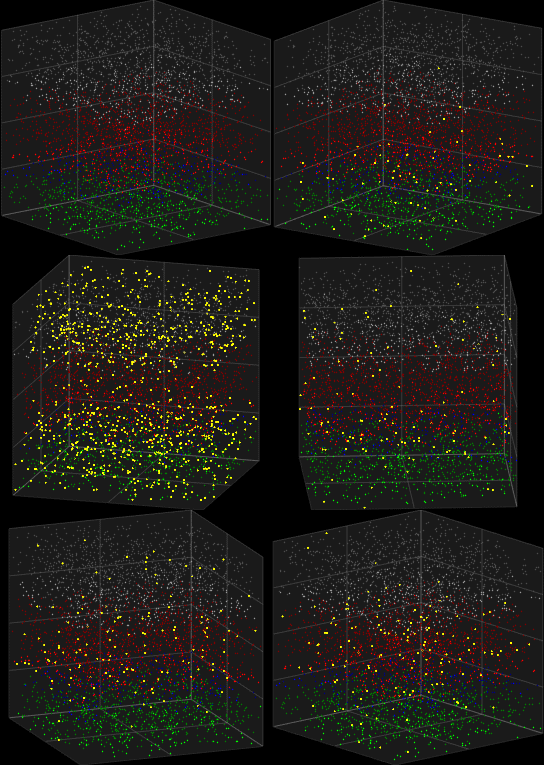
Computing is any goal-oriented activity requiring, benefiting from, or creating computing machinery. It includes the study and experimentation of algorithmic processes, and development of both hardware and software. Computing has scientific, engineering, mathematical, technological and social aspects. Major computing disciplines include computer engineering, computer science, cybersecurity, data science, information systems, information technology, digital art and software engineering.
Software engineering is an engineering-based approach to software development. A software engineer is a person who applies the engineering design process to design, develop, test, maintain, and evaluate computer software. The term programmer is sometimes used as a synonym, but may emphasize software implementation over design and can also lack connotations of engineering education or skills.
The Software Engineering Body of Knowledge is an international standard ISO/IEC TR 19759:2005 specifying a guide to the generally accepted software engineering body of knowledge.

A safety-critical system or life-critical system is a system whose failure or malfunction may result in one of the following outcomes:
In systems engineering, dependability is a measure of a system's availability, reliability, maintainability, and in some cases, other characteristics such as durability, safety and security. In real-time computing, dependability is the ability to provide services that can be trusted within a time-period. The service guarantees must hold even when the system is subject to attacks or natural failures.
Software maintenance in software engineering is the modification of a software product after delivery to correct faults, to improve performance or other attributes.
Requirements engineering (RE) is the process of defining, documenting, and maintaining requirements in the engineering design process. It is a common role in systems engineering and software engineering.
A software requirements specification (SRS) is a description of a software system to be developed. It is modeled after the business requirements specification(CONOPS). The software requirements specification lays out functional and non-functional requirements, and it may include a set of use cases that describe user interactions that the software must provide to the user for perfect interaction.
Certified Software Development Professional (CSDP) is a vendor-neutral professional certification in software engineering developed by the IEEE Computer Society for experienced software engineering professionals. This certification was offered globally since 2001 through Dec. 2014.
The Doctor of Engineering is a professional doctorate in engineering and applied science. An EngD is a terminal degree similar to a PhD in engineering but applicable more in industry rather than in academia. The degree is usually aimed toward working professionals.
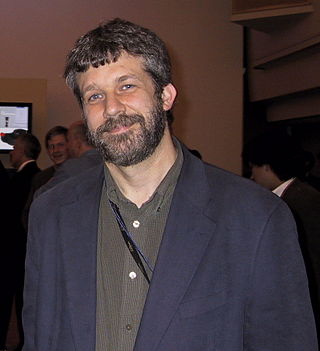
Charlie Catlett is a senior computer scientist at Argonne National Laboratory and a visiting senior fellow at the Mansueto Institute for Urban Innovation at the University of Chicago. From 2020 to 2022 he was a senior research scientist at the University of Illinois Discovery Partners Institute. He was previously a senior computer scientist at Argonne National Laboratory and a senior fellow in the Computation Institute, a joint institute of Argonne National Laboratory and The University of Chicago, and a senior fellow at the University of Chicago's Harris School of Public Policy.
The NHS Connecting for Health (CFH) agency was part of the UK Department of Health and was formed on 1 April 2005, having replaced the former NHS Information Authority. It was part of the Department of Health Informatics Directorate, with the role to maintain and develop the NHS national IT infrastructure. It adopted the responsibility of delivering the NHS National Programme for IT (NPfIT), an initiative by the Department of Health to move the National Health Service (NHS) in England towards a single, centrally-mandated electronic care record for patients and to connect 30,000 general practitioners to 300 hospitals, providing secure and audited access to these records by authorised health professionals.

Sir Nigel Richard Shadbolt is Principal of Jesus College, Oxford, and Professorial Research Fellow in the Department of Computer Science, University of Oxford. He is chairman of the Open Data Institute which he co-founded with Tim Berners-Lee. He is also a visiting professor in the School of Electronics and Computer Science at the University of Southampton. Shadbolt is an interdisciplinary researcher, policy expert and commentator. His research focuses on understanding how intelligent behaviour is embodied and emerges in humans, machines and, most recently, on the Web, and has made contributions to the fields of Psychology, Cognitive science, Computational neuroscience, Artificial Intelligence (AI), Computer science and the emerging field of Web science.
Ultra-large-scale system (ULSS) is a term used in fields including Computer Science, Software Engineering and Systems Engineering to refer to software intensive systems with unprecedented amounts of hardware, lines of source code, numbers of users, and volumes of data. The scale of these systems gives rise to many problems: they will be developed and used by many stakeholders across multiple organizations, often with conflicting purposes and needs; they will be constructed from heterogeneous parts with complex dependencies and emergent properties; they will be continuously evolving; and software, hardware and human failures will be the norm, not the exception. The term 'ultra-large-scale system' was introduced by Northrop and others to describe challenges facing the United States Department of Defense. The term has subsequently been used to discuss challenges in many areas, including the computerization of financial markets. The term "ultra-large-scale system" (ULSS) is sometimes used interchangeably with the term "large-scale complex IT system" (LSCITS). These two terms were introduced at similar times to describe similar problems, the former being coined in the United States and the latter in the United Kingdom.

Sir Anthony Charles Wiener Finkelstein is a British engineer and computer scientist. He is the President of City, University of London. He was Chief Scientific Adviser for National Security to HM Government until 2021.
Software construction is a software engineering discipline. It is the detailed creation of working meaningful software through a combination of coding, verification, unit testing, integration testing, and debugging. It is linked to all the other software engineering disciplines, most strongly to software design and software testing.
The UK Large-Scale Complex IT Systems (LSCITS) Initiative is a research and graduate education programme focusing on the problems of developing large-scale, complex IT systems. The initiative is funded by the EPSRC, with more than ten million pounds of funding awarded between 2006 and 2013.

Anthony "Tony" I. Wasserman, is an American computer scientist. He is a member of the board of directors of the Open Source Initiative, was a professor of the Practice in Software Management at Carnegie Mellon Silicon Valley, and is executive director of the CMU Center for Open Source Investigation. He has been a SkyDeck accelerator program advisor at University of California, Berkeley since 2021.
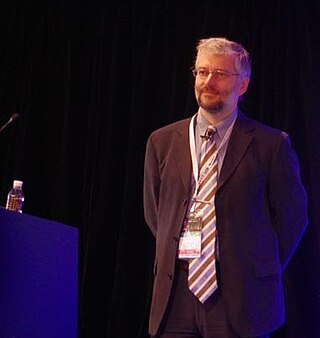
Igor Muttik is a computer security expert, researcher and inventor.
Linda Ann Macaulay is the Emeritus Professor of System Design at the University of Manchester, specialising in Human–computer interaction, Requirements engineering and Service science, management and engineering.


