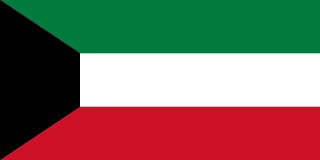
Kuwait is a constitutional emirate with a semi-democratic political system. The hybrid political system is divided between an elected parliament and appointed government.

The National Assembly is bicameral with the lower house, the Chamber of Deputies, having 40 members elected in single-seat constituencies for a four-year term. The upper house, the Shura Council, has 40 members appointed by the King of Bahrain, with the stated aim of giving a voice to minority communities and technocratic experts within the legislative process. Supporters of the system refer to long established democracies the United Kingdom and Canada operating with this bicameralism with an appointed upper chamber and an elected lower chamber. Opponents of this system point out that unlike the bicameral systems in the UK and Canada, the Bahraini system gives the unelected upper house equal or more legislative power than the elected lower house, allowing the King to control all legislation. Opponents also point out that the current system was imposed unilaterally by the King, violating the 1973 Constitution and a 2001 signed agreement with the Bahraini opposition.
Elections in Kuwait are held for both the National Assembly and for the Municipality. Kuwait's constitution calls for elections to the unicameral National Assembly at a maximum interval of four years. Elections are held earlier if the Constitutional Court or Emir dissolve the parliament.

The Liberal Democratic Party is an Australian political party founded in Canberra in 2001. The party espouses smaller government and supports policies that are based on classical liberal and right-libertarian principles. The LDP is a registered party in the Australian Capital Territory, New South Wales, South Australia, Victoria and Western Australia and is also registered for federal elections with the Australian Electoral Commission. It also has a member of the Western Australian Legislative Council, Aaron Stonehouse, two representatives in the Victorian Legislative Council, Tim Quilty and David Limbrick, and elected representatives in some local governments.

Nasser Mohammed Ahmad Al-Jaber Al-Sabah is a Kuwaiti politician who served as Prime Minister of Kuwait from 7 February 2006 until resigning on 28 November 2011. He is the first prime minister to date that never became ruler or even crown prince.

General elections were held in Kuwait on 29 June 2006. They were the first elections in Kuwait in which women were able to vote and run for office.
General elections were held in Bahrain on 25 November 2006 for the 40-seat Council of Representatives alongside municipal elections. There was a 72% turnout in the first round of polling. As expected by most observers, Shi'a and Sunni Islamists dominated the poll, winning a clean sweep in the first round of voting, while liberal and ex-communist MPs lost all their seats. Four candidates of the left-wing National Democratic Action made it through to second round run-off which was held on 2 December 2006.
An early parliamentary election was held in Kuwait on 17 May 2008 after the Emir Sabah Al-Sabah dissolved the National Assembly of Kuwait on 19 March 2008 over constant clashes between the government and the elected MPs. The last elections were held less than two years previously and saw a loose alliance of reformists and Islamists gain almost two thirds of the seats.
Kuwait is a constitutional emirate with a semi-democratic political system. The hybrid political system is divided between an elected parliament and appointed government.
Musallam Al-Barrak is a Kuwaiti politician. He was a member of the Kuwaiti National Assembly, representing the fourth district.
An early parliamentary election was held in Kuwait on 16 May 2009, the country's third in a three-year period. Kuwait had voted on six occasions between 1991 and 2009. The turnout rate was 50%. The election was notable in that four women were elected for the first time since Kuwait gained independence from the United Kingdom in 1961.

A parliamentary election to the People's Assembly of Egypt was held from 28 November 2011 to 11 January 2012, following the revolution that ousted President Hosni Mubarak, after which the Supreme Council of the Armed Forces (SCAF) dissolved the parliament of Egypt. However the dissolution was ruled unconstitutional and Parliament was reinstated. Originally, the elections had been scheduled to be held in September 2011, but was postponed amid concerns that established parties would gain undue advantage.
The Kuwaiti protests refers to the series of 2011–12 demonstrations for government reforms in the state of Kuwait. In November 2011, the government of Kuwait resigned in response to the protests, making Kuwait one of several countries affected by the Arab Spring to experience major governmental changes due to unrest. The protests began with stateless people (Bedoon).

The Egyptian Bloc was an electoral alliance in Egypt. It was formed in August 2011 by several liberal, social democratic, and leftist political parties and movements, as well as the traditional Islamist Sufi Liberation Party to prevent the Muslim Brotherhood, and its affiliated Freedom and Justice Party from winning the parliamentary election in November of that year. As of September 2012, all former constituent parties left the bloc, joined other alliances or merged into other parties.
Early general elections were held in Kuwait on 1 December 2012 after early elections in February 2012 were declared invalid.

Early general elections were held in Kuwait on 27 July 2013. The elections were required after the Constitutional Court dissolved Parliament and annulled the results of the December 2012 elections. Voter turnout was an estimated 52.5%, which was higher than expected despite an opposition boycott, and only 7% lower than the non-boycotted February 2012 elections.

General elections will be held in the Kingdom of Denmark after either the dissolution or expiry of the current Parliament, and must be held on or before 17 June 2019. All 179 members of the Folketing will be elected. 175 members will be elected in Denmark proper, two in the Faroe Islands and two in Greenland.
Events from the year 2013 in Kuwait.
Early general elections were held in Kuwait on 26 November 2016. They follow the dissolution of the parliament elected in 2013 by Emir Sabah Al-Ahmad Al-Jaber Al-Sabah in October 2016. Under the constitution, elections must be held within two months. Opposition candidates won 24 of the 50 seats in the National Assembly. Voter turnout was around 70 percent.