Elections in Antigua and Barbuda take place in the framework of a parliamentary democracy.

Elections in Kuwait are held for both the National Assembly and for the Municipality. Kuwait's constitution calls for elections to the unicameral National Assembly at a maximum interval of four years. Elections are held earlier if the Constitutional Court or Emir dissolve the parliament.

Parliamentary elections were held in Macedonia on 18 October 1998, with a second round on 1 November. VMRO-DPMNE emerged as the largest party, winning 49 of the 120 seats, and later formed a coalition government with Democratic Alternative and the Democratic Party of Albanians.
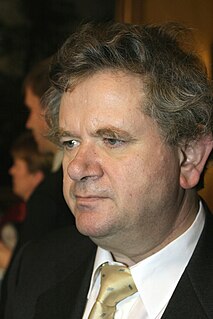
Parliamentary elections were held in Iceland on 10 May 2003. The Independence Party remained the largest party in the Althing, winning 22 of the 63 seats.

General elections were held in Angola on 29 and 30 September 1992 to elect a President and National Assembly, the first time free and multi-party elections had been held in the country. They followed the signing of the Bicesse Accord on 31 May 1991 in an attempt to end the 17-year-long civil war. Voter turnout was 91.3% for the parliamentary election and 91.2% for the presidential election.

General elections were held in Singapore on 23 December 1976. The result was a victory for the People's Action Party, which won all 69 seats, the third of four consecutive elections in which they repeated the feat. Voter turnout was 95.1%, out of 857,297 voters eligible from the 53 contested constituencies.

Parliamentary elections were held in Lithuania in two stages on 25 October and 15 November 1992. All 141 members of the Seimas, which replaced the Supreme Council, were elected; 70 based on proportional party lists and 71 in single member constituencies. Where no candidate gained more than 50% of the vote on 25 October, a run-off was held on 15 November. The first round of the elections were held simultaneously with a referendum on the adoption of a new constitution.
Early parliamentary elections were held in Egypt on 6 April 1987, with a second round for nine seats on 13 April. They followed a change in the electoral law, approved by a referendum in February, which would allow independent candidates to run in the election. The result was a victory for the ruling National Democratic Party, which won 346 of the 458 seats. Following the election, the People's Assembly nominated incumbent Hosni Mubarak for the post of president, whose candidacy was put to voters in a referendum on 5 October.
Parliamentary elections were held in South Yemen between 28 and 30 October 1986, having originally been scheduled for 1983, but later postponed. A total of 181 candidates contested the 111 seats. Although the country was a one-party state at the time, with the Yemeni Socialist Party as the sole legal party, independents were also able to run as candidates.
Parliamentary elections were held in Kuwait on 23 January 1963. A total of 205 candidates contested the 50 seats, with pro-government candidates emerging as the largest bloc. Voter turnout was 85.0%.
Parliamentary elections were held in Kuwait on 23 January 1971. A total of 183 candidates contested the election, which saw pro-government candidates remain the largest bloc in Parliament. Voter turnout was 51.6%.
Parliamentary elections were held in Kuwait on 27 January 1975. Around 260 candidates contested the election, which saw pro-government candidates remain the largest bloc in Parliament. Voter turnout was 60.1%.
Parliamentary elections were held in Kuwait on 23 February 1981. A total of 447 candidates contested the election, which saw pro-government candidates remain the largest bloc in Parliament. Voter turnout was 89.8%.
Parliamentary elections were held in Kuwait on 21 February 1985. A total of 231 candidates contested the election, which saw pro-government candidates remain the largest bloc in Parliament. Voter turnout was 85.1%.

Parliamentary elections were held in Kuwait on 23 October 1996. A total of 230 candidates contested the election, which saw pro-government candidates win the largest number of seats. Voter turnout was 83.4%.
Parliamentary elections were held in Kuwait on 4 July 1999. A total of 288 candidates contested the election, which saw pro-government candidates and secular opposition candidates emerge as the two largest blocs in Parliament. Voter turnout was 83.2%.
Early general elections were held in Kuwait on 2 February 2012, the country's second general election in a three-year period. The election's turnout rate was 59%. However, in June 2012 Kuwait's Constitutional Court declared the elections invalid and reinstated the former parliament. The court said the dissolution of Parliament in December 2011 by Emir Sabah Al-Sabah was unconstitutional. In response, opposition MPs resigned from parliament and demanded a full parliamentary system.

Parliamentary elections were held in Latvia on 7 and 8 October 1922. The Latvian Social Democratic Workers' Party remained the largest party, winning 30 of the 100 seats.

Early general elections were held in Kuwait on 27 July 2013. The elections were required after the Constitutional Court dissolved Parliament and annulled the results of the December 2012 elections. Voter turnout was an estimated 52.5%, which was higher than expected despite an opposition boycott, and only 7% lower than the non-boycotted February 2012 elections.

General elections were held in Botswana on 24 October 2014. The result was an eleventh straight victory for the Botswana Democratic Party, which won 37 of the 57 elected seats. Incumbent President Ian Khama was sworn in for a second term on 28 October.