
Leptospermum deuense is a species of shrub that is endemic to New South Wales. It is a leafy, densely branched shrub with rough bark on the older stems, elliptical leaves with a glossy upper surface, white flowers arranged singly or in pairs and woody fruit.
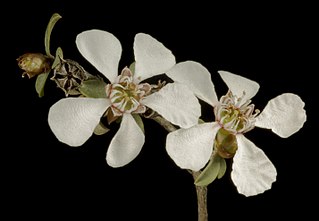
Leptospermum erubescens, commonly known as the roadside tea tree, is a species of shrub that is endemic to southwest of Western Australia. It has thin, fibrous bark, egg-shaped leaves, small white flowers and woody fruit.

Leptospermum inelegans is a species of straggly shrub that is endemic to Western Australia. It has only partly hairy young stems, egg-shaped to narrow elliptical leaves on a short petiole, relatively small white or pink flowers and fruit that fall from the plant when mature.
Leptospermum subtenue is a species of small shrub in the family Myrtaceae and is endemic to Western Australia. It has thick, elliptical, concave leaves, white or pink flowers and fruit that falls from the plant when mature. It occurs to the south of Kalgoorlie.

Leptospermum glaucescens, commonly known as the blue-green tea tree or smoky tea tree, is a species of shrub or small tree that is endemic to Tasmania. It has elliptical to egg-shaped leaves that are often greyish green, white flowers about 15 mm (0.59 in) in diameter arranged in consecutive leaf axils and fruit that remain on the plant for some time after maturity.

Leptospermum parvifolium, commonly known as lemon-scented tea-tree, is a species of shrub that is endemic to eastern Australia. It has thin, rough bark, egg-shaped leaves with the narrower end towards the base, white or pink flowers, and fruit with the remains of the sepals attached but that is shed when the seeds are mature.

Leptospermum deanei, commonly known as Deane's tea-tree, is a species of rare, slender shrub that is endemic to the northern suburbs of Sydney. It has bark peeling in long strips from the older stems, hairy young stems, narrow elliptical to lance-shaped leaves, white flowers arranged singly on short side shoots and mostly glabrous fruit.

Leptospermum argenteum, commonly known as the Mt Royal tea-tree, is a species of shrub that is endemic to the higher parts of Barrington Tops in New South Wales. It has smooth bark, stems with a flange along the sides, broad leaves, white flowers and unlike many others in the genus, it is never lemon-scented.

Leptospermum brevipes, commonly known as the slender tea-tree, is a species of shrub or small tree that is endemic to eastern Australia. It has fibrous bark on the main stems, smooth bark on young stems, narrow elliptical to narrow egg-shaped leaves, white flowers and hemispherical fruit that is shed when mature.

Leptospermum divaricatum is a species of plant that is endemic to inland New South Wales. It is an erect or weeping shrub with compact fibrous bark, elliptical to egg-shaped leaves, white flowers arranged singly on short axillary side shoots and woody fruit that fall off when mature.

Leptospermum glabrescens, commonly known as the smooth teatree, is a shrub or small tree that is endemic to East Gippsland in Victoria, Australia. It has linear, elliptic or narrow egg-shaped leaves, white flowers arranged singly on short side shoots and fruit that remain on the plant.

Leptospermum grandiflorum is a species of shrub or small tree that is endemic to eastern Tasmania. It has thick, elliptical to egg-shaped, greyish green leaves, white flowers about 20 mm (0.79 in) in diameter arranged singly on short side branches, and fruit that remain on the plant for long time after reaching maturity.
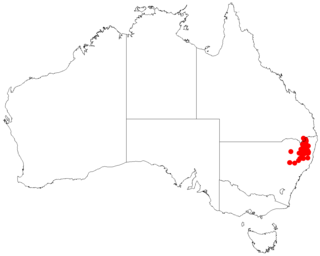
Leptospermum gregarium is a species of shrub that is endemic to eastern Australia. Its young stems are hairy the leaves are egg-shaped to lance-shaped with the narrower end towards the base, the flowers are white and arranged singly or in pairs on short side branches and the fruit remain on the plant at maturity. It usually grows in dense stands in swamps or along rocky creeks in high altitude place in northern New South Wales and south-eastern Queensland.
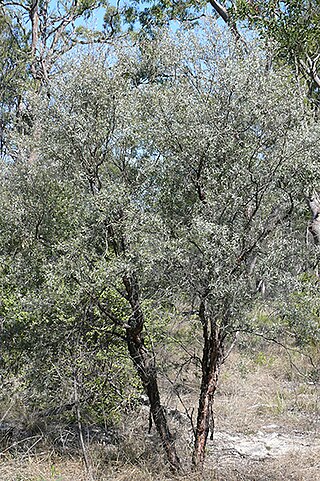
Leptospermum lamellatum is a species of shrub or small tree that is endemic to inland Queensland and has distinctive reddish, layered bark. It has narrow elliptical leaves, white flowers and small fruit that fall from the plant when mature.

Leptospermum myrtifolium, commonly known as the myrtle tea-tree or grey tea-tree, is a species of shrub that is endemic to south eastern Australia. It has broad egg-shaped to elliptical leaves, white flowers usually borne singly on short side shoots, and fruit that remains on the plant until it dies.
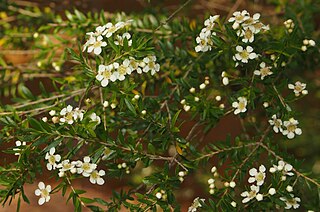
Leptospermum neglectum is a shrub or small tree that is endemic to Queensland. It has elliptical leaves that are silky-hairy at first, white flowers on short shoots in leaf axils and fruit with the remnants of the sepals attached but that fall from the plant shortly after the seeds are released.
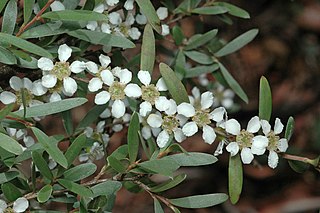
Leptospermum polyanthum is a rigid, spreading shrub or small tree that is endemic to New South Wales. It has thin, rough bark, young stems that are hairy at first, elliptical leaves, relatively small white flowers and fruit are shed when the seeds are mature.

Leptospermum purpurascens, commonly known as the purple-stemmed turkey bush, is a shrub or small tree that is endemic to far north Queensland. It has bark that is purple when new, elliptical to broadly lance-shaped leaves, relatively small white flowers arranged in pairs and small fruit that falls from the plants when the seeds are released.

Leptospermum semibaccatum is a species of low, dense shrub that is endemic to eastern Australia. It has egg-shaped to narrow elliptical leaves with a blunt tip, white or pink flowers and hairy, flat-topped fruit that falls from the plant shortly after the seeds are released. It grows in poorly-drained soil in coastal heath.

Leptospermum subglabratum is a species of open shrub that is endemic to a south-eastern New South Wales. It has thin, rough bark, egg-shaped to lance-shaped leaves with the narrower end towards the base, white flowers arranged singly on short side shoots and relatively small fruit that falls from the plant at maturity.


