Malabuyoc, Cebu

Last updated
Malabuyoc
Municipality

Anghayandmarket.jpg

Malabuyoc, Cebu
Ph locator cebu malabuyoc.png
Map of Cebu with Malabuyoc highlighted
Philippines location map (square).svg
Red pog.svg
Malabuyoc
Location within the Philippines
Coordinates: 9°39′N123°20′E / 9.65°N 123.33°E / 9.65; 123.33 Coordinates: 9°39′N123°20′E / 9.65°N 123.33°E / 9.65; 123.33
Country Philippines
Region Central Visayas (Region VII)
Province Cebu
District 2nd district of Cebu
Founded 1832
Barangay
Government [1]
  Type Sangguniang Bayan
   Mayor Lito Creus (1Cebu)
  Vice mayor Jigjig Creus
   Town Council
   Representative Peter John Calderon
Area [2]
  Total 69.27 km2 (26.75 sq mi)
Population (2015 census) [3]
  Total 19,373
  Density 280/km2 (720/sq mi)
  Voter(2016) [4] 12,814
Time zone PST (UTC+8)
ZIP code 6029
IDD : area code +63(0)32
Income class 5th class
PSGC 072229000
Patron Saint San Nicolas de Tolentino

Malabuyoc is a 5th municipal income classmunicipality in the province of Cebu, Philippines. According to the 2015 census, it has a population of 19,373. [3] In the 2016 electoral roll, it had 12,814 registered voters. [4]

Cebu Province in Central Visayas, Philippines

Cebu is a province of the Philippines located in the Central Visayas (Region VII) region, and consists of a main island and 167 surrounding islands and islets. Its capital is Cebu City, the oldest city and first capital of the Philippines, which is politically independent from the provincial government.

Philippines Republic in Southeast Asia

The Philippines, officially the Republic of the Philippines, is an archipelagic country in Southeast Asia. Situated in the western Pacific Ocean, it consists of about 7,641 islands that are categorized broadly under three main geographical divisions from north to south: Luzon, Visayas, and Mindanao. The capital city of the Philippines is Manila and the most populous city is Quezon City, both part of Metro Manila. Bounded by the South China Sea on the west, the Philippine Sea on the east and the Celebes Sea on the southwest, the Philippines shares maritime borders with Taiwan to the north, Vietnam to the west, Palau to the east, and Malaysia and Indonesia to the south.

Contents

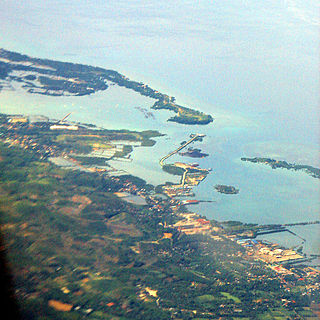
Malabuyoc is situated in the southwestern coast of the island of Cebu and is about 125 kilometres (80 mi) from Cebu City.

History

The popular story tells that that once Malabuyoc grew plenty of fruit trees like mangoes, lanzones, cacaos and others. Some much that the branches of trees bent heavily down (buyoc in Visaya). On account of this, the place came to be called Buyoc.

Barangays

Malabuyoc comprises 14 barangays:

PSGC Barangay Population ±% p.a.
2015 [3] 2010 [5]
072229001 Armeña (Cansilongan) 5.2% 1,016 921 1.89%
072229015 Barangay I (Poblacion) 8.5% 1,638 1,578 0.71%
072229016 Barangay II (Poblacion) 6.1% 1,189 1,169 0.32%
072229005 Cerdeña (Ansan) 10.3% 1,993 1,769 2.30%
072229006 Labrador (Bulod) 3.8% 733 796 −1.56%
072229008 Lombo 7.4% 1,441 1,294 2.07%
072229007 Looc 6.3% 1,218 1,189 0.46%
072229009 Mahanlud 2.9% 554 616 −2.00%
072229010 Mindanao (Pajo) 2.7% 532 474 2.22%
072229011 Montañeza (Inamlang) 16.7% 3,229 3,059 1.04%
072229012 Salmeron (Bulok) 3.9% 763 711 1.35%
072229013 Santo Niño (Salering) 13.6% 2,630 2,509 0.90%
072229014 Sorsogon (Balikmaya) 5.2% 1,015 967 0.93%
072229004 Tolosa (Calatagan) 7.3% 1,422 1,374 0.66%
Total 19,373 18,426 0.96%

Demographics

Population census of Malabuyoc
YearPop.±% p.a.
1903 11,781    
1918 14,894+1.58%
1939 13,855−0.34%
1948 14,096+0.19%
1960 11,883−1.41%
1970 12,628+0.61%
1975 13,993+2.08%
1980 13,740−0.36%
1990 14,628+0.63%
1995 17,090+2.96%
2000 17,015−0.09%
2007 18,117+0.87%
2010 18,426+0.62%
2015 19,373+0.96%
Source: Philippine Statistics Authority [3] [5] [6] [7]

In the 2016 electoral roll, it had 12,814 registered voters, meaning that 66% of the population are aged 18 and over. [4]

Economy

The main economy is agriculture, in particular fruit-bearing trees.

Tourism

Places of Interest
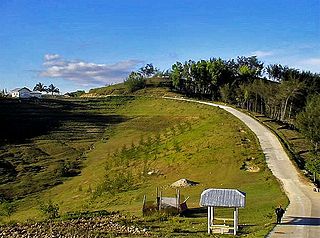
  • Ilihan Hills
  • Kabutongan Falls
  • Kagula Cliff
  • Montañeza Falls & Hot Spring
  • Moro Watch Tower
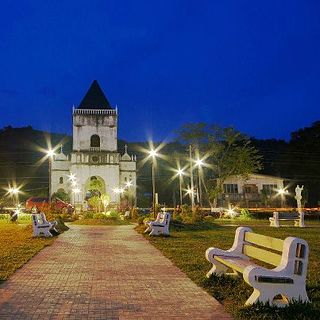
  • Old Roman Catholic Church
  • Talangnan Marine Sanctuary
Malabuyocbelltower.jpgthumbBell tower of San Nicolas de Tolentino church

Related Research Articles

Barili Municipality of the Philippines in the province of Cebu

Barili, officially the Municipality of Barili,, is a 2nd class municipality in the province of Cebu, Philippines. According to the 2015 census, it has a population of 73,862 people.

Alcoy, Cebu Municipality of the Philippines in the province of Cebu

Alcoy, officially the Municipality of Alcoy,, is a 5th class municipality in the province of Cebu, Philippines. According to the 2015 census, it has a population of 16,979 people.

Alegria, Cebu Municipality of the Philippines in the province of Cebu

Alegria, officially the Municipality of Alegria,, is a 4th class municipality in the province of Cebu, Philippines. According to the 2015 census, it has a population of 23,300 people.

Argao Municipality of the Philippines in the province of Cebu

Argao, officially the Municipality of Argao,, is a 1st class municipality in the province of Cebu, Philippines. According to the 2015 census, it has a population of 72,366 people.

Badian, Cebu Municipality of the Philippines in the province of Cebu

Badian, officially the Municipality of Badian,, is a 3rd class municipality in the province of Cebu, Philippines. According to the 2015 census, it has a population of 37,912 people.

Borbon, Cebu Municipality of the Philippines in the province of Cebu

Borbon, officially the Municipality of Borbon,, is a 4th class municipality in the province of Cebu, Philippines. According to the 2015 census, it has a population of 35,526 people.

Carmen, Cebu Municipality of the Philippines in the province of Cebu

Carmen, officially the Municipality of Carmen,, is a 3rd class municipality in the province of Cebu, Philippines. According to the 2015 census, it has a population of 51,325 people.

Cordova, Cebu Municipality of the Philippines in the province of Cebu

Cordova, officially the Municipality of Cordova,, is a 3rd class municipality in the province of Cebu, Philippines. According to the 2015 census, it has a population of 59,712 people.

Ginatilan Municipality of the Philippines in the province of Cebu

Ginatilan, officially the Municipality of Ginatilan,, is a 5th class municipality in the province of Cebu, Philippines. According to the 2015 census, it has a population of 15,919 people.

Oslob, Cebu Municipality of the Philippines in the province of Cebu

Oslob, officially the Municipality of Oslob,, is a 4th class municipality in the province of Cebu, Philippines. According to the 2015 census, it has a population of 27,893 people.

Samboan Municipality of the Philippines in the province of Cebu

Samboan, officially the Municipality of Samboan,, is a 5th class municipality in the province of Cebu, Philippines. According to the 2015 census, it has a population of 20,884 people.

Santander, Cebu Municipality of the Philippines in the province of Cebu

Santander, officially the Municipality of Santander,, is a 4th class municipality in the province of Cebu, Philippines. According to the 2015 census, it has a population of 17,857 people.

Sogod, Cebu Municipality of the Philippines in the province of Cebu

Sogod, officially the Municipality of Sogod,, is a 4th class municipality in the province of Cebu, Philippines. According to the 2015 census, it has a population of 35,108 people.

Bien Unido, Bohol Municipality of the Philippines in the province of Bohol

Bien Unido, officially the Municipality of Bien Unido, is a 4th class municipality in the province of Bohol, Philippines. According to the 2015 census, it has a population of 27,115 people.

Roseller Lim, Zamboanga Sibugay Municipality in Zamboanga Peninsula, Philippines

Roseller Lim, officially the Municipality of Roseller Lim, is a 3rd class municipality in the province of Zamboanga Sibugay, Philippines. According to the 2015 census, it has a population of 43,646 people.

Cabatuan, Iloilo Municipality of the Philippines in the province of Iloilo

Cabatuan, officially the Municipality of Cabatuan, is a 2nd class municipality in the province of Iloilo, Philippines. According to the 2015 census, it has a population of 58,442 people.

Bato, Leyte Municipality in Eastern Visayas, Philippines

Bato, officially the Municipality of Bato, is a 4th class municipality in the province of Leyte, Philippines. According to the 2015 census, it has a population of 38,356 people.

The Legislative Districts of Cebu are the representations of the province of Cebu in the various national legislatures of the Philippines. The province, including the highly urbanized city of Mandaue, are currently represented in the lower house of the Congress of the Philippines through the first, second, third, fourth, fifth, sixth and seventh districts of Cebu.

Roman Catholic Archdiocese of Cebu archdiocese of the Catholic Church in the Philippines

The Roman Catholic Archdiocese of Cebu is a Roman Rite archdiocese of the Roman Catholic Church in the Philippines and one of the ecclesiastical provinces of the Roman Catholic Church in the country. It is composed of the entire civil province of Cebu. It is the Mother Church of the Philippines. The jurisdiction, Cebu, is considered as the fount of Christianity in the Far East.

Sorsogon, is one of the barrios or barangays of the municipality of Malabuyoc, province of Cebu, Philippines. Sorsogon is located at center of all the barangays in Malabuyoc.

References

  1. "Municipality". Quezon City, Philippines: Department of the Interior and Local Government. Retrieved 31 May 2013.
  2. "Municipal: Malabuyoc, Cebu". PSGC Interactive. Quezon City, Philippines: Philippine Statistics Authority . Retrieved 8 January 2016.
  3. 1 2 3 4 Census of Population (2015). "Region VII (Central Visayas)". Total Population by Province, City, Municipality and Barangay. PSA . Retrieved 20 June 2016.
  4. 1 2 3 "2016 National and Local Elections Statistics". Commission on Elections. 2016.
  5. 1 2 Census of Population and Housing (2010). "Region VII (Central Visayas)". Total Population by Province, City, Municipality and Barangay. NSO . Retrieved 29 June 2016.
  6. Censuses of Population (1903–2007). "Region VII (Central Visayas)". Table 1. Population Enumerated in Various Censuses by Province/Highly Urbanized City: 1903 to 2007. NSO.
  7. "Province of Cebu". Municipality Population Data. Local Water Utilities Administration Research Division. Retrieved 17 December 2016.