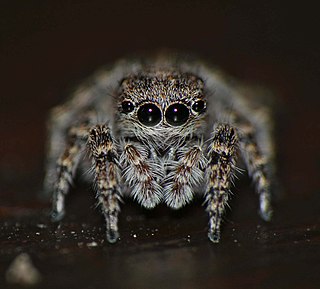
Langelurillus is a spider genus of the family Salticidae. All the described species occur only in Africa.

Icius pulchellus is a species of jumping spider in the genus Icius that lives in South Africa. It was first described in 2011 by Charles Haddad and Wanda Wesołowska. Only the female has been described. The spider is small, with a carapace measuring between 2.0 and 2.5 mm long and an abdomen that is between 2.0 and 2.4 mm in length. It has a sickle-shaped embolus. The spider is similar to the related Icius minimus, but can be distinguished by the pattern of the abdomen, which includes a brown stripe down the middle, and its short fat tibial apophysis.
Habrocestum auricomum is a jumping spider species in the genus Habrocestum that lives in South Africa. It was first identified in 2013.
Heliophanus gramineus is a jumping spider species in the genus Heliophanus that lives in South Africa. It was first identified in 2013.

Asemonea clara is a species of jumping spider in the genus Asemonea that is endemic to South Africa. The spider was first defined in 2013 by Wanda Wesołowska and Charles Haddad. The spider is small, with a cephalothorax that is between 1.9 and 2.2 mm long and an abdomen that is between 2.2 and 2.4 mm long. The white carapace is pear-shaped and the abdomen is white apart from two dark lines across the front, a small round dot in the middle and a black dot towards the back. The male has not been described.
Microbianor furcatus is a jumping spider species of the genus Microbianor that lives in South Africa. The male was first identified in 2013.
Colaxes benjamini is a jumping spider species in the genus Colaxes that was first identified in 2013. It lives in South Africa.
Propiomarengo plana is a species of jumping spider in the genus Propiomarengo that lives in South Africa. Originally named Afromarengo plana when first described in 2013, the species was renamed 7 years later and made the type species of the new genus. The spider is small, with a grey-beige abdomen that is between 2.4 and 2.8 centimetres in length and a brown carapace that is slightly smaller. Only the female has been described, which has a distinctive epigyne with two depressions flanking a ridge. It has only been found in Free State.
Belippo meridionalis is a jumping spider species in the genus Belippo that lives in South Africa. It was first identified in 2013.
Belippo pulchra is a jumping spider species in the genus Belippo that lives in South Africa. It was first identified in 2013.
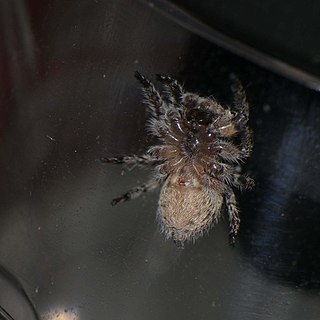
Langelurillus krugeri is a species of jumping spider in the genus Langelurillus that lives in South Africa. The species was first described in 2013 by Wanda Wesołowska and Charles Haddad. The spider is small with a brownish-grey abdomen typically 2.9 mm (0.11 in) long and a black carapace typically 1.9 mm (0.075 in) long. The species is named after Paul Kruger, who had been State President of the South African Republic. The first example was found in the Kruger National Park. The female can be distinguished from other spiders in the genus, particularly Langelurillus primus', in the design of its copulatory organs. The male has not been described.
Massagris mohale is a jumping spider species in the genus Massagris that lives in Lesotho. It was first identified in 2014.
Massagris separata is a jumping spider species in the genus Massagris that lives in South Africa. It was first identified by Wanda Wesołowska in 1993.
Massagris natalensis is a jumping spider species in the genus Massagris that lives in South Africa. It was first identified in 2009.
Massagris mirifica is a jumping spider species in the genus Massagris that lives in South Africa. The male was first identified by George and Elizabeth Peckham in 1903.
Dendryphantes limpopo is a jumping spider species in the genus Dendryphantes that lives in South Africa. The female was first described in 2013.
Dendryphantes silvestris is a jumping spider species in the genus Dendryphantes that lives in South Africa. It was first described in 2013.
Rhene lingularis is a species of jumping spider in the genus Rhene that can be found in South Africa. The male was first identified in 2011. It is typical of the genus, and is small, dark brown and hairy. The spider is distinguished by its tongue-shaped embolus, from which its species name derives.
Rhene timidus is a species of jumping spider in the genus Rhene that lives in South Africa. Only the female has been described, in 2013. The spider is typical of the genus, but larger than Rhene facilis, with a relatively large abdomen measuring 3.5 mm (0.14 in) in length. It has a distinctive epigyne featuring spiralling ridges.
Massagris maculosa is a jumping spider species of the genus Massagris that lives in South Africa.


