 |
|---|
| This article is part of a series on the politics and government of Mauritius |
| Constitution |
Government
|
Judiciary |
|
Administrative divisions |
|
General elections were held in Mauritius in 1891.
| |
|---|
| This article is part of a series on the politics and government of Mauritius |
| Constitution |
Government
|
Judiciary |
|
Administrative divisions |
|
General elections were held in Mauritius in 1891.
The 1885 constitution provided for a 28-member Legislative Council, which consisted of the Governor, 12 officials, 5 appointed members and 10 elected members. [1] The ten elected members were returned from nine constituencies formed from the nine districts, which all districts returning one member except Port Louis, which returned two. [2]

The Districts of the Republic of Mauritius are the second-order administrative divisions after the Outer islands of the country. Mauritius is divided into nine districts which consist of 1 city, 4 towns and 130 villages, the capital is Port Louis.

Port Louis is the capital city of Mauritius. It is mainly located in the Port Louis District, with a small western part in the Black River District. Port Louis is the country's economic, cultural and political centre, and most populous city. It is administered by the Municipal City Council of Port Louis. According to the 2012 census conducted by Statistics Mauritius, the population was 149,194.
The franchise for the elections was severely limited; the right to vote was restricted to people with Rs300 of immovable property or movable property worth Rs3,000, a monthly salary of Rs50, those paying rent of Rs25 a month or paying a licence duty of at Rs200 a year. People married to eligible voters, or the oldest son of a qualifying widow were also entitled to vote. As a result, although the population of Mauritius was around 370,000, only 5,164 people were eligible to vote, of which just 401 were Asian. [3]
The rupee is the currency of Mauritius. One rupee is subdivided into 100 cents. Several other currencies are also called rupee.

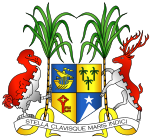
Mauritius, officially the Republic of Mauritius, is an island nation in the Indian Ocean. The main Island of Mauritius is located about 2,000 kilometres (1,200 mi) off the southeast coast of the African continent. The Republic of Mauritius also includes the islands of Rodrigues, Agalega and St. Brandon. The capital and largest city Port Louis is located on the main island of Mauritius.
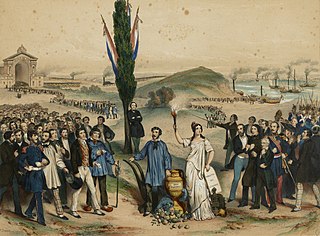
Suffrage, political franchise, or simply franchise is the right to vote in public, political elections. In some languages, and occasionally in English, the right to vote is called active suffrage, as distinct from passive suffrage, which is the right to stand for election. The combination of active and passive suffrage is sometimes called full suffrage.

Sir Anerood Jugnauth GCSK, KCMG, QC, MP, PC is a Mauritian politician who has served as both President and Prime Minister of Mauritius. He is Member of Parliament for Piton & Riviere Du Rempart.

Electoral systems for the legislatures of the individual Australian states and territories are broadly similar to the electoral system used in federal elections in Australia.

The New South Wales Legislative Council, often referred to as the upper house, is one of the two chambers of the parliament of the Australian state of New South Wales. The other is the Legislative Assembly. Both sit at Parliament House in the state capital, Sydney. It is normal for legislation to be first deliberated on and passed by the Legislative Assembly before being considered by the Legislative Council, which acts in the main as a house of review.

The Victorian Legislative Council (VLC) is the upper house of the bicameral Parliament of Victoria, Australia; the lower house being the Legislative Assembly. Both houses sit at Parliament House in Spring Street, Melbourne. The Legislative Council serves as a house of review, in a similar fashion to its federal counterpart, the Australian Senate. Although it is possible for legislation to be first introduced in the Council, most bills receive their first hearing in the Legislative Assembly.
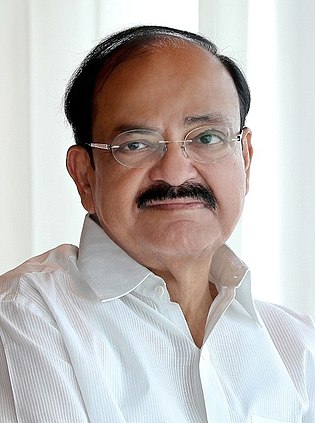
The Vice President of India is the second-highest constitutional office in India after the President. Article 63 of Indian Constitution states that "There shall be a Vice President of India." The Vice President acts as President in the absence of the president due to death, resignation, impeachment, or other situations.

The Representation of the People Act 1948 was an Act of the Parliament of the United Kingdom that altered the law relating to parliamentary and local elections. It is noteworthy for abolishing plural voting, including by the abolition of the twelve separate university constituencies; and for again increasing the number of members overall, in this case to 613.
Residency is the act of establishing or maintaining a residence in a given place. Residency is a concept which heavily affects the legal rights and responsibilities that are available to a person, including eligibility to vote, eligibility to stand for political office, eligibility to access government services, responsibility to pay taxes, and on and so forth.

The Kerala Legislative Assembly, popularly known as the Niyamasabha, is the State Assembly of Kerala, one of the 29 States in India. The Assembly is formed by 140 elected representatives and one nominated member from the Anglo-Indian community. Each elected member represents one of the 140 constituencies within the borders of Kerala and is referred to as Member of the Legislative Assembly (MLA).

"Unreformed House of Commons" is a name given to the House of Commons of Great Britain and the House of Commons of the United Kingdom before it was reformed by the Reform Act 1832.
In general, a Commonwealth citizen is a citizen of a member state of the Commonwealth of Nations. This designation is given legal effect in the nationality laws of some Commonwealth countries, and Commonwealth citizens may enjoy some privileges in the United Kingdom and, less commonly, other member states. Each Commonwealth country determines what special rights, if any, are accorded to citizens of other Commonwealth countries. The status is most significant in British law and has little effect in many other Commonwealth countries, such as Canada.

Rhodesia had limited democracy in the sense that it had the Westminster parliamentary system with multiple political parties contesting the seats in parliament, but as the voting was dominated by the White settler minority, and Black Africans only had a minority level of representation at that time, it was regarded internationally as a racist country.
In most countries, suffrage, the right to vote, is generally limited to citizens of the country. Some countries, however, extend voting rights to resident non-citizens. Such voting rights extended to non-citizens are often restricted or limited in some ways, with the details of the restrictions or limitations varying from one country to another. Voting rights to non-citizens may or may not extend to a right to run for an elected or other public office.
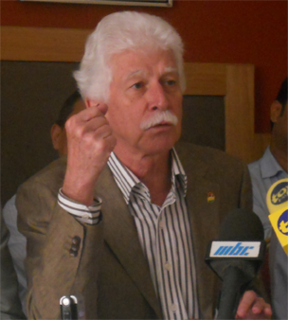
A general election was held in Mauritius on 5 May 2010. The coalition comprising Mauritius Labour Party under Navin Ramgoolam, the Militant Socialist Movement under Pravind Jugnauth and the Mauritian Social Democrat Party under Xavier Luc Duval, won a majority with 41 seats in the parliament. The Mauritian Militant Movement-led coalition under Paul Berenger finished second with 18 seats. The Mauritian Solidarity Front won one seat and the Rodrigues Movement won the two remaining seats. The elections were the ninth to be held since independence from the United Kingdom in 1968.
Electoral reform is change in electoral systems to improve how public desires are expressed in election results. That can include reforms of:

The 1995 Hong Kong Legislative Council election for members of the Legislative Council of Hong Kong (LegCo) was held on 17 September 1995. It was the last and the first fully elected legislative election in the colonial period before transferring Hong Kong's sovereignty to China two years later. The elections returned 20 members from directly elected geographical constituencies, 30 members from indirectly elected functional constituencies, and 10 members from elections committee constituency who were elected by all District Board members.
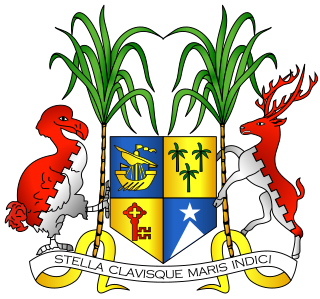
General elections were held for the first time in Mauritius between 11 and 20 January 1886. They followed the introduction of a new constitution the previous year. The Democrats and Reformists each won five of the ten elected seats.
The British colony of Mauritius received a new constitution by letters patent on 16 September 1885. It established a Council of Government of 27 members: eight ex officio members, nine appointed by the governor, and ten elected. The franchise was restricted to men, and there were property and education qualifications designed to exclude the vast majority of Indians.
General elections were held in Fiji in 1929. They were the first in which Indo-Fijians were allowed to vote.
