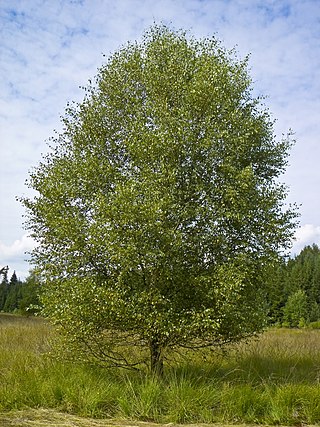
Betula pubescens, commonly known as downy birch and also as moor birch, white birch, European white birch or hairy birch, is a species of deciduous tree, native and abundant throughout northern Europe and northern Asia, growing farther north than any other broadleaf tree. It is closely related to, and often confused with, the silver birch, but grows in wetter places with heavier soils and poorer drainage; smaller trees can also be confused with the dwarf birch.
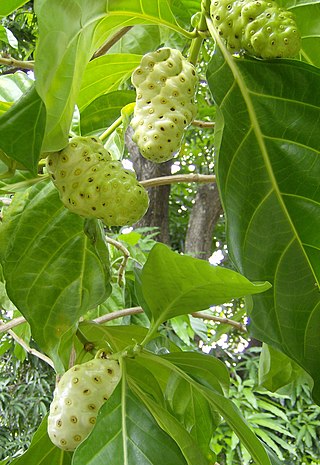
Morinda citrifolia is a fruit-bearing tree in the coffee family, Rubiaceae, native to Southeast Asia and Australasia, which was spread across the Pacific by Polynesian sailors. The species is now cultivated throughout the tropics and widely naturalised. There are over 100 names for this fruit across different regions, including great morinda, Indian mulberry, noni, beach mulberry, vomit fruit, awl tree, and rotten cheese fruit.

Capsicum pubescens is a plant of the genus Capsicum (pepper). The species name, pubescens, refers to the hairy leaves of this pepper. The hairiness of the leaves, along with the black seeds, make Capsicum pubescens distinguishable from other Capsicum species. Capsicum pubescens has pungent yellow, orange, red, green or brown fruits.
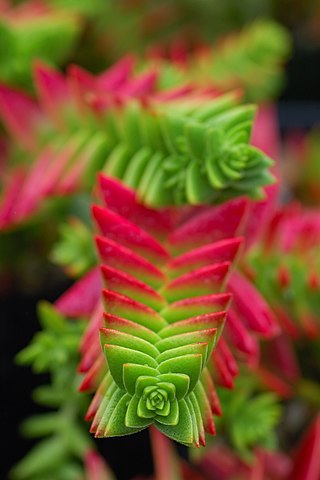
Crassula is a genus of succulent plants containing about 200 accepted species, including the popular jade plant. They are members of the stonecrop family (Crassulaceae) and are native to many parts of the globe, but cultivated varieties originate almost exclusively from species from the Eastern Cape of South Africa.

Morinda is a genus of flowering plants in the madder family, Rubiaceae. The generic name is derived from the Latin words morus "mulberry", from the appearance of the fruits, and indica, meaning "of India".

Morinda is a multi-level marketing company based in American Fork, Utah that sells Tahitian Noni juice and other products made from the noni plant. The company was founded in 1996 and has manufacturing facilities in Tahiti, Japan, China, Germany, and Utah. Morinda, formerly known as Tahitian Noni International and Morinda Bioactives, was a subsidiary of Morinda Holdings, Inc. prior to merging with and becoming a wholly owned subsidiary of New Age Beverages Corporation in December 2019.

Picea smithiana is a species of evergreen tree in the family Pinaceae family. It is referred to by the common names morinda spruce and West Himalayan spruce, and is a spruce native to the western Himalaya and adjacent mountains, from northeast Afghanistan, northern Pakistan, India to central Nepal. It grows at altitudes of 2,400-3,600 m in forests together with deodar cedar, blue pine and pindrow fir.

Veronica is the largest genus in the flowering plant family Plantaginaceae, with about 500 species. It was formerly classified in the family Scrophulariaceae. Common names include speedwell, bird's eye, and gypsyweed.
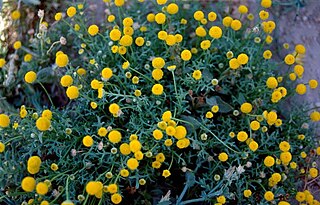
Aaronsohnia is a genus in the family Asteraceae, native to mainly non-salty steppes and deserts in North Africa and Middle East. It was named in 1927 after the agronomist Aaron Aaronsohn by the botanists Otto Warburg (1859–1938) and Alexander Eig (1894–1938).

Coreopsis pubescens, commonly called the star tickseed is a perennial, herbaceous, flowering plant in the Asteraceae family. It is found primarily in the central and southeastern United States. There are also reports of disjunct populations in New England and in northern Indiana, probably escapees from cultivation.
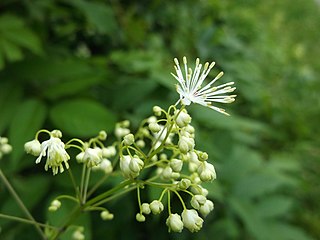
Thalictrum pubescens, the king of the meadow or tall meadow-rue, is a plant in the buttercup family, Ranunculaceae.
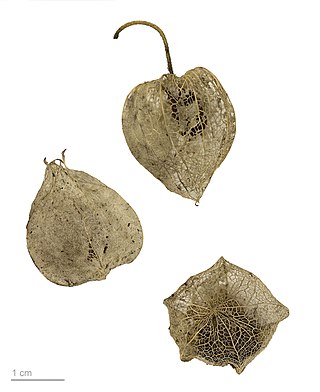
Physalis pubescens is a species of flowering plant in the nightshade family known by many common names, including husk tomato, low ground-cherry and hairy groundcherry in English, and muyaca and capulí in Spanish. It is native from Brazil, but also found in southern half of the United States, Mexico, Central and much of South America. It can be found elsewhere as an introduced species and sometimes a weed. It can grow in many types of habitat, including disturbed areas. This is an annual herb producing a glandular, densely hairy stem up to about 60 cm (24 in) in maximum height from a taproot. The oval or heart-shaped leaves are 3–9 cm (1.2–3.5 in) long and have smooth or toothed edges. The flowers blooming from the leaf axils are bell-shaped and about a centimeter long. They are yellow with five dark spots in the throats, and have five stamens tipped with blue anthers. The five-lobed calyx of sepals at the base of the flower enlarges as the fruit develops, becoming an inflated, ribbed, lanternlike structure 2–4 cm (0.79–1.57 in) long which contains the berry.
Morindeae is a tribe of flowering plants in the family Rubiaceae. The tribe contains about 165 species in 5 genera, found mainly in the tropics and subtropics.
Hypericum pubescens is a perennial herb in the Hypericaceae family. It is in the section Adenosepalum.

Gynochthodes jasminoides is a woody climber or a scrambling shrub in the family Rubiaceae. In Australia it is found on the northern and eastern coasts, in Western Australia, the Northern Territory, Queensland, Victoria, and New South Wales.
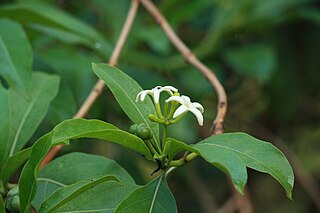
Morinda coreia is a species of flowering plant in the coffee family, Rubiaceae. It was described by Francis Buchanan-Hamilton in 1822.
Gynochthodes hollrungiana is a plant in the family Rubiaceae. Ii is found only in New Guinea.

Calotis pubescens is a species of daisy endemic to Australia and found in New South Wales and Victoria.
Hypericum scruglii is a species of flowering plant of the St. John's wort family (Hypericaceae) that is found in Sardinia.


