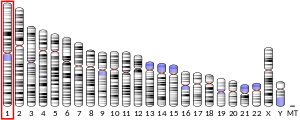
p16, is a protein that slows cell division by slowing the progression of the cell cycle from the G1 phase to the S phase, thereby acting as a tumor suppressor. It is encoded by the CDKN2A gene. A deletion in this gene can result in insufficient or non-functional p16, accelerating the cell cycle and resulting in many types of cancer.

Neprilysin is an enzyme that in humans is encoded by the MME gene. Neprilysin is a zinc-dependent metalloprotease that cleaves peptides at the amino side of hydrophobic residues and inactivates several peptide hormones including glucagon, enkephalins, substance P, neurotensin, oxytocin, and bradykinin. It also degrades the amyloid beta peptide whose abnormal folding and aggregation in neural tissue has been implicated as a cause of Alzheimer's disease. Synthesized as a membrane-bound protein, the neprilysin ectodomain is released into the extracellular domain after it has been transported from the Golgi apparatus to the cell surface.

Maspin is a protein that in humans is encoded by the SERPINB5 gene. This protein belongs to the serpin superfamily. SERPINB5 was originally reported to function as a tumor suppressor gene in epithelial cells, suppressing the ability of cancer cells to invade and metastasize to other tissues. Furthermore, and consistent with an important biological function, Maspin knockout mice were reported to be non-viable, dying in early embryogenesis. However, a subsequent study using viral transduction as a method of gene transfer was not able to reproduce the original findings and found no role for maspin in tumour biology. Furthermore, the latter study demonstrated that maspin knockout mice are viable and display no obvious phenotype. These data are consistent with the observation that maspin is not expressed in early embryogenesis. The precise molecular function of maspin is thus currently unknown.

Death-associated protein kinase 1 is an enzyme that in humans is encoded by the DAPK1 gene.

G protein-coupled receptor 56 also known as TM7XN1 is a protein encoded by the ADGRG1 gene. GPR56 is a member of the adhesion GPCR family. Adhesion GPCRs are characterized by an extended extracellular region often possessing N-terminal protein modules that is linked to a TM7 region via a domain known as the GPCR-Autoproteolysis INducing (GAIN) domain.

Epithelial cell adhesion molecule (EpCAM), also known as CD326 among other names, is a transmembrane glycoprotein mediating Ca2+-independent homotypic cell–cell adhesion in epithelia. EpCAM is also involved in cell signaling, migration, proliferation, and differentiation. Additionally, EpCAM has oncogenic potential via its capacity to upregulate c-myc, e-fabp, and cyclins A & E. Since EpCAM is expressed exclusively in epithelia and epithelial-derived neoplasms, EpCAM can be used as diagnostic marker for various cancers. It appears to play a role in tumorigenesis and metastasis of carcinomas, so it can also act as a potential prognostic marker and as a potential target for immunotherapeutic strategies.
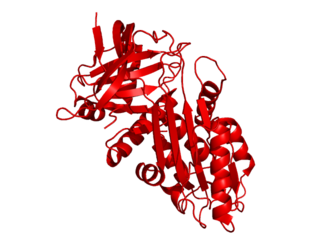
Serpin B3 is a protein that in humans is encoded by the SERPINB3 gene.
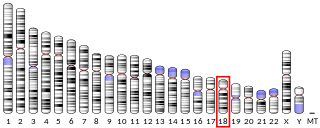
Serpin B4 is a protein that in humans is encoded by the SERPINB4 gene.

Dickkopf-related protein 3 is a protein in the Dickkopf family that in humans is encoded by the DKK3 gene.

Melanoma-associated antigen 4 is a protein that in humans is encoded by the MAGEA4 gene.

Melanoma-derived growth regulatory protein is a protein that in humans is encoded by the MIA gene.
CDKN2A, also known as cyclin-dependent kinase inhibitor 2A, is a gene which in humans is located at chromosome 9, band p21.3. It is ubiquitously expressed in many tissues and cell types. The gene codes for two proteins, including the INK4 family member p16 and p14arf. Both act as tumor suppressors by regulating the cell cycle. p16 inhibits cyclin dependent kinases 4 and 6 and thereby activates the retinoblastoma (Rb) family of proteins, which block traversal from G1 to S-phase. p14ARF activates the p53 tumor suppressor. Somatic mutations of CDKN2A are common in the majority of human cancers, with estimates that CDKN2A is the second most commonly inactivated gene in cancer after p53. Germline mutations of CDKN2A are associated with familial melanoma, glioblastoma and pancreatic cancer. The CDKN2A gene also contains one of 27 SNPs associated with increased risk of coronary artery disease.
A metastasis suppressor is a protein that acts to slow or prevent metastases from spreading in the body of an organism with cancer. Metastasis is one of the most lethal cancer processes. This process is responsible for about ninety percent of human cancer deaths. Proteins that act to slow or prevent metastases are different from those that act to suppress tumor growth. Genes for about a dozen such proteins are known in humans and other animals.
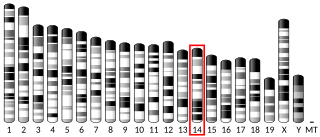
PIN2/TERF1-interacting telomerase inhibitor 1, also known as PINX1, is a human gene. PINX1 is also known as PIN2 interacting protein 1. PINX1 is a telomerase inhibitor and a possible tumor suppressor.

In medicine, desmoplasia is the growth of fibrous connective tissue. It is also called a desmoplastic reaction to emphasize that it is secondary to an insult. Desmoplasia may occur around a neoplasm, causing dense fibrosis around the tumor, or scar tissue (adhesions) within the abdomen after abdominal surgery.

In molecular biology, miR-137 is a short non-coding RNA molecule that functions to regulate the expression levels of other genes by various mechanisms. miR-137 is located on human chromosome 1p22 and has been implicated to act as a tumor suppressor in several cancer types including colorectal cancer, squamous cell carcinoma and melanoma via cell cycle control.

MORT is a long non-coding RNA (lncRNA) of the intergenic type (lincRNA) that is specific to humans and great apes. The MORT transcript is produced in all mortal cell types, but is lost in a large fraction of the most common human cancers and therefore might have a tumor suppressive function.

BRAF-activated non-protein coding RNA is a noncoding RNA that in humans is encoded by the BANCR gene. Long non-coding RNAs (lncRNAs) are involved in the intricate network of cancer and contribute significantly to tumorigenesis and progression. BRAF activated non-coding RNA (BANCR), a 693-bp four-exon transcript, was first identified in 2012 as an oncogenic long non-coding RNA in BRAFV600E melanomas cells and was found to be associated with melanoma cell migration. Apart from melanoma, growing evidence has implicated BANCR in the development and progression of a variety of other human malignancies, including retinoblastoma, lung cancer, and gastric cancer, since its discovery. The pattern of expression of BANCR varies according to the kind of cancer, acting as either a tumour suppressor or an accelerator. Functional BANCR may be a useful biomarker for cancer diagnosis and prognosis assessment. BANCR-targeted therapy may also prove to be a promising new treatment option for human cancers.
CKLF-like MARVEL transmembrane domain-containing protein 3, also termed chemokine-like factor superfamily 3, is a member of the CKLF-like MARVEL transmembrane domain-containing family of proteins. In humans, CMTM2 protein is encoded by the CMTM3 gene located in band 22.1 on the long arm of chromosome 16. This protein is expressed in a wide range of tissues, including fetal tissues. It is highly expressed in the male reproductive system, particularly testicular tissues and may play a role in the development of this tissue. It is also highly expressed in the immune system including circulating blood cells, i.e. B lymphocytes, CD4+ T lymphocytes, and monocytes. However, CMTM3 protein is weakly expressed or unexpressed in the malignant tissues of several types of cancers. In many but not all of theses cancers, this decreased or lack of expression appears due to methylation of the GpC islands in the promoter region, and thereby the silencing, of the CMTM3 gene.
Augurin is a protein that in humans is encoded by the C2orf40 gene.