
Referendums in the United Kingdom are occasionally held at a national, regional or local level. National referendums can be permitted by an Act of Parliament and regulated through the Political Parties, Elections and Referendums Act 2000, but they are by tradition extremely rare due to the principle of parliamentary sovereignty meaning that they cannot be constitutionally binding on either the Government or Parliament, although they usually have a persuasive political effect.

The Scottish devolution referendum of 1997 was a pre-legislative referendum held in Scotland on 11 September 1997 over whether there was support for the creation of a Scottish Parliament with devolved powers, and whether the Parliament should have tax-varying powers. The result was "Yes–Yes": a majority voted in favour of both proposals, and the Parliament was established following an election in 1999. Turnout for the referendum was 60.4%.
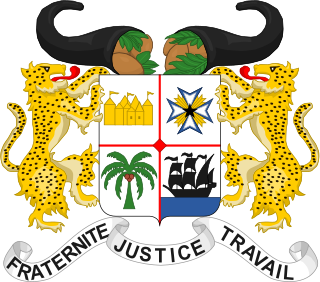
Elections in Benin take place within the framework of a multi-party democracy and a presidential system. Both the President and the National Assembly are directly elected by voters, with elections organised by the Autonomous National Electoral Commission (CENA).
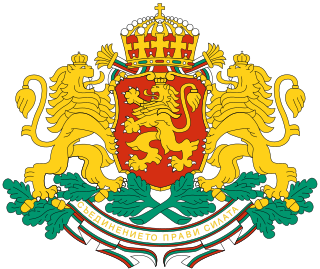
Bulgaria elects on national level a head of state - the president - and a legislature. The president is elected for a five-year term directly by the people. The National Assembly has 240 members, elected for a four-year term by proportional representation in multi-seat constituencies with a 4% threshold. Bulgaria has a multi-party system, in which no one party often has a chance of gaining power alone, and parties must work with each to form governments.

A seven-question referendum was held in Belarus on 24 November 1996. Four questions were put forward by President Alexander Lukashenko on changing the date of the country's independence day, amending the constitution, changing laws on the sale of land and the abolition of the death penalty. The Supreme Council put forward three questions on constitutional amendments by the Communist and Agrarian factions, local elections and the national finances.
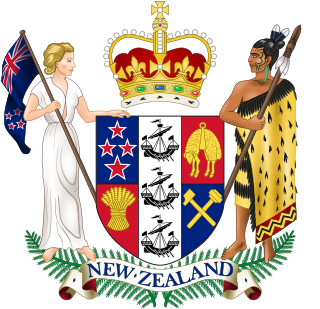
Referendums are held only occasionally by the Government of New Zealand. Referendums may be government-initiated or held in accordance with the Electoral Act 1993 or the Citizens Initiated Referenda Act 1993. Ten referendums have been held so far. Seven were government-led, and three were indicative citizen initiatives.

A constitutional referendum was held in France on 5 May 1946. Voters were asked whether they approved of a new draft Constitution proposed by the Constituent Assembly elected in 1945.
The British Columbia Recall and Initiative Referendum was a referendum held in British Columbia on October 17, 1991. It was concurrent with that year's general election. The referendum posed two questions. They were on whether elected officials should be able to be recalled and whether voters should be given a citizen's initiative. Both questions were decisively approved with over 80% of the electorate voting yes to both questions.

A referendum on the future of the Soviet Union was held on 17 March 1991. The question put to voters was

A referendum on the monarchy was held in Rwanda on 25 September 1961, concurrent with parliamentary elections. The referendum asked two questions: whether the monarchy should be retained after independence the following year, and whether the incumbent, Kigeli V, should remain King.
A four-part referendum was held in Switzerland on 11 May 1884. All four were rejected by voters.
Five referendums were held in Switzerland in 1891. The first was held on 15 March on a federal law on federal officials who had become unemployable due to disability, and was rejected by 79.4% of voters. The second was held on 5 July on a constitutional amendment, and was approved by 60.3% of voters. Two referendums were held on 18 October, one on revising article 39 of the federal constitution and one on a federal law on Swiss tariffs; both were approved. The last was held on 6 December on the question of whether the federal government should purchase the Swiss central railway, but was rejected by 68.9% of voters.

Two referendums were held in San Marino on 20 October 2013. Voters were asked whether they approve of measures to tie salary increase to inflation and whether the country should submit an application to join the European Union. Although both proposals had a majority vote in favour, neither reached the quorum of 32% of registered voters in favour, resulting in both proposals being rejected.
A referendum is a direct vote in which an entire electorate is asked to either accept or reject a particular proposal. This article summarises referendum laws and practice in various countries.
This page lists the public opinion polls that were conducted in relation to the Scottish independence referendum, 2014, that was held on 18 September 2014. Overall, polls showed that support for a "No" vote was dominant until the end of August 2014, when support for a "Yes" vote gained momentum and the gap closed significantly, with at least one poll placing the "Yes" vote ahead. In the final week of the campaign, polls showed the "No" vote to be consistently but somewhat narrowly ahead. There were no exit polls although a YouGov post-election poll was published shortly after the polls closed. For the history of the campaign itself see Scottish independence referendum, 2014, Yes Scotland, and Better Together (campaign).

The Ukrainian sovereignty referendum was conducted on March 17, 1991, as part of the first and only Soviet Union referendum. Throughout the Ukrainian Soviet Socialist Republic, voters were asked two questions, with an additional question attached to the ballot in the historical region of Galicia which includes the Ukrainian provinces of Ivano-Frankivsk, Lviv, and Ternopil.

A referendum on electoral reform was held in Jersey on 15 October 2014, alongside general elections. Voters were asked whether elected constables should continue to automatically become members of the States. Their continued automatic membership was approved by 62% of voters.

The Scottish Government has proposed holding a second referendum on Scottish independence from the United Kingdom (UK). In March 2017, the Scottish Parliament authorised the Scottish Government to request a transfer of powers from the UK Parliament to hold a referendum, but the UK Parliament and Government has not agreed to this request to date. Scotland is one of the four countries of the UK. It has representation in the UK Parliament and the devolved Scottish Parliament has control over some internal matters.
This page lists public opinion polls that have been conducted in relation to the issue of Scottish independence. A referendum on the subject was held on 18 September 2014.


