History of the Russian Republic

Last updated

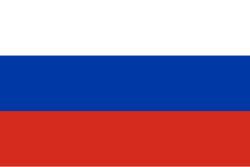
The flag used from 1917 to 1918 Flag of Russia.svg
The flag used from 1917 to 1918

The Russian Republic [a] [b] was a short-lived state which replaced the Russian Empire and ruled over the territory left after the collapse of the monarchy and abdication of Emperor Nicholas II. Proclaimed in March 1917, it was shortly dissolved after the Bolsheviks took over power, which then established Russian SFSR in January 1918. The following is a brief history of the Republic, which goes over the establishment of the Republic followed by the seize of power.

Contents

History

Background

Prime Minister Kerensky in 1917; he led the Republic in July 1917 after a crisis within the country Alexander Kerensky 1917 Crop.jpg
Prime Minister Kerensky in 1917; he led the Republic in July 1917 after a crisis within the country

During World War I, the Russian Empire experienced major protests over food shortages. Hence the popularity of Nicholas II drastically drained. Major unrest began to rise within the country, until a revolution in February occurred, which deposed the Emperor. The revolution led to the abolishment of the monarchy in March 1917 (February in the old Julian calendar). [1]

Establishment

Following the abdication of Emperor Nicholas II, the Republic was unofficially established by the Russian Provisional Government in March 1917, [2] where Georgy Lvov was elected as the head of the Republic. [3] The Provisional Committee of the State Duma was also established, which consisted of mainly liberal politicians. [1]

Lvov announced the restoration of the country, and elections were later held for the members of the Russian Constituent Assembly. Following a crisis in July, Lvov resigned and was replaced with Alexander Kerensky elected as Prime Minister. [4] Kerensky was under the Socialist Revolutionary Party. [5]

Due to mass unsatisfaction across the nation prior, a failed military coup led by Gen. Lavr Kornilov resulted in the official proclamation of the Republic.

Dissolution

In January 1918, a constitution was adopted, with the establishment of the assembly. However the next day, the assembly was dissolved by troops led under Vladimir Lenin after the October Revolution. [6] [7] On January 25, the Bolsheviks seized power and later established the Russian Soviet Federative Socialist Republic. An effort to take over power led by Kerensky resulted in an attempted coup and uprising, which failed. [8] [9]

Kerensky hence fled Russia and went into exile with his family, where he went to Paris and later spent his life in New York City. [10]

Notes

  1. Russian:Российская Республика, romanized:Rossiyskaya Respublika, IPA: [rɐˈsʲijskəjərʲɪsˈpublʲɪkə]
  2. Known also as the Russian Democratic Federative Republic (Russian: Российская Демократическая Федеративная Республика, romanized: Rossiyskaya Demokraticheskaya Federativnaya Respublika)

See also

References

  1. 1 2 Cartwright, Mark (2025-08-08). "Russia's Provisional Government of 1917". World History Encyclopedia. Archived from the original on 2026-02-16.
  2. Gitelman, Zvi. "Russian Revolutions of 1917". The YIVO Encyclopedia of Jews in Eastern Europe. Retrieved 2026-03-07.
  3. "Provisional Government / 1.0 / encyclopedic". 1914-1918 International Encyclopedia of the First World War. Retrieved 2026-03-07.
  4. "RUSSIAN REVOLUTION,". History Channel. Archived from the original on 2007-09-27. Retrieved 2026-03-07.
  5. "Russian Revolution, 1917". Holocaust Encyclopedia. Archived from the original on 2026-02-10. Retrieved 2026-03-07.
  6. "Draft Decree On The Dissolution Of The Constituent Assembly". Marxists. Retrieved 2026-03-07.
  7. "Decree on Constituent Assembly dissolution adopted". Presidential Library. Retrieved 2026-03-07.
  8. "The Russian Revolution". Express to Russia. Retrieved 2026-03-07.
  9. "Constituent Assembly". Soviet History. Retrieved 2026-03-07.
  10. "A Doomed Democracy". Stanford Magazine. 2001-01-01. Retrieved 2026-03-07.