Walnut Grove Plantation, the home of Charles and Mary Moore, was built in 1765 on a land grant given by King George III. The property is located in Roebuck in Spartanburg, South Carolina. Charles Moore was a school teacher and used the 3,000-acre (12 km2) plantation as a farm. The Moores had ten children, and some of their descendants still live within the area.

The John Wesley McElroy House is a historic house museum in Burnsville, Yancey County, North Carolina. The vernacular Federal-Greek Revival style house, which was built in the 1840s, is on the National Register of Historic Places.

The Charles Sweeney Cabin is a structure within the Appomattox Court House National Historical Park. It was registered in the National Park Service's database of Official Structures on June 26, 1989.

The Martin Marmon House is a historic house near the village of Zanesfield in Jefferson Township, Logan County, Ohio, United States. Built by pioneer settler Martin Marmon around the year 1820, it is one of the best remaining examples of Quaker architecture in the area.
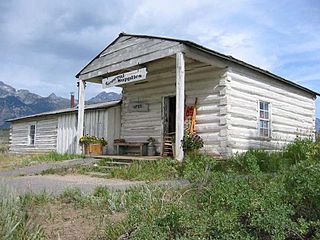
The historical buildings and structures of Grand Teton National Park include a variety of buildings and built remains that pre-date the establishment of Grand Teton National Park, together with facilities built by the National Park Service to serve park visitors. Many of these places and structures have been placed on the National Register of Historic Places. The pre-Park Service structures include homestead cabins from the earliest settlement of Jackson Hole, working ranches that once covered the valley floor, and dude ranches or guest ranches that catered to the tourist trade that grew up in the 1920s and 1930s, before the park was expanded to encompass nearly all of Jackson Hole. Many of these were incorporated into the park to serve as Park Service personnel housing, or were razed to restore the landscape to a natural appearance. Others continued to function as inholdings under a life estate in which their former owners could continue to use and occupy the property until their death. Other buildings, built in the mountains after the initial establishment of the park in 1929, or in the valley after the park was expanded in 1950, were built by the Park Service to serve park visitors, frequently employing the National Park Service Rustic style of design.
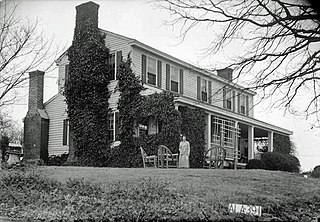
The James Greer Bankhead House, also known simply as the Greer Bankhead House and Forest Home, is a historic house in Sulligent, Alabama. It was added to the National Register of Historic Places on February 13, 1975. It is the only site listed on the National Register in Lamar County.
Keever–Cansler Farm, also known as the Daniel Keever Farm, is a historic farm and national historic district located near Blackburn, Catawba County, North Carolina. The district encompasses 5 contributing buildings. The main house was built in 1879, and is a two-story, brick, I-house dwelling. Also on the property are the contributing granary, frame barn, log barn, and smokehouse / wood shed.
Alexander Moore Farm is a historic farm and national historic district located near Catawba, Catawba County, North Carolina. The district encompasses 5 contributing buildings and 1 contributing site. The main house was built in 1843, and is a two-story, frame, vernacular late Federal style farmhouse. Also on the property are the contributing log wagon shed, smokehouse, frame barn, and log barn.

Maxwell House is a historic home located near Stedman, Cumberland County, North Carolina. It consists of two sections: a coastal cottage form log section dated to about 1790–1815 and a two-story, five-bay, transitional Federal / Greek Revival style section dated to about 1845. Also on the property are the contributing dairy, a shed, cinder block smokehouse, a tin roof stable, and a diminutive slave kitchen.
Cedar Lane, also known as Fountain House, is a historic plantation house located near Leggett, Edgecombe County, North Carolina. It was built in the late-1840s, and is a two-story, double-pile, three bays wide, vernacular Greek Revival style frame dwelling. Also on the property are the contributing cook's house, dairy and electric plant, a smokehouse, tool shed, barn, and carriage house.

Albertus Ledbetter House is a historic home located near Montford Cove, McDowell County, North Carolina. The house was built for the family of Jonathan Ledbetter, a Revolutionary War veteran and pioneer settler. His son Albertus Ledbetter continued to live there as an adult.

The Bruce–Dowd–Kennedy House is a historic house located at Carthage, Moore County, North Carolina.

James Boyd House, also known as Weymouth, is a historic home located at Southern Pines, Moore County, North Carolina. It was designed by architect Aymar Embury II and built in the 1920s. It is a large, rambling Colonial Revival style brick dwelling. It consists of a five-bay, two-story central block flanked by two-story hyphens and wings. It was built by historical novelist James Boyd after World War I. Since 1979, the building has housed the Weymouth Center for the Arts and Humanities.
The George Matthias Bernhardt House is a historic plantation house located near Rockwell, Rowan County, North Carolina.
Murphy-Lamb House and Cemetery is a historic plantation house located near Garland, Sampson County, North Carolina. The house was built about 1835, and is a two-story, five bay by two bay, single pile Federal style frame dwelling. It has a brick pier foundation, side gable roof, and engaged front porch with a shed roof and engaged rear shed. The interior follows a hall-and-parlor plan. Also on the property is the contributing family cemetery. It is identical in form to the Samuel Johnson House.
Samuel Johnson House and Cemetery is a historic plantation house located near Ingold, Sampson County, North Carolina. The house was built about 1840, and is a 2+1⁄2-story, five bay by three bay, single pile Late Federal style frame dwelling. It has a brick pier foundation, side gable roof, and engaged front porch with a shed roof and engaged rear shed. The interior follows a hall-and-parlor plan. Also on the property is the contributing family cemetery. It is identical in form to the Murphy-Lamb House.
James Kerr House is a historic plantation house located near Kerr, Sampson County, North Carolina. The house was built in 1844, and is a 2+1⁄2-story, five bay by two bay, Greek Revival style frame dwelling. It has a gable roof, 2+1⁄2-story rear ell, brick pier foundation, and a pillared double-tier porch central porch. The interior is center-hall in plan. The house is attributed to builder Isaac B. Kelly, who also built the Dr. John B. Seavey House. Also on the property are the contributing original detached kitchen and frame smokehouse.
Asher W. Bizzell House is a historic home located at Rosin, Sampson County, North Carolina. The house was built about 1820, and is a two-room, vernacular-Coastal Carolina cottage form frame dwelling. It has front and rear engaged porches and shed rooms. It was moved to its present site about 1870. The house is adjacent to the separately listed Jonas McPhail House and Annie McPhail Store.
Leak-Chaffin-Browder House is historic home located near Germanton, Stokes County, North Carolina. It was built between about 1853 and 1860, and is a large two-story, Greek Revival-style brick dwelling. It has a Colonial Revival style front porch that dates from the early 20th century. Also on the property are the contributing kitchen-slave/servants' house, granary / tobacco pack house, wood shed, privy, shed, barn, and combination corn crib, equipment shed, and meat house.
Maj. James Scarborough House is a historic plantation house located near Saratoga, Wilson County, North Carolina. It was built about 1821, and is a two-story, five-bay, Federal style frame dwelling with a rear shed addition and exterior end chimneys. It has a one-story rear kitchen wing connected by a breezeway. Also on the property is a contributing latticed well-house.