In the 1970s, Turin moved to the left and was led by the organic centre-left coalition that had also ruled Italy in the 1960s, with a Socialist elected by the city council to be mayor, becoming the first non-Christian Democrat mayor of Turin, alongside one Italian Liberal Party mayor from 1964 to 1965. From 1975 to 1985, Turin was governed by a left-wing coalition between the Communists and the Socialists, underlining the left-wing shift, with the Communist Diego Novelli serving as mayor. From 1985 to 1990, the city was still led by a Socialist but under the Pentapartito coalition, with one each Liberal, Italian Republican Party, and Italian Democratic Socialist Party member serving as mayor from 1990 to 1992. Starting in 1993, the mayor of Turin began to be directly elected. As in other Italian cities, the mayor either resigned due to the Tangentopoli scandal or to make way for the direct election of the mayor.
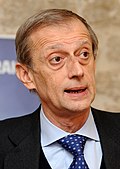
The first direct election resulted in a runoff between a left-wing coalition of Novelli led by the Communist Refoundation Party and the centre-left of Valentino Castellani, who came in second in the first round but ultimately won in the runoff. After two close elections in 1997 and 2001 with the centre-right coalition, the centre-left won in a landslide in 2006 (after the mayor's term had been extended from four to five years) under incumbent Sergio Chiamparino and 2011 under new mayor Piero Fassino. In 2016, the centre-left was defeated in an upset by the Five Star Movement candidate Chiara Appendino, who overcame the first-round deficit to become the first female mayor since 1992 and the first to be popularly elected as well as the youngest. In 2021, Appendino did not run for a second term, and the centre-left was returned to the office of mayor, defeating the centre-right in a landslide in the runoff.
History
Background and early history
Turin's City Hall
Turin was the capital city of the Kingdom of Sardinia, the legal predecessor of the Kingdom of Italy, of which it served as its first capital.[1] The history of Turin's mayors dates back to the Duchy of Savoy and began in 1564 when two to four members of the aristocratic class were chosen annually as mayors; this lasted until 1800.[2] After a 14-year hiatus under the Napoleonic era, with the two mayors (maires) Ignazio Laugier (1801–1805) and Giovanni Negro (1806–1814), the annually elected mayors returned to office until 1848.[2] From 1814 to 1848, Turin was administrated by a city council (decurionaro) led by two annual syndics (sindici).[3] The office of mayor of Turin (sindaco di Torino) was created by the Kingdom of Sardinia in 1848 after the promulgation of the Albertine Statute.[4] The prominent Moderate Party member Luigi de Margherita is commonly recognised as the first mayor of Turin.[5] It was during this period that the first elections (with partial suffrage) were held under the Albertine Statute.[2] This continued regularly until 1922, with the advent of fascism in Italy.[2]
After the creation of the Kingdom of Italy, the mayor of Turin was elected as continuation of the previous office created during the Kingdom of Sardinia.[6] The fascist dictatorship abolished mayors and city councils in 1926, replacing them with an authoritarian podestà chosen by the National Fascist Party.[7] The office of mayor was restored in 1945 during the Allied occupation of Italy.[7] In these 84 years, the longest-serving mayors among the 19 elected were Teofilo Rossi of the Liberals from June 1909 to June 1917; Melchiorre Voli of the Historical Left from January 1887 to October 1894; and Giovanni Notta of the Moderate Party from January 1853 to February 1860.[8] The only ones to be elected for multiple terms were Secondo Frola of the Historical Right from July 1903 to June 1909 and then from October 1917 to November 1919; and Felice Rignon of the Historical Right from November 1870 to December 1877, then from June 1895 to January 1896, and subsequently a third term from March 1896 to April 1898.[8]
Into the 21st century, Turin is one of the strongholds of the centre-left coalition, which won all but one election since 1993 (alongside Naples among major cities), with five wins in a row and the centre-left doing better only in Florence (among major cities) where it won all direct elections since 1995. Although Turin is not considered as left-wing as Bologna, Florence, and other more left-leaning strongholds due to narrow centre-left wins in 1997 and 2001 and the significant influence of moderates, it has a long tradition of left-wing, communist, and socialist politics dating back to the post-war period, with the Italian Communist Party resulting the most voted party from 1970 to 1990. For example, Milan, which also had a strong socialist tradition, was for a time a stronghold of the centre-right coalition. Even as Piedmont (among the most representative Italian regions of national politics) shifted to the right in the late 2010s and early 2020s, Turin remained to the left. As with Naples, which saw a turn to the left in the 2010s under the mayor Luigi de Magistris, Appendino's win was to a certain extant a similar shift to the left and a dissatisfaction with the centre-left that did not entail support for the centre-right. Although at that time the Five Star Movement was not left-wing in the sense that it rejected the left–right political spectrum, Appendino's career began within the local section of Left Ecology Freedom and was a supporter of Nichi Vendola, and in subsequent years maintained a progressive profile similar to that of the anti-establishment left, which is critical of alliances with the Democratic Party. As of the 2021 Italian local elections in Turin, no centre-right or right-wing mayor was elected, with all mayors being members of the centre-left (through its various incarnations such as the Alliance of Progressives and The Olive Tree or through its main parties such as the Democratic Party of the Left, the Democrats of the Left, and the Democratic Party) or the Five Star Movement.[10]
Among the 20 mayors since the war, only two were women: the Italian Socialist Party member Maria Magnani Noya from July 1987 to July 1990 and the Italian Republican Party member Giovanna Cattaneo Incisa from February to December 1992.[2] The early 1990s proved to be turbulent years.[9] Cattaneo Incisa followed the rule of Italian Liberal Party member Valerio Zanone, who governed from July 1990 until his resignation in December 1991.[9] This resulted in the appointment of Baldassarre Furnari of the Italian Democratic Socialist Party between January and February 1992 to lead the local caretaker government, before Cattaneo Incisa was elected mayor.[9] Since 1993, under provisions of new local administration law, the mayor of Turin is chosen by direct election, originally every four then every five years.[10] The office of the deputy mayor of Turin was officially created in 1993 with the adoption of the new local administration law. The deputy mayor is nominated and eventually dismissed by the mayor, and can hold several responsibilities. For example, Michela Favaro, the incumbent deputy mayor, was given responsibility for Personnel, Property, Legality, and Procurement.[12]
Valentino Castellani was the first popularly elected mayor of Turin as part of the centre-left coalition, starting a series of centre-left wins, including one against a left-wing coalition led by the Communist Refoundation Party (1993), two narrow wins thanks to the support of the Communist Refoundation Party and the Party of Italian Communists (1997 and 2001), and two landslide victories in the first round (2006 and 2011).[13] His administration focused on transforming Turin from an industrial city to a more diverse European hub, involving various stakeholders in governance, and oversaw both significant urban transformation as Turin moved beyond its industrial past and the successful candidacy of Turin for the 2006 Winter Olympics.[1] Economically, Castellani's aim was to reduce the city's economic and perceived image-impairing dependence on Fiat (what was called the industrial monoculture) and promote development in other sectors, primarily the tertiary sector and cultural activities.[1] In this area, results fell short of expectations and Sergio Chiamparino, Castellani's successor, attempted to refocus attention on the automotive industry's role in the city's economy. Chiamparino was succeeded in 2011 by Piero Fassino, who followed a similar line to Castellani.[1] In an upset, Chiara Appendino of the Five Star Movement was elected in 2016, overturning Fassino's lead in the runoff. Due to the COVID-19 pandemic in Italy, she remained in office for around four more months in 2021 after her original term had expired (October rather than June).[14]
In addition to Fiat and automotive politics, Turinese politics was affected by the Turin–Lyon high-speed railway (TAV) and the No TAV movement. Appendino became the first woman to be popularly elected as mayor of Turin, the first since 1992 and the youngest, and the second elected mayor of a major city for the anti-establishment and populist Five Star Movement (Virginia Raggi was elected mayor of Rome on the same day as Appendino but was sworn in on 22 June compared to Appendino's on 30 June), which in the 2016 Italian local elections underwent a successful wave of mayors elected, including in Rome with Raggi.[15] At that time, the Five Star Movement defined itself as neither left nor right, and won the mayoralty in part due to left-wing dissatisfaction. Although Appendino's concerns included a balanced budget, resulting in a series of cuts, she enacted a series of progressive reforms, most notably legally recognising same-sex families (a first in Italy). She also oversaw the candidacy of Turin (alongside Milan and Cortina d'Ampezzo) for the 2026 Winter Olympics, which ultimately collapsed after Appendino withdrew it in a polemic with CONI over the lack of sports assigned to Turin, the organisation of the ATP Finals (2021–2026), and a series of funds allocations from the Italian government. Appendino did not run for a second term in the 2021 election, which was postponed by a few months due to the COVID-19 pandemic and returned the centre-left to power, with an increased presence of the left within the centre-left coalition; unlike other cities and regions where the Democratic Party and the Five Star Movement are allies as part of the Progressive Camp, the Five Star Movement went back to the opposition. The incumbent mayor Stefano Lo Russo, a university professor of Geology who is a member of the Catholic wing of the Democratic Party, was elected mayor with a significant margin in the runoff against the centre-right coalition candidate.[10]
List of mayors
Kingdom of Sardinia (1814–1848)
Syndics
Term start
Term end
Party
Paolo Mazzetti di Saluggia Giovanni Battista Arbaudi
↑Nominated by the prefect after the mayor and the members of the City Council resigned in order to hold a new election under the provision of the new local electoral law
↑As a result of the majority bonus granted by the electoral law to the candidate who wins the runoff if no coalition reaches more than 50% of the votes in the first round
Mayoral and City Council election, 1997
The election took place in two rounds: the first on 27 April, the second on 11 May 1997.[14]
Results
Summary of the 1997 Turin City Council election results
↑Officially endorsed the centre-left coalition candidate only in the second round
↑33.26% without the Communist Refoundation Party in the first round
↑As a result of the majority bonus granted by the electoral law to the candidate who wins the runoff if no coalition reaches more than 50% of the votes in the first round
Mayoral and City Council election, 2001
The election took place in two rounds: the first on 13 May, the second on 27 May 2001.[14]
Results
Summary of the 2001 Turin City Council election results
↑As a result of the majority bonus granted by the electoral law to the candidate who wins the runoff if no coalition reaches more than 50% of the votes in the first round
↑As a result of the majority bonus granted by the electoral law to the candidate who wins the runoff if no coalition reaches more than 50% of the votes in the first round
↑As a result of the majority bonus granted by the electoral law to the candidate who wins the runoff if no coalition reaches more than 50% of the votes in the first round
De Nardo, Tony (19 October 2021). "Sono ventuno i sindaci di Torino dal dopoguerra"[There have been twenty-one mayors of Turin since the post-war period]. CittAgorà (in Italian). Archived from the original on 18 December 2025. Retrieved 20 December 2025.
Raniero, Flavio (8 January 2025). "I sindaci di Torino dal 1800 al 1850"[The mayors of Turin from 1800 to 1850] (in Italian). Associazione Amici della Fondazione Cavour. Archived from the original on 20 December 2025. Retrieved 20 December 2025.
Raniero, Flavio (5 November 2025). "I sindaci di Torino dal 1851 al 1900"[The mayors of Turin from 1851 to 1900] (in Italian). Associazione Amici della Fondazione Cavour. Archived from the original on 20 December 2025. Retrieved 20 December 2025.
"Storico Elezioni Comunali di Torino (TO)"[History of the Turin Municipal Elections (TO)]. Tuttitalia.it (in Italian). 2024. Archived from the original on 16 February 2025. Retrieved 20 December 2025.
"Torino". Treccani (in Italian). 28 July 2023. Retrieved 29 December 2025.
Borio, Ferruccio (1980). I sindaci della libertà. Torino dal 1945 ad oggi[The Mayors of Freedom: Turin from 1945 to Today] (in Italian). Edizioni Eda. Retrieved 20 December 2025– via Google Books.
Achilli, Massimo; etal. (September 2009). Il premio di maggioranza: applicazione e implicazioni nelle elezioni comunali[The Majority Bonus: Application and Implications in Municipal Elections](PDF). XXIII Convegno SISP (in Italian). LUISS Guido Carli, Rome: Società Italiana di Scienza Politica. Archived from the original(PDF) on 28 February 2013. Retrieved 21 December 2025.
"Decreto legislativo 18 agosto 2000, n. 267"[Legislative Decree no. 267 of 18 August 2000]. Gazzetta Ufficiale (in Italian). No.267. 28 September 2000. Retrieved 21 December 2025– via Normattiva.
"Legge 25 marzo 1993, n. 81"[Law no. 81 of 25 March 1993]. Gazzetta Ufficiale (in Italian). No.72 (Gu Serie Generale, Supplemento Ordinaro No. 32). 27 March 1993. Retrieved 21 December 2025– via Normattiva.
External links
I Sindaci di Torino at Città di Torino – photo gallery of the mayors of Turin, 1945–2011 (in Italian)
This page is based on this Wikipedia article Text is available under the CC BY-SA 4.0 license; additional terms may apply. Images, videos and audio are available under their respective licenses.