
The Southern Alps are a mountain range extending along much of the length of New Zealand's South Island, reaching its greatest elevations near the range's western side. The name "Southern Alps" generally refers to the entire range, although separate names are given to many of the smaller ranges that form part of it.

The FIS Alpine Ski World Cup is the top international circuit of alpine skiing competitions, launched in 1966 by a group of ski racing friends and experts which included French journalist Serge Lang and the alpine ski team directors from France and the USA. It was soon backed by International Ski Federation president Marc Hodler during the FIS Alpine World Ski Championships 1966 at Portillo, Chile, and became an official FIS event in the spring of 1967 after the FIS Congress at Beirut, Lebanon.

The chamois or Alpine chamois is a species of goat-antelope native to the mountains in Southern Europe, from the Pyrenees, the Alps, the Apennines, the Dinarides, the Tatra to the Carpathian Mountains, the Balkan Mountains, the Rila–Rhodope massif, Pindus, the northeastern mountains of Turkey, and the Caucasus. It has also been introduced to the South Island of New Zealand. Some subspecies of chamois are strictly protected in the EU under the European Habitats Directive.

The European Car of the Year award is an international Car of the Year award established in 1964 by a collective of automobile magazines from different countries in Europe. The current organising media of the award are Auto (Italy), Autocar, Autopista (Spain), Autovisie (Netherlands), L'Automobile Magazine (France), Stern (Germany) and Vi Bilägare (Sweden).

The Simca 1307 is a large family car produced by Chrysler Europe and subsequently PSA Peugeot Citroën from 1975 to 1986. Codenamed 'C6' in development, the car was styled in the United Kingdom by Roy Axe and his team at Whitley, and the car was engineered by Simca at Poissy in France.

Grevillea, commonly known as spider flowers, is a genus of about 360 species of evergreen flowering plants in the family Proteaceae. Plants in the genus Grevillea are shrubs, rarely trees, with the leaves arranged alternately along the branches, the flowers zygomorphic, arranged in racemes at the ends of branchlets, and the fruit a follicle that splits down one side only, releasing one or two seeds.

Ohakune is a small town at the southern end of Tongariro National Park, close to the southwestern slopes of the active volcano Mount Ruapehu, in the North Island of New Zealand.

The Alpine Fault is a geological fault that runs almost the entire length of New Zealand's South Island, being about 600 km (370 mi). long, and forms the boundary between the Pacific plate and the Australian plate. The Southern Alps have been uplifted on the fault over the last 12 million years in a series of earthquakes. However, most of the motion on the fault is strike-slip, with the Tasman district and West Coast moving north and Canterbury and Otago moving south. The average slip rates in the fault's central region are about 38 mm (1.5 in) a year, very fast by global standards. The last major earthquake on the Alpine Fault was in about 1717 AD with a great earthquake magnitude of 8.1± 0.1. The probability of another one occurring before 2068 was estimated at 75 percent in 2021.

Karaka, also known as the New Zealand laurel, is a medium-sized evergreen tree in the family Corynocarpaceae. It is endemic to New Zealand and is common throughout the North Island and less common in the South Island. Karaka trees are also found on the Chatham Islands, Kermadec Islands, and the Three Kings Islands. It is mostly a coastal tree, though in the North Island, it can also be found in inland forests.

Swiss Air-Rescue is a private, non-profit air rescue service that provides emergency medical assistance in Switzerland and Liechtenstein. Rega was founded on 27 April 1952 by Rudolf Bucher, who believed that the Swiss rescue service needed a specialized air branch. Rega mainly assists in mountain rescues, but also operates in other terrains when necessary, especially in life-threatening emergencies. Rega also provides a repatriation and medical advice service for members who experience a medical emergency while abroad and local treatment is not available.
The Southerner was a passenger express train in New Zealand's South Island between Christchurch and Invercargill along the South Island Main Trunk, that ran from 1 December 1970 to 10 February 2002. It was one of the premier passenger trains in New Zealand and its existence made Invercargill the southernmost passenger station in the world. The service will return for a limited time in 2025.

Jade Dragon Snow Mountain is a mountain massif or small mountain range in Yulong Naxi Autonomous County, Lijiang, in Yunnan province, China. Its highest peak is named Shanzidou or Shan-Tzu-tou (扇子陡) and it is 5,596 m (18,360 ft) above sea level.
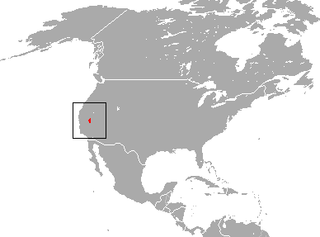
The Mount Lyell shrew is a species of mammal in the family Soricidae. It is named for Mount Lyell in Yosemite National Park, the area where the shrew has been most commonly found.

The Hornbein Couloir is a narrow and steep couloir high to the west on the north face of Mount Everest in Tibet, that extends from about 8,000 to 8,500 m elevation, 350 metres below the summit.

Emily Cumming Harris was one of New Zealand's first professional women painters. She chiefly painted New Zealand plants and flowers and worked mainly in water colour. She was born in Plymouth, Devon, England in about 1837 but spent most of her life in Nelson, New Zealand.
Penwiper is a common name that can refer to a number of plant species in different nations.
Laurence Fearnley is a New Zealand short-story writer, novelist and non-fiction writer. Several of her books have been shortlisted for or have won awards, both in New Zealand and overseas, including The Hut Builder, which won the fiction category of the 2011 NZ Post Book Awards. She has also been the recipient of a number of writing awards and residencies including the Robert Burns Fellowship, the Janet Frame Memorial Award and the Artists to Antarctica Programme.

Notothlaspi is a genus of flowering plants belonging to the family Brassicaceae.
Lobelia macrodon is a species of small flower from alpine habitats in New Zealand.
Puccinia whakatipu is a species of rust on Leptocarpus in New Zealand.

