Tabor Robak | |
|---|---|
| Robak in 2017 | |
| Born | May 31, 1986 Portland, Oregon, U.S. |
| Nationality | American |
| Education | Pacific Northwest College of Art (BFA) |
| Occupation | Contemporary artist |
| Website | www |
Tabor Robak (born May 31, 1986) is an American contemporary artist working in New Media, living in Paris, France. Robak is primarily known for his trailblazing digital art practice, multi-channel video installations and generative artworks. [1] Robak's work has been exhibited and collected internationally at renowned institutions such as Museum of Modern Art, Serpentine, National Gallery of Victoria, Albright Knox, and Migros Museum. [2] In 2014, Robak was named in Forbes 30 Under 30 in Art. [3] Robak has guest lectured MFA students at Yale and co-taught an MFA course on real time 3D at New York University. [4] [2]
The Metropolitan Museum of Art describes Robak as a "prodigy of digital effects" and "the most talented and interesting artist using computer graphics today." [5]
Tabor Robak was born in Portland, Oregon. He began working freelance as a photoshop editor at the age of 13, before earning a BFA from Pacific Northwest College of Art in Portland, Oregon. [6] After earning his degree in 2010, Robak moved to New York City and began participating in group shows internationally at places such as MoMA PS1, Rhizome, Thaddeus Ropac, and the Lyon Biennale before his first solo exhibition at Team Gallery in 2013. [7]
During college, Robak began incorporating digital tools into his practice and uploading his work to his website and sites like tumblr to connect with the growing community of net artists. Robak's early works consisted of 3D interactive environments, to be accessed on the artist's website. [8] These pieces, which the artist described as having a "desktop screensaver aesthetic," sought to isolate digital space as a fact, an abstracted, alternate reality. Many of Robak's works during this period were featured on Rhizome including his first online piece, Reality CPU, along with works such as Digital Spirituality, Carbon and Mansion. [9]
In 2011 Robak formed HDBOYZ with fellow artists and friends, Alex-Kelly Hoffman, Ryder Ripps, Aaron David Ross and Colin Self. Dubbed by DIS Magazine as "the first internet boy band," they performed five songs including Photoshopped and HDMI in Love? at MoMA PS1 during the closing night of Ryan Trecartin’s solo show. [10] [11] [12]
In 2011, Robak designed and animated a music video in collaboration with artist and musician Fatima Al Qadari, for her song, Vatican Vibes. The video created a “visual analogy between the Vatican’s 'centuries-old mechanisms of control over people' and video gamers’ “godlike power over populations." [13] The video premiered at the New Museum and toured internationally from 2011-2013. [14]
In 2012, Robak created a downloadable interactive virtual environment for Gatekeeper’s album, EXO which was set to the music and doubled as the band’s tour visuals. [15]
In 2013, Robak made his solo show debut at Team Gallery in New York City, entitled, “Next-Gen Open Beta.” Artforum described the show as, "visually breathtaking" with "painstakingly detailed environments that make as strong a case for technological accelerationism as they do for the somewhat old-world values of craftsmanship and painterly illusionism” and with imagery as “alienating as it is immersive” [16] The New York Observer called the exhibition "one of the major events of the season" both because of the quality of the work and because it was "signaling [digital art's] newfound acceptance by big-league galleries like Team. [1] Xenix, was later acquired by the Museum of Modern Art. [17]
In 2015, Robak exhibited his second solo show at Team Gallery entitled, Fake Shrimp. The show featured 4 CGI works and received wide critical acclaim. Roberta Smith reviewed the exhibition in The New York Times , praising Robak's virtuosity, his dazzling visuality, and "his meshing of high and low; digital and labor-intensive; art and advertising." [18] Lloyd Wise from Artforum described the show as “MDMA for the eye,” “sparkling and synthetic, color-splashed and sumptuous, gloriously seamless and refined." [19] Wise described Robak’s mastery of digital tools as having a “next-level skill set of a virtuoso." [19] New York Magazine dubbed Robak, "Pixelangelo" in reference to level of detail and the labor intensive process required in producing the show, noting that while the imagery was evocative of video games, the work was "exponentially more elaborate." [20] Where’s My Water? was acquired by the Metropolitan Museum of Art in 2017. [5]
In 2016, Robak presented his third solo show, Sunflower Seed, at Team Gallery’s Venice Beach location in Los Angeles. The exhibition was also shown that summer in Sweden at Johan Berggren Gallery in Malmo. [21] Critics praised Robak for having “choreographed a masterly and complex ballet of pixels” and noted the imagery was “meditative, whimsical, mesmerizing and almost impossible to walk away from.” The work was a thematic departure, with Robak exploring scenes from the natural world. [22] Skypad was later added to the permanent collection of AkzoNobel Art Foundation, in Amsterdam. [23]
In 2017, Robak exhibited his fourth solo show, Quantaspectra, at Team Gallery in New York City. Named for quantification via the color system, the show featured seven single channel works, each representing a different color and exploring different themes in a universe creation. [24]
In 2019, Robak presented his 6th solo show, MENTAL, at vonammon co in Washington, DC. Arguably, his “most experimental exhibition to date," Robak explores “the bankruptcy of branding” and the “dystopian divide [between mind and body] that may be deepened by art.” The show received positive reviews with Artforum describing Robak’s mastery of the technology as "operating like a dark-web Nam June Paik.” The publication also noted Robak’s “critique is more specifically attuned to how capitalism elicits feelings of frustration and ambivalence in the field of contemporary art. [25] [26] [27] Sculpture magazine compared the works to vanitas that “impart a loss of permanence and control, while paradoxically, signaling our shared vulnerability.” [26]
In 2019, Robak exhibited Xenix, at the Museum of Modern Art, as part of the group show, New Order: Art and Technology in the 21st Century. The show was curated with work from the museum’s permanent collection and organized by Michelle Kuo. The New York Times called Robak’s work, “one of the most significant” in the exhibition. [28]
In 2019, Robak exhibited, Flatearth.io, his first solo show in the Netherlands, at Upstream Gallery in Amsterdam. Critics called Robak, “the most compelling artist today working with computer-generated imagery” and praised his ability to elevate “the craftsmanship of CGI to the standing of intellectual art.” [29]
In December 2020, Robak presented, Megafauna, an 80 screen video installation commissioned by the National Gallery of Victoria for the museum’s Triennial, which featured an “immersive installation of computer-generated animations that surround the viewer in an entire gallery, and was “the biggest work he has ever made.” [30]
In 2020, Robak's work was featured in group exhibitions worldwide including, Better off Online, presented by KÖNIG GALERIE at Ars Electronica; Art in the Age of Anxiety at Sharjah Art Foundation in Dubai; Open World: Video Games and Contemporary Art, at the Currier Museum of Art. [31] [32] [33]
In 2021, Robak created Butterfly Room: Special Edition, for the group exhibition, World on a Wire, presented by Rhizome as part of a collaboration with Hyundai in Beijing. [34]
In 2021, Robak's work was included in institutional group shows internationally including, How to Win at Photography as Fotomuseum Winterthur in Switzerland, and Reflections beyond the Surface at AkzoNobel Art Foundation in the Netherlands. [35] [36]
In 2022, Robak had a series of notable achievements, including the acquisition of his time-reactive procedurally generated artwork, Colorwheel, by the Whitney Museum in New York. [37] He also experienced success in the NFT realm with his work, Colorspace, being selected for the curated collection on Art Blocks and selling out within an hour of its release. [38] Additionally, Robak's 2013 artwork, Free-to-Play, was showcased at the Play - Video Game Art and Beyond exhibition held at the Palace of Venaria in Italy. [39]
In 2023, Colorwheel, was featured in the exhibition Behind The Screens, at the CODA Museum, in the Netherlands. [40] Later that year Robak gained representation by Super Dakota gallery in Brussels, Belgium. [41] Additionally, Robak's work, Drinking Bird Universe, was included in the book Internet_Art: From the Birth of the Web to the Rise of NFTs by Omar Kholeif and published by Phaidon. [42]
Robak programmed and designed the animated sequences in the 2015 film, #Horror, directed by Tara Subkoff, curated by Urs Fischer and starring Chloë Sevigny and Natasha Lyonne. [43] The film premiered at the Museum of Modern Art. [44]
Robak’s work, Mini Jumbo, a miniature Jumbotron sculpture from his show MENTAL, was showcased at Maison Margiela's concept store in Soho in as part of the first series of installations at the experimental boutique. [45]
In 2019, Robak created a custom video loop of a cityscape set to unreleased tracks by DJ Hell for Balenciaga. [46]
Robak's work utilizes the visual vocabulary of modern video games, advertising and animated film, to examine societal perceptions of the digital and the real. [47] [20] His work often deals with the tension between human nature and technology, exploring themes such as, late capitalism, mass media, trauma, domestic life, weapons, violence, robotics, healthcare and privacy. [26] [27] [30] [48]
Robak commonly employs several computer programs including Unity, Adobe After Effects, and Cinema 4D to create multi-channel video installations, procedurally generated animations, and electronic sculpture. [49] [19] [27] He often incorporates novel technology including transparent television monitors, mini Raspberry Pi computers, and builds custom PCs for his procedurally generative works. [50]
In his procedurally generated work, Robak programs software to create algorithmic visual compositions that mimic the gestures of a painter's brush stroke. He embraces generative code to produce those fleeting, but perfect moments akin to the serendipity of nature’s rhythms, believing the open-ended quality of this process presents more opportunities to replicate these moments than deliberate design. [6]
Critics have referred to Robak’s proficiency with the software as “virtually unmatched” in the Art World, and praised Robak for bringing “an old-school sense of integrity and craft—even disciplinary rigor—to his digital practice, “exploring the medium of CGI the way Michelangelo did marble." [19] [20] His working method has been described as "fluid, intuitive, and obsessive" creating extremely "detailed and meticulous" images and software that can take "months to compose." [6] [19]
In 2014, Swiss Institute commissioned, A*, from Robak for the exhibition, The Saint Petersburg Paradox. [51]
In 2016, Public Art Fund commissioned, Liquid Demo for the 117-by-56-foot, 360 degree LED screen in the Oculus at Barclays Center, for the exhibition, Commercial Break. [52]
In 2017, Robak was commissioned by Microsoft to create an artwork for the 40-foot screen on the façade of their flagship store on 5th Avenue. [53]
The National Gallery of Victoria commissioned an 80 screen video installation from Robak for the museum’s 2020 Triennial. [30]
In 2021, Hyundai and Rhizome commissioned Butterfly Room: Special Edition for the 50-foot LED video wall at Hyundai Motorstudio in Seoul, South Korea. [54]
Robak’s work is currently held in the following public collections: [7]
2023
2022
2021
2019
2018
2017
2016
2015
(selected by Yuko Hasegawa)
Migros Museum, Zurich, Switzerland, Toys Redux - On Play and Critique (curated by Raphael Gygax & Judith Welter)
(curated by Lisa Schiff, Leslie Fritz and Eugenio Re Rebaudengo)
(curated by Eugenio Re Rebaudengo) 2014
Christine Sciulli is a New York-based video installation/intervention artist. Her works have been seen on the street, in New York area galleries and institutions. Exhibitions include The Arts Center in St. Petersburg, Florida and New York’s Islip Art Museum.
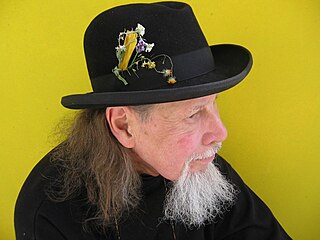
Willoughby Sharp was an American artist, independent curator, independent publisher, gallerist, teacher, author, and telecom activist. Avalanche published interviews they conducted with contemporary artists such as Vito Acconci, Dennis Oppenheim and Yvonne Rainer. Sharp also was contributing editor to four other publications: Impulse (1979–1981); Video magazine (1980–1982); Art Com (1984–1985), and the East Village Eye (1984–1986). He published three monographs on contemporary artists, contributed to many exhibition catalogues, and wrote on art for Artforum, Art in America, Arts magazine, Laica Journal, Quadrum and Rhobo. He was editor of the Public Arts International/Free Speech documentary booklet in 1979. Sharp received numerous grants, awards, and fellowships; both as an individual or under the sponsorship of non-profit arts organizations.
Urs Fischer is a Swiss-born contemporary visual artist living in New York City and Los Angeles. Fischer’s practice includes sculpture, installation, photography, and digitally-mediated images.
Mark Tribe is an American artist. He is the founder of Rhizome, a not-for-profit arts organization based in New York City.
Federico Solmi is a visual artist based in Brooklyn, New York.
Sanford Biggers is a Harlem-based interdisciplinary artist who works in film/video, installation, sculpture, music, and performance. An L.A. native, he has lived and worked in New York City since 1999.
Eric Wesley is an American artist. Wesley was born in Los Angeles, California, where he continues to live and work. He has held solo exhibitions in galleries internationally as well as at the Museum of Contemporary Art, Los Angeles and Foundation Morra Greco, Naples, Italy.
Mariah Robertson is an American artist. She lives in New York City.
Angela Washko is an American new media artist and facilitator based in New York. She is currently associate professor of art at Carnegie Mellon University. Washko mobilizes communities and creates new forums for discussions of feminism where they do not exist.
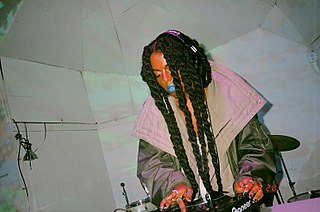
Juliana Huxtable is an American artist, writer, performer, DJ, and co-founder of the New York–based nightlife project Shock Value. Huxtable has exhibited and performed at a number of venues including Reena Spaulings Fine Art, Project Native Informant, Artists Space, the New Museum, the Museum of Modern Art, Portland Institute for Contemporary Art, and Institute of Contemporary Arts. Huxtable's multidisciplinary art practice explores a number of projects, such as the internet, the body, history, and text, often through a process she calls "conditioning." Huxtable is a published author of two books and a member of the New York City–based collective House of Ladosha. She is on the roster of the talent agency Discwoman, a New York based collective and talent agency that books DJs for parties and events around the world. She previously lived and worked in New York City, and has been based in Berlin since 2020.
Jacolby Satterwhite is an American contemporary artist who creates immersive installations. He has exhibited work at the Minneapolis Institute of Art, the Museum of Contemporary Art, Chicago, Louis Vuitton Foundation in Paris, the New Museum and the Museum of Modern Art, both in New York City, and the Institute of Contemporary Art, Philadelphia. In addition to MoMA, his work is in the public collections of the Studio Museum in Harlem, the Seattle Art Museum, the Whitney Museum of American Art, the Kiasma, and the San Jose Museum of Art. Satterwhite has also served as a contributing director for the music video that accompanied Solange's 2019 visual album When I Get Home and directed a short film accompaniment to Perfume Genius's 2022 studio album Ugly Season.
Sondra Perry is an interdisciplinary artist who works with video, computer-based media, installation, and performance. Perry's work investigates "blackness, black femininity, African American heritage" and the portrayal or representation of black people throughout history, focusing on how blackness influences technology and image making. Perry explores the duality of intelligence and seductiveness in the contexts of black family heritage, black history, and black femininity. "Perry is committed to net neutrality and ideas of collective production and action, using open source software to edit her work and leasing it digitally for use in galleries and classrooms, while also making all her videos available for free online. This principle of open access in Perry's practice aims to privilege black life, to democratize access to art and culture, and to offer a critical platform that differentiates itself from the portrayal of blackness in the media". For Perry, blackness is a technology which creates fissures in systems of surveillance and control and thus creates inefficiency as an opportunity for resistance.
Faith Holland is a new media artist based in New York City. Her work engages with deconstructing female sexualization in the digital space and incorporates sculpture, video, and photography.
Paul Kneale is a London based artist whose practice explores the impact of digital technology on the world's perception of reality and art.
Aria Dean is an American artist, critic, and curator. Until 2021, Dean served as Curator and Editor of Rhizome. Her writings have appeared in various art publications including Artforum, e-flux, The New Inquiry, Art in America, and Topical Cream. Dean has exhibited internationally at venues such as Foxy Production and American Medium in New York, Chateau Shatto in Los Angeles, and Arcadia Missa in London. Dean also co-directs As It Stands LA, an artists project space that opened in 2015. Dean lives and works in New York City and Los Angeles. She is represented by Greene Naftali.
Susan Hoffman (b.) is a quilt artist. She began quilting while still in high school, and with her friend and fellow quilt artist Molly Upton, opened a small shop to sell artwork in her hometown in Vermont. Hoffman attended college at the University of Denver.
Siebren Versteeg is an American artist known for his painting and video works created through digital processes. His multivalent practice responds to the technology of our time and the way we consume and deploy those technologies.
Caitlin Cherry is an African-American painter, sculptor, and educator.
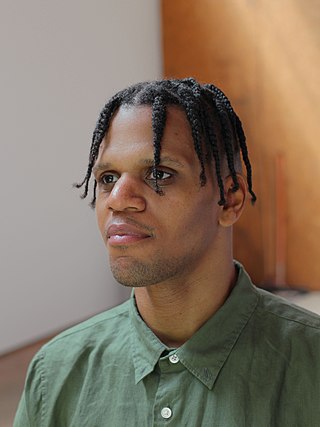
American Artist is a contemporary artist working in new media, video, installation and writing. They legally changed their name to American Artist in 2013, in order to re-contextualize the definition of the term "American artist"—at once taking on the name of an anonymous term while becoming the embodiment of its meaning. Their work, in Artist's words, focuses on themes surrounding "blackness, being, and resistance in the context of networked virtual life."
Dave Greber is an American digital artist and installation artist known for his digital animations and Video installations. His work explores the relationship between the natural world, mysticism and contemporary modes of communication.
{{cite web}}: CS1 maint: multiple names: authors list (link){{cite web}}: CS1 maint: multiple names: authors list (link){{cite news}}: CS1 maint: multiple names: authors list (link)