Outline of lichens

Last updated

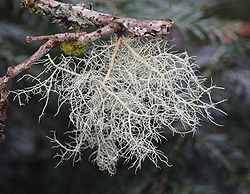
Usnea filipendula - one of about 20,000 described species of lichen Usnea filipendula 170406a.jpg
Usnea filipendula – one of about 20,000 described species of lichen

The following outline provides an overview of and topical guide to lichens.

Contents

Lichens are composite organisms made up of multiple species. They comprise a fungal partner, one or more photosynthetic partners, which can be either green algae or cyanobacteria, and, in at least 52 genera of lichens, a yeast. [1] In American English, "lichen" is pronounced the same as the verb "liken" ( /ˈlkən/ ). In British English, both this pronunciation and one rhyming with "kitchen" ( /ˈlɪən/ ) are used. [2]

Descriptions of lichens

A lichen can be described as all of the following:

  • Composite organism – a symbiotic life form composed of multiple partners from different biological domains, families and kingdoms, and from different phyla, classes and divisions within those domains and kingdoms. In the case of lichens, a fungal partner (the mycobiont) combines with one or more photosynthetic partner(s) (the photobiont ) as well as (in some cases) a yeast.
  • Eukaryote (domain) – organisms with a cell nucleus within a nuclear envelope; both the mycobiont and any algal partners fall into this domain. [3]
  • Fungi (kingdom) – the fungal partner and any yeast partner fall into this kingdom. [1]
  • For the biological classes and families these fungi belong to, see below.
  • Prokaryote (domain) – organisms without a cell nucleus; any cyanobacterial partner falls into this domain. [3]

Nature of lichens

Schematic cross section of foliose lichen:
(a) The cortex is the outer layer of tightly woven fungal filaments (hyphae)
(b) This photobiont layer has photosynthesizing green algae
(c) Loosely packed hyphae in the medulla
(d) A tightly woven lower cortex
(e) Anchoring hyphae called rhizines, where the fungus attaches to the substrate Lichen cross section - heteromeric thallus.svg
Schematic cross section of foliose lichen:
(a) The cortex is the outer layer of tightly woven fungal filaments (hyphae)
(b) This photobiont layer has photosynthesizing green algae
(c) Loosely packed hyphae in the medulla
(d) A tightly woven lower cortex
(e) Anchoring hyphae called rhizines, where the fungus attaches to the substrate

Morphology

  • Apoplast – the symbiotic interface zone between the mycobiont and photobiont, outside the cell membranes or walls of both. [8]
  • Haustorium (pl.haustoria) – a root-like structure which allows the fungal partner to extract nutrients from its photosynthetic partner(s). [9]
  • Ascocarp – the fruiting body of a lichen, which contains the asci. [11]
  • Ascus (pl.asci) – a sexual, fungal spore-bearing structure, typically sac-like in shape. [12]
  • Ascospore – a fungal spore, the product of meiosis, produced in an ascus. [13]
  • Epispore – a transparent bag-like outer covering on some spores, [9] which helps to determine spore shape. [14]
  • Cephalodium (pl.cephalodia) – a gall-like structure that contains cyanobacteria [15]
  • Hypha (pl.hyphae) – a long, branching, thread-like structure composed of one or more fungal cells, which typically makes up a large part of lichens; hyphae are densely compacted in the cortex and more loosely interwoven in the medulla. [16]
  • Pycnidium (pl.pycnidia) – a flask-shaped, asexual fruiting body possessed by some lichens. [17]
  • Conidium (pl.conidia) – an asexual fungal spore produced in pycnidia by some lichens. [18]
  • Rhizine – a root-like structure that anchors a lichen to the substrate on which it grows. [19]
  • Soralium (pl.soralia) – a localized region or structure, typically a crack or pore, containing soredium. [20]
  • Soredium (pl.soredia) – asexual reproductive propagules composed of loose clumps of fungal hyphae and photobiont cells, produced in soralia. [20]
  • Thallus (pl.thalli) – the vegetative body of a lichen, made up of both mycobiont and photobiont components. [21]
  • Cortex – the lichen's outer layer(s), made up of tightly woven fungal filaments. [22]
  • Isidium (pl.isidia) – outgrowths of the thallus which contain photobiont cells and provide means of vegetative reproduction for some lichens. [23]
  • Medulla – a loose layer of interwoven fungal hyphae within the thallus. [24]
  • Podetium (pl.podetia) – an upright secondary thallus, which supports the fruiting bodies of Cladonia species. [25]

Ecology

Lichens with a cyanobacteria as the photosynthetic partner, like this Peltigera collina, can fix nitrogen. Lichen in the Peace River region -a.jpg
Lichens with a cyanobacteria as the photosynthetic partner, like this Peltigera collina , can fix nitrogen.

Types of lichens

Lichen taxonomical classifications

Chaenotheca brunneola falls into Coniocybomycetes, a small fungal class which contains only a handful of lichen species. 2011-06-21 Chaenotheca brunneola (Ach.) Mull. Arg 237882.jpg
Chaenotheca brunneola falls into Coniocybomycetes, a small fungal class which contains only a handful of lichen species.

Lichen systematics – Although they are composite organisms, lichens have traditionally been classified on the basis of their fungal partner. These span eight different biological classes, 39 orders, 117 families, and around 1,000 genera. [34] [35]

Classes

Lichens fall into eight fungal classes and several subclasses: [38]

Orders

Lecidella elaeochroma is a member of Lecanorales, the fungal order which contains the greatest number of lichen species. Lecidella elaeochroma Jymm.jpg
Lecidella elaeochroma is a member of Lecanorales, the fungal order which contains the greatest number of lichen species.

They are split across nearly 40 orders. Those which cannot be assigned to a particular order are assigned instead to "incertae sedis" within the appropriate class. These orders were listed in Lücking, Hodkinson and Leavitt's 2016 treatise on the classification of lichenized fungi, except where otherwise noted, [38] with orders updated in 2021. [34]

Families

They fall into 117 families. Those which cannot be assigned to a particular family are assigned instead to "incertae sedis" within the appropriate order. These were listed in Lücking, Hodkinson and Leavitt's 2016 treatise on the classification of lichenized fungi, except where otherwise noted; [35] families were updated in 2021. [34]

  1. Acarosporaceae
  2. Agyriaceae
  3. Andreiomycetaceae
  4. Aphanopsidaceae
  5. Arctomiaceae
  6. Arthoniaceae
  7. Arthrorhaphidaceae
  8. Atheliaceae
  9. Baeomycetaceae
  10. Biatorellaceae
  11. Brigantiaeaceae
  12. Caliciaceae
  13. Cameroniaceae
  14. Candelariaceae
  15. Carbonicolaceae
  16. Catillariaceae
  17. Celotheliaceae
  18. Chrysotrichaceae
  19. Cladoniaceae
  20. Clavulinaceae
  21. Coccocarpiaceae
  22. Coccotremataceae
  23. Coenogoniaceae
  24. Collemataceae
  25. Coniocybaceae
  26. Corticiaceae
  27. Cystocoleaceae
  28. Dacampiaceae
  29. Dactylosporaceae
  30. Elixiaceae
  31. Fuscideaceae [41]
  32. Gloeoheppiaceae
  33. Gomphillaceae
  34. Graphidaceae
  35. Gyalectaceae
  36. Gypsoplacaceae
  37. Haematommataceae
  38. Harpidiaceae [42]
  39. Helocarpaceae
  40. Hygrophoraceae
  41. Hymeneliaceae
  42. Icmadophilaceae
  43. Koerberiaceae
  44. Lecanographaceae
  45. Lecanoraceae
  46. Lecideaceae
  47. Lepidostromataceae
  48. Leprocaulaceae
  49. Letrouitiaceae
  50. Lichinaceae
  51. Lopadiaceae
  52. Lyrommataceae
  53. Malmideaceae
  54. Massalongiaceae
  55. Megalariaceae
  56. Megalosporaceae
  57. Megasporaceae
  58. Melaspileaceae
  59. Microtheliopsidaceae
  60. Monoblastiaceae
  61. Mycoporaceae
  62. Nephromataceae
  63. Ochrolechiaceae
  64. Opegraphaceae
  65. Ophioparmaceae
  66. Pachyascaceae
  67. Pannariaceae
  68. Parmeliaceae
  69. Peltigeraceae
  70. Peltulaceae
  71. Pertusariaceae
  72. Phaneromycetaceae [41] [43]
  73. Phlyctidaceae
  74. Physciaceae
  75. Pilocarpaceae
  76. Placynthiaceae
  77. Porinaceae
  78. Protothelenellaceae
  79. Psilolechiaceae
  80. Psoraceae
  81. Pycnoraceae
  82. Pyrenotrichaceae
  83. Pyrenulaceae
  84. Ramalinaceae
  85. Ramboldiaceae
  86. Redonographaceae [41]
  87. Requienellaceae
  88. Rhizocarpaceae
  89. Roccellaceae
  90. Roccellographaceae
  91. Ropalosporaceae
  92. Sagiolechiaceae
  93. Sarrameanaceae
  94. Schaereriaceae
  95. Scoliciosporaceae
  96. Sphaerophoraceae
  97. Sporastatiaceae
  98. Stereocaulaceae
  99. Stictidaceae
  100. Strangosporaceae
  101. Strigulaceae
  102. Teloschistaceae
  103. Tenuitholiascaceae [44] [45]
  104. Tephromelataceae
  105. Thelenellaceae
  106. Thelocarpaceae
  107. Trapeliaceae
  108. Trichosphaeriaceae [42]
  109. Trypetheliaceae
  110. Umbilicariaceae
  111. Vahliellaceae
  112. Varicellariaceae
  113. Verrucariaceae
  114. Vezdaeaceae
  115. Xanthopyreniaceae
  116. Xylographaceae

Genera

Extant lichens are found in more than 1000 genera. These were listed in Lücking, Hodkinson and Leavitt's 2016 treatise on the classification of lichenized fungi, except where otherwise noted. [35]

  1. Absconditella
  2. Acantholichen
  3. Acanthothecis
  4. Acanthotrema
  5. Acarospora
  6. Aciculopsora
  7. Acolium
  8. Acrocordia
  9. Acroscyphus
  10. Actinoplaca
  11. Adelolecia
  12. Aderkomyces
  13. Aggregatorygma
  14. Agonimia
  15. Ahtiana
  16. Ainoa
  17. Albemarlea [46]
  18. Alectoria
  19. Allantoparmelia
  20. Allocalicium
  21. Allocetraria
  22. Allographa [47]
  23. Allophoron [42]
  24. Alyxoria
  25. Amandinea
  26. Amazonomyces
  27. Amazonotrema
  28. Ameliella
  29. Amphorothecium
  30. Ampliotrema
  31. Amundsenia
  32. Amygdalaria
  33. Amylora
  34. Anamylopsora
  35. Anaptychia
  36. Ancistrosporella
  37. Andreiomyces
  38. Anema
  39. Angiactis
  40. Anisomeridium
  41. Anomalographis
  42. Anomomorpha
  43. Antennulariella
  44. Anthracocarpon
  45. Anthracothecium
  46. Anzia
  47. Anzina
  48. Apatoplaca
  49. Aphanopsis
  50. Aplanocalenia
  51. Aptrootia
  52. Aquacidia [48]
  53. Architrypethelium
  54. Arctocetraria
  55. Arctomia
  56. Arctoparmelia
  57. Argopsis
  58. Aridoplaca [49]
  59. Arrhenia
  60. Arthonia (list)
  61. Arthopyrenia
  62. Arthotheliopsis
  63. Arthothelium
  64. Arthrorhaphis
  65. Asahinea
  66. Aspicilia
  67. Aspiciliella [50]
  68. Aspiciliopsis
  69. Aspidothelium
  70. Aspilidea
  71. Asteristion
  72. Asteroporum
  73. Asterothyrium
  74. Astrochapsa
  75. Astrothelium
  76. Athallia
  77. Athelopsis
  78. Atla
  79. Atrophysma [51]
  80. Aulaxina
  81. Auriculora
  82. Australiaena
  83. Australidea [52]
  84. Austrella
  85. Austrographa
  86. Austrolecia
  87. Austromelanelixia [53] [54]
  88. Austroparmeliella [55]
  89. Austroparmelina
  90. Austropeltum
  91. Austroplaca
  92. Austroroccella
  93. Austrotrema
  94. Awasthia
  95. Awasthiella
  96. Bacidia
  97. Bacidina
  98. Bacidiopsora
  99. Bactrospora
  100. Baculifera
  101. Badimia
  102. Badimiella
  103. Baeomyces
  104. Baflavia
  105. Bagliettoa
  106. Bahianora
  107. Baidera [56]
  108. Bapalmuia
  109. Bartlettiella
  110. Barubria
  111. Bathelium
  112. Bellemerea
  113. Biatora
  114. Biatorella
  115. Biatoridium
  116. Bibbya [57]
  117. Bilimbia
  118. Blastenia
  119. Blastodesmia
  120. Blennothallia
  121. Bogoriella
  122. Boreoplaca
  123. Borinquenotrema
  124. Botryolepraria
  125. Bouvetiella
  126. Brasilicia
  127. Brianaria
  128. Brigantiaea
  129. Brodoa
  130. Brownliella
  131. Bryobilimbia
  132. Bryocaulon
  133. Bryodina
  134. Bryogomphus
  135. Bryonora
  136. Bryoplaca
  137. Bryoria
  138. Bryostigma
  139. Buellia (list)
  140. Buelliastrum
  141. Bulbothrix
  142. Bunodophoron
  143. Burrowsia [58]
  144. Byssolecania
  145. Byssoloma
  146. Byssotrema
  147. Caeruleum
  148. Calathaspis
  149. Calenia
  150. Caleniopsis
  151. Calicium
  152. Callome
  153. Calogaya
  154. Calopadia
  155. Calopadiopsis
  156. Caloplaca (list)
  157. Calotrichopsis
  158. Calvitimela
  159. Calycidium
  160. Cameronia
  161. Candelaria
  162. Candelariella
  163. Candelina
  164. Canoparmelia
  165. Caprettia
  166. Carassea
  167. Carbacanthographis
  168. Carbonicola
  169. Catapyrenium
  170. Catarrhospora
  171. Catarraphia
  172. Catenarina
  173. Catillaria
  174. Catillochroma
  175. Catinaria
  176. Catolechia
  177. Cecidonia
  178. Celothelium
  179. Cenozosia
  180. Cephalophysis
  181. Cerothallia
  182. Cetradonia
  183. Cetraria
  184. Cetrariella
  185. Cetrelia
  186. Cetreliopsis
  187. Chaenotheca
  188. Chapsa
  189. Charcotiana
  190. Cheiromycina
  191. Chiodecton
  192. Chrismofulvea
  193. Chromatochlamys
  194. Chroodiscus
  195. Chrysothrix
  196. Cinnabaria [59]
  197. Ciposia
  198. Circinaria
  199. Cladia
  200. Cladidium
  201. Cladocetraria [60]
  202. Claurouxia
  203. Cladonia (list)
  204. Clandestinotrema
  205. Clathroporina
  206. Clauzadea
  207. Clauzadeana
  208. Clauzadella
  209. Clavascidium
  210. Cliostomum
  211. Clypeopyrenis
  212. Coccocarpia
  213. Coccotrema
  214. Coelopogon
  215. Coenogonium
  216. Collema
  217. Collemopsidium
  218. Combea
  219. Compositrema
  220. Compsocladium
  221. Coniangium
  222. Coniarthonia
  223. Coniocarpon
  224. Conotremopsis
  225. Constrictolumina
  226. Coppinsia
  227. Coppinsidea [61]
  228. Cora
  229. Corella
  230. Coronoplectrum
  231. Cornicularia
  232. Corticorygma
  233. Coscinocladium
  234. Cratiria
  235. Creographa
  236. Crespoa
  237. Cresponea
  238. Cresporhaphis [42]
  239. Crocellina
  240. Crocodia
  241. Crocynia
  242. Cruentotrema
  243. Crustospathula
  244. Crutarndina
  245. Cryptodiscus
  246. Crypthonia
  247. Cryptophaea
  248. Cryptothecia
  249. Cryptothele
  250. Culbersonia
  251. Cyanoporina
  252. Cyphelium
  253. Cyphellostereum
  254. Cystocoleus
  255. Dacampia
  256. Dactylina
  257. Davidgallowaya
  258. Degelia
  259. Dendriscosticta
  260. Dendrographa
  261. Dermatiscum
  262. Dermatocarpon
  263. Dermiscellum
  264. Diaphorographis
  265. Dibaeis
  266. Dichosporidium
  267. Dictyocatenulata
  268. Dictyographa
  269. Dictyomeridium
  270. Dictyonema
  271. Digitothyrea
  272. Dijigiella [62] [63]
  273. Dimelaena
  274. Dimidiographa
  275. Diorygma
  276. Diploicia
  277. Diploschistella
  278. Diploschistes
  279. Diplotomma
  280. Dirinaria
  281. Dirina
  282. Dirinastrum
  283. Diromma
  284. Distopyrenis
  285. Dolichocarpus
  286. Dolichousnea [64] [54]
  287. Ducatina [65] [66]
  288. Dufourea
  289. Dyplolabia
  290. Echidnocymbium
  291. Echinoplaca
  292. Edrudia
  293. Edwardiella
  294. Eiglera
  295. Eilifdahlia
  296. Elixia
  297. Elixjohnia [67] [63]
  298. Emmanuelia [68]
  299. Emodomelanelia
  300. Encephalographa
  301. Enchylium
  302. Endocarpon
  303. Endocena
  304. Endohyalina
  305. Enterodictyon
  306. Enterographa
  307. Epilichen
  308. Enigmotrema
  309. Eopyrenula
  310. Ephebe
  311. Eremastrella
  312. Eremithallus
  313. Eremothecella
  314. Erinacellus
  315. Erioderma
  316. Ertzia
  317. Erythrodecton
  318. Eschatogonia
  319. Esslingeriana
  320. Eugeniella
  321. Eumitria [64] [54]
  322. Euopsis
  323. Evernia
  324. Everniopsis
  325. Farnoldia
  326. Fauriea
  327. Feigeana
  328. Felipes
  329. Fellhanera
  330. Fellhaneropsis
  331. Ferraroa
  332. Fibrillithecis
  333. Filsoniana
  334. Finkia
  335. Fissurina
  336. Flabelloporina [69]
  337. Flakea
  338. Flavobathelium
  339. Flavocetraria
  340. Flavoparmelia
  341. Flavoplaca
  342. Flavopunctelia
  343. Fluctua
  344. Follmannia
  345. Follmanniella
  346. Fominiella [70]
  347. Fouragea
  348. Franwilsia
  349. Frigidopyrenia
  350. Frutidella
  351. Fulgidea
  352. Fulvophyton
  353. Fuscidea
  354. Fuscoderma
  355. Fuscopannaria
  356. Gabura [42]
  357. Gassicurtia
  358. Gibbosporina
  359. Gintarasia
  360. Gintarasiella [71]
  361. Glaucotrema
  362. Gloeoheppia
  363. Glomerilla
  364. Glomerulophoron
  365. Glyphis
  366. Glypholecia
  367. Glyphopeltis
  368. Glyphopsis
  369. Gomphillus
  370. Gondwania
  371. Gorgadesia
  372. Gossypiothallon
  373. Gowardia
  374. Granulopyrenis
  375. Graphidastra
  376. Graphis
  377. Gregorella
  378. Gudelia
  379. Gyalecta
  380. Gyalectaria
  381. Gyalectidium
  382. Gyalidea
  383. Gyalideopsis
  384. Gyalolechia
  385. Gymnoderma
  386. Gymnographa
  387. Gymnographopsis
  388. Gyrocollema
  389. Gyrographa
  390. Gyronactis
  391. Gyrotrema
  392. Haematomma
  393. Halecania
  394. Halegrapha
  395. Halographis
  396. Haloplaca
  397. Hanstrassia [72]
  398. Haplodina
  399. Haploloma
  400. Harpidium
  401. Harusavskia [73]
  402. Heiomasia
  403. Helicobolomyces [74] [75]
  404. Helminthocarpon
  405. Helocarpon
  406. Hemithecium
  407. Henrica
  408. Heppia
  409. Heppsora
  410. Herpothallon
  411. Hertella
  412. Herteliana
  413. Hertelidea
  414. Heterocarpon
  415. Heterocyphelium
  416. Heterodermia
  417. Heteromyces
  418. Heteroplacidium
  419. Himantormia
  420. Hippocrepidea
  421. Homothecium
  422. Hormosphaeria
  423. Hosseusia
  424. Hosseusiella [76]
  425. Huea
  426. Hueidea
  427. Huneckia
  428. Hydropunctaria
  429. Hymenelia
  430. Hyperphyscia
  431. Hypocenomyce
  432. Hypoflavia
  433. Hypogymnia
  434. Hypotrachyna
  435. Icmadophila
  436. Igneoplaca
  437. Ikaeria [77]
  438. Immersaria
  439. Imshaugia
  440. Ingaderia
  441. Ingvariella
  442. Inoderma
  443. Involucropyrenium
  444. Ionaspis
  445. Ioplaca
  446. Isalonactis
  447. Jamesiella
  448. Japewia
  449. Japewiella
  450. Jarmania
  451. Jasonhuria
  452. Jenmania
  453. Joergensenia
  454. Josefpoeltia
  455. Julella [42]
  456. Kaernefeltia
  457. Kaernefia
  458. Kalbiana
  459. Kalbionora [78] [79]
  460. Kalbographa
  461. Kashiwadia
  462. Kantvilasia
  463. Klauskalbia [80]
  464. Knightiella [42]
  465. Koerberia
  466. Koerberiella
  467. Krogia
  468. Kroswia
  469. Kuettlingeria
  470. Kurokawia [81]
  471. Lambiella
  472. Lasallia
  473. Lasioloma
  474. Lathagrium
  475. Lazarenkoella
  476. Lecanactis
  477. Lecania
  478. Lecanographa
  479. Lecanora (list)
  480. Lecidea (list)
  481. Lecidella
  482. Lecidoma
  483. Lecidopyrenopsis
  484. Leciophysma
  485. Leifidium
  486. Leightoniella
  487. Leimonis
  488. Leioderma
  489. Leiorreuma
  490. Lemmopsis
  491. Lempholemma
  492. Lendemeriella
  493. Lepidocollema
  494. Lepidostroma
  495. Lepra
  496. Leprantha
  497. Lepraria
  498. Leprocaulon
  499. Leprocollema
  500. Leproplaca
  501. Leptochidium
  502. Leptogidium
  503. Leptogium
  504. Leptorhaphis
  505. Leptotrema
  506. Letharia
  507. Lethariella
  508. Letrouitia
  509. Leucodecton
  510. Leucodermia
  511. Lichenomphalia
  512. Lichina
  513. Lichinella
  514. Lichinodium
  515. Lignoscripta
  516. Lithoglypha
  517. Lithographa
  518. Lithogyalideopsis
  519. Lithothelium
  520. Llimonaea
  521. Lobaria
  522. Lobariella
  523. Lobarina
  524. Lobothallia
  525. Loekoesia
  526. Loflammia
  527. Loflammiopsis
  528. Logilvia
  529. Lopacidia
  530. Lopadium
  531. Lopezaria
  532. Loxospora
  533. Loxosporopsis
  534. Lueckingia
  535. Lyromma
  536. Magmopsis
  537. Malcolmiella
  538. Malmidea
  539. Malmographina
  540. Mangoldia
  541. Marcelaria
  542. Marchandiomphalina
  543. Marchantiana
  544. Marfloraea
  545. Maronea
  546. Maronella
  547. Maronina [64] [82]
  548. Masonhalea
  549. Massalongia
  550. Mastodia
  551. Mawsonia
  552. Mazaediothecium
  553. Mazosia
  554. Megalaria
  555. Megaloblastenia
  556. Megalospora
  557. Megalotremis
  558. Megaspora
  559. Melanelia
  560. Melanelixia
  561. Melanohalea
  562. Melanolecia
  563. Melanophloea
  564. Melanotopelia
  565. Melanotrema
  566. Melarthonis
  567. Melaspilea
  568. Menegazzia (list)
  569. Meridianelia
  570. Metamelanea
  571. Metus
  572. Micarea
  573. Microtheliopsis
  574. Milospium
  575. Miltidea
  576. Minksia
  577. Miriquidica
  578. Mischoblastia
  579. Mobergia
  580. Monerolechia
  581. Monoblastia
  582. Montanelia
  583. Moriola
  584. Multiclavula
  585. Multisporidea [83]
  586. Mycobilimbia
  587. Mycoblastus
  588. Mycoporum
  589. Myelochroa
  590. Myeloconis
  591. Myelorrhiza
  592. Myriolecis
  593. Myrionora
  594. Myriospora
  595. Myriostigma
  596. Myochroidea
  597. Nadvornikia
  598. Nebularia
  599. Neobrownliella [84]
  600. Neocatapyrenium
  601. Neophyllis
  602. Neopsoromopsis
  603. Neosergipea
  604. Nephroma
  605. Nephromopsis
  606. Nevesia
  607. Niebla
  608. Nigrovothelium
  609. Nipponoparmelia
  610. Nitidochapsa
  611. Nodobryoria
  612. Normandina
  613. Notocladonia
  614. Notoparmelia
  615. Nyungwea
  616. Obscuroplaca [85]
  617. Ocellomma
  618. Ocellularia (list)
  619. Ochrolechia
  620. Oevstedalia
  621. Olegblumia
  622. Omphalodium
  623. Omphalora
  624. Opegrapha
  625. Opeltia [86]
  626. Ophioparma
  627. Orceolina
  628. Orcularia
  629. Orientophila
  630. Oropogon
  631. Orphniospora
  632. Oxnerella
  633. Pachnolepia
  634. Pachyascus
  635. Pachypeltis
  636. Pachyphysis
  637. Palicella
  638. Pallidogramme
  639. Pannaria
  640. Pannoparmelia
  641. Parabagliettoa
  642. Paracollema
  643. Paragyalideopsis [87] [88]
  644. Parainoa
  645. Paraporpidia
  646. Paraschismatomma
  647. Parasiphula
  648. Paratopeliopsis
  649. Paratricharia
  650. Parmelia
  651. Parmeliella
  652. Parmelina
  653. Parmelinella
  654. Parmeliopsis
  655. Parmostictina
  656. Parmotrema (list)
  657. Parmotremopsis
  658. Parvoplaca
  659. Paulia
  660. Peccania
  661. Pectenia
  662. Peltigera
  663. Peltula
  664. Peltularia
  665. Pentagenella
  666. Pertusaria (list)
  667. Petractis
  668. Phaeographis
  669. Phaeographopsis
  670. Phaeophyscia
  671. Phaeorrhiza
  672. Phloeopeccania
  673. Phlyctis
  674. Phoebus
  675. Phylliscidium
  676. Phyllisciella
  677. Phylliscidiopsis
  678. Phylliscum
  679. Phyllobaeis
  680. Phyllobathelium
  681. Phylloblastia
  682. Phyllocratera
  683. Phyllogyalidea
  684. Phyllopsora
  685. Physcia
  686. Physcidia
  687. Physciella
  688. Physconia
  689. Physma
  690. Piccolia
  691. Pilophorus
  692. Placidiopsis
  693. Placidium
  694. Placocarpus
  695. Placolecis
  696. Placomaronea
  697. Placopsis
  698. Placopyrenium
  699. Placothelium
  700. Placynthiella
  701. Placynthiopsis
  702. Placynthium
  703. Platismatia
  704. Platygramme
  705. Platythecium
  706. Plectocarpon
  707. Pleopsidium
  708. Pleurosticta
  709. Pliariona
  710. Podostictina
  711. Podotara
  712. Poeltiaria
  713. Poeltidea
  714. Poeltinula
  715. Polistroma
  716. Polyblastia
  717. Polyblastidium
  718. Polycauliona
  719. Polychidium
  720. Polymeridium
  721. Polypyrenula
  722. Polysporina
  723. Porina
  724. Porocyphus
  725. Porpidia
  726. Porpidinia [42]
  727. Protoblastenia
  728. Protomicarea
  729. Protopannaria
  730. Protoparmelia
  731. Protoparmeliopsis
  732. Protoroccella [42]
  733. Protothelenella
  734. Protousnea
  735. Psammina
  736. Psathyrophlyctis
  737. Pseudarctomia
  738. Pseudephebe
  739. Pseudevernia
  740. Pseudobaeomyces
  741. Pseudocalopadia
  742. Pseudochapsa
  743. Pseudocyphellaria
  744. Pseudohepatica
  745. Pseudoheppia
  746. Pseudolecanactis
  747. Pseudoleptogium
  748. Pseudopannaria
  749. Pseudoparmelia
  750. Pseudopaulia
  751. Pseudopeltula
  752. Pseudopyrenula
  753. Pseudoramonia
  754. Pseudosagedia
  755. Pseudoschismatomma
  756. Pseudothelomma
  757. Pseudotopeliopsis
  758. Psilolechia
  759. Psiloparmelia
  760. Psora
  761. Psorinia
  762. Psoroglaena
  763. Psoroma
  764. Psoromella
  765. Psoromidium [42]
  766. Psoronactis
  767. Psorotheciopsis
  768. Psorotichia
  769. Psorula
  770. Pterygiopsis
  771. Ptychographa
  772. Pulvinodecton
  773. Pulvinora [89]
  774. Punctelia
  775. Punctonora
  776. Puttea
  777. Pycnora
  778. Pycnothelia
  779. Pycnotrema
  780. Pyrenocarpon
  781. Pyrenocollema
  782. Pyrenodesmia
  783. Pyrenopsis
  784. Pyrenothrix
  785. Pyrenowilmsia
  786. Pyrenula (list)
  787. Pyrgillus
  788. Pyrrhospora
  789. Pyxine
  790. Racodium
  791. Racoleus
  792. Ramalea
  793. Ramalina
  794. Ramalodium
  795. Ramboldia
  796. Ramonia
  797. Redingeria
  798. Redonia
  799. Redonographa
  800. Rehmanniella [90]
  801. Reichlingia
  802. Reimnitzia
  803. Relicina
  804. Remototrachyna
  805. Requienella
  806. Rhabdodiscus
  807. Rhabdopsora
  808. Rhaphidicyrtis
  809. Rhexophiale
  810. Rhizocarpon
  811. Rhizolecia
  812. Rhizoplaca
  813. Ricasolia
  814. Rimularia
  815. Rinodina (list)
  816. Rinodinella
  817. Robergea
  818. Roccella
  819. Roccellographa
  820. Roccellina
  821. Roccellinastrum
  822. Rockefellera [91]
  823. Rolfidium
  824. Rolueckia
  825. Romjularia
  826. Ropalospora
  827. Rostania
  828. Rubrotricha
  829. Rufoplaca
  830. Rusavskia
  831. Sagedia
  832. Sagema
  833. Sagenidiopsis
  834. Sagiolechia
  835. Sanguinotrema
  836. Santessonia
  837. Sarcographa
  838. Sarcographina
  839. Sarcogyne
  840. Sarcosagium
  841. Sarea
  842. Sarrameana
  843. Savoronala
  844. Schadonia
  845. Schaereria
  846. Schismatomma
  847. Schistophoron
  848. Schizodiscus
  849. Schizopelte
  850. Schizotrema
  851. Schizoxylon
  852. Sclerococcum
  853. Sclerophora
  854. Sclerophyton
  855. Scleropyrenium
  856. Scoliciosporum
  857. Sculptolumina
  858. Scutaria
  859. Scytinium
  860. Sedelnikovaea
  861. Segestria
  862. Seirophora
  863. Semigyalecta
  864. Semiomphalina
  865. Septotrapelia
  866. Servitia
  867. Shackletonia
  868. Sigridea
  869. Simonyella
  870. Sipmaniella
  871. Siphula
  872. Siphulastrum
  873. Siphulella
  874. Sipmania
  875. Sirenophila
  876. Snippocia [92] [75]
  877. Solenopsora
  878. Solitaria
  879. Solorina
  880. Solorinaria
  881. Sparria
  882. Speerschneidera
  883. Sphaerophorus
  884. Sphaerophoropsis
  885. Spheconisca
  886. Sphinctrinopsis
  887. Spilonema
  888. Sporastatia
  889. Sporodictyon
  890. Sporodophoron
  891. Sporopodiopsis
  892. Sporopodium
  893. Sporostigma
  894. Sprucidea [93] [82]
  895. Squamarina
  896. Squamella
  897. Squamulea
  898. Staurospora [94] [95]
  899. Staurolemma
  900. Staurothele
  901. Stegobolus
  902. Steinera
  903. Steineropsis
  904. Steinia
  905. Stellarangia
  906. Stenhammarella
  907. Stephanocyclos
  908. Stereocaulon
  909. Sticta
  910. Stictis
  911. Stigmatochroma
  912. Stigmidium
  913. Strangospora
  914. Streimannia
  915. Stirtonia
  916. Stirtoniella
  917. Strigula
  918. Stromatella
  919. Sulcaria
  920. Sulcopyrenula
  921. Sulzbacheromyces
  922. Synalissa
  923. Synarthonia
  924. Synarthothelium
  925. Syncesia
  926. Szczawinskia
  927. Tania
  928. Tapellaria
  929. Tapellariopsis
  930. Tarbertia
  931. Tasmidella
  932. Tassiloa
  933. Tayloriellina
  934. Teloschistes
  935. Teloschistopsis
  936. Tenuitholiascus [96] [45]
  937. Tephromela
  938. Tetramelas
  939. Teuvoa
  940. Texosporium
  941. Thallinocarpon
  942. Thalloloma
  943. Thamnochrolechia
  944. Thamnolecania
  945. Thamnolia
  946. Thecaria
  947. Thecographa
  948. Thelenella
  949. Thelenidia
  950. Thelidiopsis
  951. Thelignya
  952. Thelliana
  953. Thelocarpon
  954. Thelomma
  955. Thelopsis
  956. Thelotrema
  957. Thermutis
  958. Thermutopsis
  959. Tholurna
  960. Thrombium
  961. Thyrea
  962. Thysanothecium
  963. Tibellia
  964. Timdalia
  965. Tingiopsidium
  966. Toensbergia
  967. Toninia
  968. Toniniopsis
  969. Topelia
  970. Topeliopsis
  971. Tornabea
  972. Trapelia
  973. Trapeliopsis
  974. Traponora
  975. Tremolecia
  976. Tremotylium [42]
  977. Tricharia
  978. Trichothelium
  979. Trimmatothele
  980. Trimmatothelopsis
  981. Trinathotrema
  982. Trizodia
  983. Trypetheliopsis
  984. Trypethelium
  985. Tuckermanella
  986. Tuckermanopsis
  987. Tylophorella
  988. Tylophoron
  989. Tylophoropsis
  990. Tylothallia
  991. Umbilicaria
  992. Upretia [97]
  993. Usnea
  994. Usnocetraria
  995. Usnochroma
  996. Vahliella
  997. Vainionora
  998. Varicellaria
  999. Variospora
  1000. Verrucaria (list)
  1001. Verruculopsis
  1002. Verseghya [98]
  1003. Vezdaea
  1004. Vigneronia
  1005. Villophora
  1006. Violella
  1007. Viridothelium
  1008. Vulpicida
  1009. Wadeana
  1010. Wahlenbergiella
  1011. Watsoniomyces [99]
  1012. Wawea
  1013. Waynea
  1014. Wetmoreana
  1015. Willeya
  1016. Wirthiotrema
  1017. Xalocoa
  1018. Xanthocarpia
  1019. Xanthomendoza
  1020. Xanthoparmelia (list)
  1021. Xanthopeltis
  1022. Xanthopsorella
  1023. Xanthoria
  1024. Xenolecia
  1025. Xenus
  1026. Xyleborus
  1027. Xylographa
  1028. Xyloschistes
  1029. Xylopsora
  1030. Yarrumia
  1031. Yoshimuria
  1032. Yoshimuriella
  1033. Zahlbrucknerella
  1034. Zeroviella
  1035. Zwackhia

Species

In 2009, taxonomists estimated that the total number of lichen species (including those yet undiscovered) might be as high as 28,000. [100] By 2016, 19,387 species of lichens had been described and widely accepted. [101]

Lichens, by growth form

Xanthoria parietina has the leafy-looking growth of a foliose lichen. Xanthoria parietina - Common orange lichen - Gewohnliche Gelbflechte - 04.jpg
Xanthoria parietina has the leafy-looking growth of a foliose lichen.

Lichen growth forms – These vary depending on the species:

Lichens, by substrate

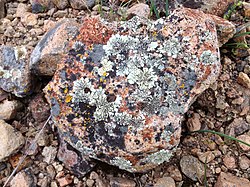
Saxicolous lichens are those which grow on stone. A lichen-covered rock.JPG
Saxicolous lichens are those which grow on stone.

Lichens can be classified by the substrate on which they grow:

Lichens, by region

Namibia's vast deserts, which hold many species of lichen, remain largely unsurveyed. Lichens near Wlotzkasbaken, Namibia.jpg
Namibia's vast deserts, which hold many species of lichen, remain largely unsurveyed.

Africa

Antarctica

Asia

Australia

Europe

North America

Oceania

Pacific

South America

Photobiont

The photobiont in most lichens is a green alga, particularly those from the genus Trebouxia. Trebouxia 2 - Miguel Varona - Cuaderno de Campo del Treparriscos.jpg
The photobiont in most lichens is a green alga, particularly those from the genus Trebouxia .

Photobiont – the photosynthetic partner in a lichen. [118]

Lichen metabolites

Lichen product – organic products, known as secondary metabolites, produced by lichens; these provide a variety of protections for the lichen – from microbes, viruses, herbivores, radiation, oxidants and more. [120]

Chemical spot tests on the foliose lichen Punctelia borreri showing thallus (top) and medulla (bottom). The pinkish-red colour change of the medulla in the C and KC tests indicate the presence of gyrophoric acid, a chemical feature that helps to distinguish this lichen from similar species in the same genus. Punctelia borreri 149849.jpg
Chemical spot tests on the foliose lichen Punctelia borreri showing thallus (top) and medulla (bottom). The pinkish-red colour change of the medulla in the C and KC tests indicate the presence of gyrophoric acid, a chemical feature that helps to distinguish this lichen from similar species in the same genus.

Study of lichens

Lichenology – the study of lichens. [122]

Threats

Lichens in culture

Two baked loaves of Bryoria fremontii, an important traditional food for some First Nations people Loaf of cooked wila lichen.jpg
Two baked loaves of Bryoria fremontii , an important traditional food for some First Nations people

Lichen organizations

  • Herzogia – peer-reviewed journal published by BLAM.
  • Lindbergia – peer-reviewed journal co-published by the Dutch Bryological and Lichenological Society and the Nordic Bryological Society.

Independent lichenological journals

See also

Citations

  1. 1 2 Van Hoose 2021.
  2. Cambridge Dictionary.
  3. 1 2 Favor 2005, p. 5.
  4. Laundon 1986, p. 3.
  5. Li et al. 2021, p. evab101.
  6. 1 2 3 Purvis 2000, p. 9.
  7. 1 2 Laundon 1986, p. 2.
  8. Honegger 1998, p. 197.
  9. 1 2 Brodo, Sharnoff & Sharnoff 2001, p. 758.
  10. Baron 1999, p. 14.
  11. Hawksworth, Sutton & Ainsworth 1983, p. 26.
  12. Silverstein, Silverstein & Silverstein 1996, p. 32.
  13. Smith et al. 2009, p. 22.
  14. Smith et al. 2009, p. 30.
  15. Brodo, Sharnoff & Sharnoff 2001, p. 756.
  16. Hale 1983, pp. 3, 6.
  17. Smith et al. 2009, p. 36.
  18. Smith et al. 2009, p. 24.
  19. Hawksworth, Sutton & Ainsworth 1983, p. 330.
  20. 1 2 Smith et al. 2009, p. 38.
  21. Brodo, Sharnoff & Sharnoff 2001, p. 763.
  22. 1 2 Brodo, Sharnoff & Sharnoff 2001, p. 757.
  23. Brodo, Sharnoff & Sharnoff 2001, p. 759.
  24. Brodo, Sharnoff & Sharnoff 2001, p. 760.
  25. Brodo, Sharnoff & Sharnoff 2001, p. 761.
  26. 1 2 Henriksson & Simu 1971, p. 119.
  27. Smith et al. 2020, p. 134.
  28. Bowler & Rundel 1975, p. 328.
  29. Bowler & Rundel 1975, p. 326–327.
  30. Galloway 2012, p. 315.
  31. Zakeri et al. 2022, p. 80.
  32. Chen, Blume & Beyer 2000, p. 124.
  33. Green et al. 2018, p. 397.
  34. 1 2 3 4 Wijayawardene et al. 2022.
  35. 1 2 3 Lücking, Hodkinson & Leavitt 2016, p. 377–400.
  36. Bendre 2010, p. 131.
  37. Lepp 2014.
  38. 1 2 3 Lücking, Hodkinson & Leavitt 2016, p. 371.
  39. 1 2 Kraichak et al. 2018a.
  40. 1 2 Kraichak et al. 2018b.
  41. 1 2 3 Wijayawardene et al. 2022, p. 162.
  42. 1 2 3 4 5 6 7 8 9 10 11 Lücking, Hodkinson & Leavitt 2017, p. 58.
  43. Gamundí & Spinedi 1985, p. 112.
  44. Jiang et al. 2020, p. 11.
  45. 1 2 Wijayawardene et al. 2022, p. 124.
  46. Lendemer, Harris & Ruiz 2016, p. 26.
  47. Lücking & Kalb 2018, p. 353.
  48. Aptroot, Sparrius & Alvarado 2018, p. 12.
  49. Wilk et al. 2021, p. 292.
  50. Zakeri, Divakar & Otte 2017, p. 170.
  51. Spribille et al. 2020, p. 85.
  52. Kantvilas, Wedin & Svensson 2021, p. 400.
  53. Divakar et al. 2017, p. 110.
  54. 1 2 3 Wijayawardene et al. 2022, p. 150.
  55. Ekman et al. 2014, p. 634.
  56. Diederich & Ertz 2020, p. 22.
  57. Kistenich et al. 2018, p. 871.
  58. Fryday et al. 2020, p. 473.
  59. Wilk et al. 2021, p. 293.
  60. Chesnokov et al. 2023, p. e24.
  61. Kondratyuk et al. 2019, p. 295.
  62. Kondratyuk et al. 2017, p. 79.
  63. 1 2 Wijayawardene et al. 2022, p. 156.
  64. 1 2 3 Divakar et al. 2017, p. 109.
  65. Ertz et al. 2017, p. 131.
  66. Wijayawardene et al. 2022, p. 159.
  67. Kondratyuk et al. 2017, p. 86.
  68. Simon et al. 2020, p. 82.
  69. Sobreira et al. 2018, p. 67.
  70. Kondratyuk et al. 2017, p. 87.
  71. Kondratyuk et al. 2017, p. 90.
  72. Kondratyuk et al. 2017, p. 91.
  73. Kondratyuk et al. 2017, p. 96.
  74. Grube, Matzer & Hafellner 1995, p. 28.
  75. 1 2 Wijayawardene et al. 2022, p. 89.
  76. Kondratyuk et al. 2018, p. 97.
  77. Kondratyuk et al. 2017, p. 105.
  78. Wijayawardene et al. 2022, p. 98.
  79. Sodamuk et al. 2017, p. 15.
  80. Kondratyuk et al. 2021, p. 372.
  81. Kondratyuk et al. 2021, p. 375.
  82. 1 2 Wijayawardene et al. 2022, p. 149.
  83. Kalb & Aptroot 2021, p. 5.
  84. Kondratyuk et al. 2015, p. 328.
  85. Bungartz, Søchting & Arup 2021.
  86. Kondratyuk et al. 2017, p. 112.
  87. Etayo 2017, p. 335.
  88. Wijayawardene et al. 2022, p. 160.
  89. Davydov et al. 2021, p. 245.
  90. Kondratyuk et al. 2018, p. 107.
  91. Lendemer, Stone & Tripp 2017, p. 459.
  92. Ertz et al. 2018, p. 170.
  93. Cáceres et al. 2017, p. 206.
  94. Wijayawardene et al. 2022, p. 38.
  95. Grube 2018, p. 695.
  96. Jiang et al. 2020, p. 1.
  97. Kondratyuk et al. 2018, p. 24.
  98. Kondratyuk et al. 2016, p. 104.
  99. Díaz-Escandón et al. 2021, p. 501.
  100. Lücking et al. 2009, p. 411.
  101. Lücking, Hodkinson & Leavitt 2016, p. 370.
  102. Dobson 2011, p. 470.
  103. Brodo, Sharnoff & Sharnoff 2001, p. 16.
  104. 1 2 3 4 5 The British Lichen Society 2022a.
  105. Temu et al. 2019, p. 1.
  106. Kantvilas 1996, p. 229.
  107. Dobson 2011, p. 26.
  108. Sanders 2001, p. 1033.
  109. Brodo, Sharnoff & Sharnoff 2001, p. 17.
  110. Brodo, Sharnoff & Sharnoff 2001, p. 18.
  111. 1 2 3 4 5 6 7 The British Lichen Society 2022b.
  112. Lendemer, Buck & Harris 2016, p. 441.
  113. 1 2 3 4 Upreti & Rai 2013, p. 2.
  114. 1 2 Lücking 2008, p. 4.
  115. Lücking 1998, p. 287.
  116. Rosentreter 1993, p. 333.
  117. Schultz, Zedda & Rambold 2009, p. 315.
  118. Purvis 2000, p. 5.
  119. Rikkinen 2015, p. 973.
  120. Goga et al. 2018, p. 1.
  121. Truong & Clerc 2003, p. 52.
  122. Merriam-Webster.
  123. International Association for Lichenology.
  124. Pfister 1985, p. 1.
  125. Brodo, Sharnoff & Sharnoff 2001, p. 84.
  126. Brodo, Sharnoff & Sharnoff 2001, p. 103.
  127. Lawrey & Diederich 2003, p. 80.
  128. Nimis, Scheidegger & Wolseley 2002.
  129. Oliver 2011, p. 1.
  130. Field Museum 2022.
  131. Turner 1977, p. 461.
  132. Penguin Books.
  133. Ivanova & Ivanov 2009, p. 11.
  134. Vinayaka & Krishnamurthy 2012, p. 265.

References