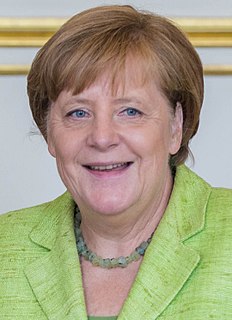
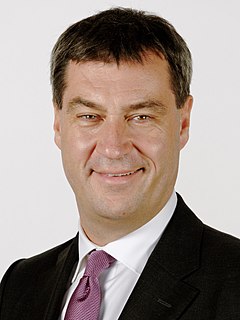
| |||||||||||||||||||||||||||||||||||||||||||||||||||||||||||||||||||||||||||||||||||||
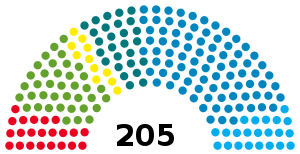
205 seats in the Landtag (including 25 overhang and leveling seats) 103 seats needed for a majority | |||||||||||||||||||||||||||||||||||||||||||||||||||||||||||||||||||||||||||||||||||||
|---|---|---|---|---|---|---|---|---|---|---|---|---|---|---|---|---|---|---|---|---|---|---|---|---|---|---|---|---|---|---|---|---|---|---|---|---|---|---|---|---|---|---|---|---|---|---|---|---|---|---|---|---|---|---|---|---|---|---|---|---|---|---|---|---|---|---|---|---|---|---|---|---|---|---|---|---|---|---|---|---|---|---|---|---|---|
| Turnout | 72.3% | ||||||||||||||||||||||||||||||||||||||||||||||||||||||||||||||||||||||||||||||||||||
| |||||||||||||||||||||||||||||||||||||||||||||||||||||||||||||||||||||||||||||||||||||
| |||||||||||||||||||||||||||||||||||||||||||||||||||||||||||||||||||||||||||||||||||||
The 2018 Bavarian state election took place on 14 October 2018 to elect the 180 members of the 18th Landtag of Bavaria. [1]
The Landtag of Bavaria is the unicameral legislature of the state of Bavaria in Germany. The parliament meets in the Maximilianeum in Munich.
The parties of the CDU/CSU-SPD federal-government grand coalition suffered heavy losses. The CSU and the SPD both lost more than 10 percentage points compared to the 2013 election, finishing at 37.2% (CSU) and 9.7% (SPD) respectively. AfD, which ran in Bavaria for the first time, made double-digit gains and won 10.2% of the total vote. The Greens gained 8.9pp and hence finished as the second strongest party, at 17.5%, replacing the SPD. The FDP, which failed to enter the Landtag in 2013, barely made it with 5.1% (+1.8pp) as the smallest party in the new legislature; the Bavarian Free Voters gained 2.6pp and finished third, slightly ahead of AfD at 11.6%. All other parties failed to cross the 5% threshold required to make it into the Bavarian Landtag.
The Christian Democratic Union of Germany is a Christian democratic and liberal-conservative political party in Germany. It is the major catch-all party of the centre-right in German politics. The CDU forms the CDU/CSU grouping, also known as the Union, in the Bundestag with its Bavarian counterpart the Christian Social Union in Bavaria (CSU). The party is widely considered an effective successor of the Centre Party, although it has a broader base.
A grand coalition is an arrangement in a multi-party parliamentary system in which the two largest political parties of opposing political ideologies unite in a coalition government. The term is most commonly used in countries where there are two dominant parties with different ideological orientations, and a number of smaller parties that have passed the election threshold to secure representation in the parliament. The two large parties will each try to secure enough seats in any election to have a majority government alone, and if this fails each will attempt to form a coalition with smaller parties that have a similar ideological orientation. Because the two large parties will tend to differ on major ideological issues, and portray themselves as rivals, or even sometimes enemies, they will usually find it more difficult to agree on a common direction for a combined government with each other than with smaller parties.
The Christian Social Union in Bavaria is a Christian-democratic and conservative political party in Germany. The CSU operates only in Bavaria while its larger counterpart, the Christian Democratic Union (CDU), operates in the other fifteen states of Germany. It differs from the CDU by being somewhat more conservative in social matters. The CSU is considered an effective successor of the Weimar-era Catholic Bavarian People's Party (BVP).
Turnout increased by 8.7%, from 63.6% in the last election in 2013 to 72.3% in 2018. [2]
The election in Bavaria was overshadowed by federal politics and the condition of the German coalition government after two government crises, the "asylum quarrel" in June/July, and the crisis around Hans-Georg Maaßen in September, in both of which CSU chief Horst Seehofer played a leading role. Four days before the election, SPD leader Andrea Nahles had criticised German Chancellor Angela Merkel and accused her of a "lack of leadership". [3]
The fourth cabinet of Chancellor Angela Merkel is the current government of Germany, sworn in on 14 March 2018 after Merkel was proposed as Chancellor by President of Germany Frank-Walter Steinmeier and elected on the first ballot. It is the 24th cabinet of Germany.
The 2018 German government crisis, sometimes referred to as Asylstreit, was a government crisis affecting the Fourth Merkel cabinet, which began in June 2018 and effectively ended in July 2018.
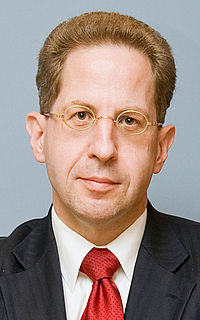
Hans-Georg Maaßen is a German civil servant and lawyer. From 1 August 2012 to 8 November 2018, he served as the President of the Federal Office for the Protection of the Constitution, Germany's domestic security agency and one of three agencies in the German Intelligence Community.
According to the Bavarian Constitution, the election must be held on a Sunday "at the earliest 59 months, at the latest 62 months" after the preceding state elections [4] which took place on 15 September 2013. This would theoretically allow an election date between 19 August and 11 November 2018, but in practice the elections since 1978 have always taken place between mid-September and mid-October. [5] The Bavarian state government proposed 14 October 2018 as the election date on 9 January 2018 [6] and officially set it on 20 February after hearing the parties to the state parliament. [7]
The deadline for determining the population figures, which are decisive for the distribution of the 180 Landtag mandates among the seven Bavarian administrative districts and a possible new division of the constituencies, was 15 June 2016 (33 months after the election of the previous Landtag). [8] On this basis, the Bavarian Ministry of the Interior had to submit a constituency report to the Landtag until 36 months after the election [9] This was done on 6 September 2016.
Delegates to the internal constituency meetings could be appointed at the earliest 43 months after the preceding election, i.e. since 16 April 2017. The actual constituency candidates had been eligible since 16 July 2017. [10] [11] The parties and other organised electoral groups which had not been represented continuously in the Bavarian Land Parliament or in the German Bundestag since their last election on the basis of their own election proposals (CDU, CSU, SPD, Free Voters of Bavaria, Alliance 90/The Greens, FDP, Die Linke, AfD) had to notify their intention to participate to the State Election Commissioner by the 90th day before the election, i.e. by 16 July 2018 at the latest. [12] The actual election proposals and any necessary signatures had to be submitted by 2 August 2018. [13]
Party representation is not apportioned statewide, the distribution of seats takes place separately within the seven administrative districts (Regierungsbezirke), which are referred to in the electoral law as constituencies. The constituencies are divided into districts in which one member is directly elected. The number of single member districts is about half the number of seats in the constituency. In contrast to the Bundestag election law, the distribution of seats by proportional representation uses the single member district votes (first votes) into account, as well as the votes for candidates on the party lists (second votes). Only Parties and groups of voters who obtain at least 5% of the total votes (sum of first and second votes) in Bavaria participate in the distribution of seats.
In the statutory constituency report of September 2016, the state government stated that the numerical distribution of the 180 state parliament seats among the constituencies would have to be changed due to changes in the number of inhabitants. It was recommended that a seat previously to be awarded in the Lower Franconia constituency be allocated to the Upper Bavaria constituency.
Within Upper Bavaria, the additional seat was used to reshape the single member districts in the state capital of Munich, as two of them — Giesing and Milbertshofen [14] — exceeded the average population by more than 15 percent. Upper Bavaria now has 31 single member districts for the 2018 elections, nine of which are accounted for by the state capital.
Seats and single member districts are distributed as follows: [15]
| Constituency | Seats | Single member districts |
|---|---|---|
| Upper Bavaria | 61 | 31 |
| Lower Bavaria | 18 | 9 |
| Upper Palatinate | 16 | 8 |
| Upper Franconia | 16 | 8 |
| Middle Franconia | 24 | 12 |
| Lower Franconia | 19 | 10 |
| Swabia | 26 | 13 |
| Total | 180 | 91 |
Since the state elections in Bavaria in 2013, the CSU has again had the absolute majority of seats, as it did from 1962 to 2008. In December 2017, however, Minister President of Bavaria Horst Seehofer (CSU) finally declared his renunciation of the top candidate in the state elections in Bavaria 2018, partly due to the poor performance of the CSU in the 2017 Bundestag elections. In March 2018, he also resigned from his office as Minister President of Bavaria before the end of the parliamentary term. The former Bavarian Finance Minister Markus Söder was elected as the new top CSU candidate and later also as Minister President of Bavaria in the state parliament.
In 2018, the CSU Markus Söder's government enacted the Kreuzpflicht , an obligation to display crosses at the entrance of public buildings. Söder has stated that the crosses are not to be seen as Christian symbols, but as symbols of Bavarian cultural identity. [16]
Some observers have described the Kreuzpflicht as a measure to appeal to voters deserting the Christian democratic conservative CSU for the right-wing nationalist AfD party. Also the CSU interior minister Horst Seehofer has taken a harder line on immigration. [17]
| This article is part of a series on the politics and government of Bavaria |
|---|
Constitution |
Executive |
Legislature |
Foreign policy |
A Leaders' debate between Minister President Markus Söder (CSU) and Ludwig Hartmann (Alliance 90/The Greens) took place on 26 September 2018. The Bayerischer Rundfunk justified the party selection with the result of the Bayerntrend of September 12, 2018, according to which CSU and Greens can hope for the most votes in the election. SPD Secretary-General Uli Grötsch described this decision as "completely absurd". [18] A programme with representatives of the other five parties, whose survey results were above or close to the five percent hurdle, followed on 28 September 2018: Natascha Kohnen (SPD), Hubert Aiwanger (Free Voters), Martin Sichert (AfD), Martin Hagen (FDP) and Ates Gürpinar (The Left). The first programme was moderated by BR editor-in-chief Christian Nitsche, the second by Ursula Heller.
| Polling firm | Fieldwork date | Sample size | CSU | SPD | FW | Grüne | FDP | Linke | AfD | Others | Lead |
|---|---|---|---|---|---|---|---|---|---|---|---|
| 2018 state election | 14 Oct 2018 | – | 37.2 | 9.7 | 11.6 | 17.6 | 5.1 | 3.2 | 10.2 | 5.4 | 19.7 |
| Forschungsgruppe Wahlen | 10–11 Oct 2018 | 1,075 | 34 | 12 | 10 | 19 | 5.5 | 4 | 10 | 5.5 | 15 |
| Civey | 6–10 Oct 2018 | 5,063 | 32.9 | 11.0 | 9.8 | 18.5 | 5.9 | 3.9 | 12.8 | 5.2 | 14.4 |
| INSA | 2–8 Oct 2018 | 1,707 | 33 | 10 | 11 | 18 | 5.5 | 4.5 | 14 | 4 | 15 |
| Forschungsgruppe Wahlen | 1–4 Oct 2018 | 1,122 | 35 | 12 | 10 | 18 | 5.5 | 4.5 | 10 | 5 | 17 |
| Infratest dimap | 1–2 Oct 2018 | 1,002 | 33 | 11 | 11 | 18 | 6 | 4.5 | 10 | 6.5 | 15 |
| GMS | 20–26 Sep 2018 | 1,004 | 35 | 13 | 10 | 16 | 5 | 4 | 12 | 5 | 19 |
| INSA | 21–25 Sep 2018 | 1,064 | 34 | 11 | 10 | 17 | 6 | 4 | 14 | 4 | 17 |
| Civey | 19–23 Sep 2018 | 5,061 | 36.0 | 12.0 | 8.6 | 17.9 | 5.0 | 3.3 | 13.2 | 4.0 | 18.1 |
| Forschungsgruppe Wahlen | 17–19 Sep 2018 | 1,114 | 35 | 13 | 11 | 18 | 5 | 4 | 10 | 4 | 17 |
| Infratest dimap | 5–10 Sep 2018 | 1,000 | 35 | 11 | 11 | 17 | 5 | 5 | 11 | 5 | 18 |
| GMS | 4–10 Sep 2018 | 1,006 | 36 | 12 | 7 | 16 | 6 | 4 | 14 | 5 | 20 |
| Civey | 30 Aug–9 Sep 2018 | 5,046 | 35.8 | 12.1 | 8.1 | 16.5 | 5.8 | 2.7 | 13.7 | 5.3 | 19.3 |
| INSA | 23–27 Aug 2018 | 1,033 | 36 | 13 | 8 | 15 | 6 | 3 | 14 | 5 | 21 |
| Civey | 15–26 Aug 2018 | 5,049 | 37.8 | 11.8 | 8.1 | 15.1 | 6.1 | 2.5 | 13.5 | 5.1 | 22.7 |
| Civey | 30 Jul–13 Aug 2018 | 5,047 | 38.1 | 12.3 | 7.3 | 15.0 | 5.3 | 2.7 | 15.2 | 4.1 | 22.9 |
| Forsa | 25 Jul–9 Aug 2018 | 1,105 | 37 | 12 | 8 | 17 | 5 | 4 | 13 | 4 | 20 |
| GMS | 25–31 Jul 2018 | 1,004 | 39 | 12 | 8 | 14 | 6 | 3 | 13 | 5 | 25 |
| Infratest dimap | 11–16 Jul 2018 | 1,003 | 38 | 13 | 9 | 16 | 5 | 4 | 12 | 3 | 22 |
| GMS | 5–11 Jul 2018 | 1,007 | 39 | 12 | 7 | 14 | 6 | 3 | 14 | 5 | 25 |
| Forsa | 4–6 Jul 2018 | 1,003 | 38 | 12 | 8 | 15 | 6 | 3 | 14 | 4 | 23 |
| Civey | 23 Jun–5 Jul 2018 | 5,093 | 42.5 | 13.7 | 6.0 | 13.2 | 5.2 | 2.8 | 13.1 | 3.5 | 28.8 |
| INSA | 25–27 Jun 2018 | 1,231 | 41 | 13 | 6 | 13 | 5 | 3 | 14 | 5 | 27 |
| Forsa | 21–22 Jun 2018 | 1,033 | 40 | 13 | 8 | 14 | 5 | 3 | 13 | 4 | 26 |
| Civey | 19 May–7 Jun 2018 | 5,066 | 41.1 | 13.4 | 7.0 | 12.6 | 4.8 | 3.5 | 13.5 | 4.1 | 27.6 |
| GMS | 11–16 May 2018 | 1,005 | 42 | 13 | 7 | 12 | 5 | 2 | 13 | 6 | 29 |
| Civey | 23 Apr–11 May 2018 | 5,082 | 42.1 | 13.7 | 6.6 | 13.5 | 5.1 | 2.9 | 12.0 | 4.1 | 28.4 |
| Infratest dimap | 22–27 Apr 2018 | 1,002 | 41 | 12 | 7 | 14 | 6 | 3 | 12 | 5 | 27 |
| GMS | 20–26 Apr 2018 | 1,002 | 44 | 14 | 6 | 11 | 5 | 3 | 12 | 5 | 30 |
| INSA | 17–20 Apr 2018 | 1,005 | 42 | 13 | 6 | 13 | 7 | 3 | 13 | 3 | 29 |
| Civey | 19 Mar–5 Apr 2018 | 5,048 | 44.5 | 14.8 | 6.5 | 11.3 | 4.2 | 2.8 | 11.9 | 4.0 | 29.7 |
| GMS | 16–21 Mar 2018 | 1,004 | 43 | 15 | 6 | 11 | 6 | 3 | 12 | 4 | 28 |
| Civey | 2–15 Mar 2018 | 5,004 | 41.4 | 14.2 | 8.4 | 12.0 | 4.6 | 3.0 | 12.1 | 4.3 | 27.2 |
| Civey | 12–26 Feb 2018 | 5,040 | 39.4 | 13.4 | 8.6 | 12.2 | 5.3 | 3.5 | 12.3 | 5.3 | 26.0 |
| Forsa | 8–22 Feb 2018 | 1,027 | 42 | 14 | 7 | 14 | 6 | 3 | 10 | 4 | 28 |
| GMS | 1–9 Feb 2018 | 1,510 | 40 | 15 | 6 | 11 | 6 | 3 | 12 | 7 | 25 |
| Civey | 6–16 Jan 2018 | 5,040 | 39.9 | 14.8 | 7.6 | 11.4 | 5.8 | 3.4 | 13.1 | 4.0 | 21.1 |
| Infratest dimap | 3–8 Jan 2018 | 1,002 | 40 | 16 | 7 | 14 | 5 | 3 | 10 | 5 | 24 |
| GMS | 27 Dec 2017–1 Jan 2018 | 1,007 | 39 | 15 | 7 | 10 | 7 | 3 | 12 | 7 | 24 |
| INSA | 12–13 Dec 2017 | 1,003 | 40 | 15 | 7 | 12 | 7 | 4 | 12 | 3 | 25 |
| Civey | 24 Nov–13 Dec 2017 | 5,019 | 36.7 | 16.0 | 8.3 | 12.1 | 7.1 | 2.9 | 12.9 | 4.0 | 20.7 |
| GMS | 27–29 Nov 2017 | 1,006 | 37 | 15 | 7 | 10 | 8 | 3 | 14 | 6 | 22 |
| Civey | 16 Oct–16 Nov 2017 | 5,034 | 38.8 | 14.9 | 6.5 | 10.8 | 8.0 | 3.6 | 13.5 | 3.9 | 23.9 |
| Forsa | 6–9 Nov 2017 | 1,017 | 38 | 17 | 7 | 11 | 9 | 4 | 11 | 3 | 21 |
| INSA | 2–3 Nov 2017 | 1,033 | 37 | 17 | 8 | 10 | 8 | 4 | 13 | 3 | 20 |
| GMS | 13–18 Oct 2017 | 1,004 | 41 | 15 | 6 | 11 | 7 | 3 | 13 | 4 | 26 |
| Civey | 25 Sep–13 Oct 2017 | 5,043 | 40.7 | 14.1 | 7.0 | 12.4 | 7.1 | 3.4 | 11.3 | 4.0 | 26.6 |
| 2017 federal election | 24 Sep 2017 | – | 38.8 | 15.3 | 2.7 | 9.8 | 10.2 | 6.1 | 12.4 | 4.8 | 23.5 |
| Infratest dimap | 4–9 Jan 2017 | 1,001 | 45 | 14 | 7 | 13 | 4 | 3 | 10 | 4 | 31 |
| GMS | 27 Oct–2 Nov 2016 | 1,005 | 44 | 18 | 6 | 10 | 6 | 2 | 9 | 5 | 26 |
| GMS | 8–12 Oct 2016 | 1,013 | 45 | 19 | 6 | 10 | 5 | 2 | 9 | 4 | 26 |
| GMS | 9–14 Sep 2016 | 1,015 | 45 | 18 | 5 | 12 | 5 | 2 | 9 | 4 | 27 |
| Forsa | 4–15 Jul 2016 | 1,008 | 43 | 16 | 6 | 14 | 4 | 3 | 8 | 6 | 27 |
| Infratest dimap | 11–14 Jul 2016 | 1,000 | 45 | 17 | 5 | 13 | 4 | – | 9 | 7 | 28 |
| GMS | 8–13 Jul 2016 | 1,015 | 47 | 17 | 6 | 11 | 5 | 2 | 7 | 5 | 30 |
| INSA | 17 May–8 Jun 2016 | 1,698 | 47.5 | 17.5 | 4.5 | 11.5 | 3.5 | 3.5 | 7 | 5 | 30 |
| Forsa | 23 May–3 Jun 2016 | 1,010 | 40 | 16 | 6 | 14 | 4 | 3 | 10 | 7 | 24 |
| GMS | 27 May–1 Jun 2016 | 1,021 | 48 | 17 | 6 | 10 | 5 | 2 | 8 | 4 | 31 |
| GMS | 15–19 Apr 2016 | 1,018 | 48 | 16 | 6 | 10 | 5 | 2 | 9 | 4 | 32 |
| GMS | 14–16 Mar 2016 | 1,015 | 48 | 16 | 5 | 11 | 5 | 2 | 9 | 4 | 32 |
| GMS | 12–17 Feb 2016 | 1,010 | 46 | 17 | 5 | 11 | 4 | 2 | 9 | 6 | 29 |
| Infratest dimap | 7–11 Jan 2016 | 1,000 | 47 | 16 | 5 | 12 | 3 | 3 | 8 | 6 | 31 |
| GMS | 28 Dec 2015–3 Jan 2016 | 1,019 | 45 | 19 | 6 | 10 | 4 | 3 | 7 | 6 | 26 |
| GMS | 12–18 Nov 2015 | 1,016 | 46 | 18 | 5 | 11 | 4 | 3 | 8 | 5 | 28 |
| GMS | 1–7 Oct 2015 | 1,019 | 46 | 18 | 6 | 12 | 6 | – | 5 | 7 | 28 |
| Forsa | 23 Sep–2 Oct 2015 | 1,007 | 43 | 19 | 5 | 11 | 4 | 3 | 6 | 9 | 24 |
| GMS | 10–16 Sep 2015 | 1,007 | 49 | 20 | 6 | 10 | 5 | – | 2 | 8 | 29 |
| GMS | 16–22 Jul 2015 | 1,011 | 47 | 20 | 6 | 10 | 5 | – | 2 | 10 | 27 |
| GMS | 18–24 Jun 2015 | 1,012 | 48 | 19 | 7 | 9 | 5 | 2 | 4 | 6 | 29 |
| INSA | 5–15 Jun 2015 | 651 | 46 | 20 | 8 | 8 | 4 | 3 | 4 | 7 | 26 |
| GMS | 7–13 May 2015 | 1,008 | 48 | 18 | 7 | 10 | 4 | – | 5 | 8 | 30 |
| GMS | 9–15 Apr 2015 | 1,016 | 48 | 19 | 7 | 10 | 4 | 2 | 4 | 6 | 29 |
| Forsa | 19–31 Mar 2015 | 1,266 | 47 | 19 | 7 | 11 | 3 | 2 | 4 | 7 | 28 |
| Infratest dimap | 8–12 Jan 2015 | 1,004 | 46 | 19 | 10 | 9 | 3 | 3 | 4 | 6 | 27 |
| GMS | Nov 2014 | 2,000 | 49 | 18 | 7 | 9 | 2 | 2 | 5 | 8 | 31 |
| pollytix | 13–23 Nov 2014 | 1,700 | 47 | 20 | 8 | 10 | 2 | 3 | 6 | 4 | 27 |
| Emnid | 1 Oct–4 Nov 2014 | 2,114 | 48 | 18 | 9 | 9 | 2 | 2 | 5 | 7 | 30 |
| 2014 European election | 25 May 2014 | – | 40.5 | 20.1 | 4.3 | 12.1 | 3.1 | 2.9 | 8.1 | 9.0 | 20.4 |
| Infratest dimap | 10–12 Mar 2014 | 1,002 | 46 | 18 | 12 | 11 | – | – | – | 13 | 28 |
| Infratest dimap | 9–13 Jan 2014 | 1,004 | 49 | 19 | 9 | 10 | 4 | 2 | – | 7 | 30 |
| 2013 federal election | 22 Sep 2013 | – | 49.3 | 20.0 | 2.7 | 8.4 | 5.1 | 3.8 | 4.3 | 6.4 | 29.3 |
| 2013 state election | 15 Sep 2013 | – | 47.7 | 20.6 | 9.0 | 8.6 | 3.3 | 2.1 | – | 8.7 | 27.1 |
On behalf of the RTL/n-tv Trendbarometer, Forsa Institute interviewed the survey participants about the "biggest problems at state level". [19] "In Bavaria, 34 percent of those surveyed named the CSU and Prime Minister Markus Söder. 28 percent called the subject refugees, 26 percent 'the situation on the housing market'". [20]
Infratest dimap asked respondents to the ARD primary election survey which topic is very important for their election decision. In the order of most percentage points these were school and education policy (55%), nature conservation in Bavaria (46%), creation of affordable housing (45%), reduction of injustice in society (41%), security and police (40%), regulation of immigration (39%), the behaviour of Horst Seehofer in the federal government (26%), the cooperation of CDU, CSU and SPD in the federal government (21%). [21]
The voter turnout in the city of Munich remained high. Until 2 p.m. it was 54.6 percent including the postal voters. In 2013, the turnout at that time was 49.7 percent. [22] The final total turnout was recorded as 72.3% of eligible voters. [23]
Summary of the 14 October 2018 election results [24] for the Landtag of Bavaria
| Party | Ideology | Votes | Votes % (change) | Seats (change) | Seats % | |||
|---|---|---|---|---|---|---|---|---|
| Christian Social Union (CSU) | Christian democracy | 5,047,006 | 37.2% | −10.4pp | 85 | −16 | 41.5% | |
| Alliance '90/The Greens (Grünen) | Green politics | 2,377,766 | 17.5% | +8.9pp | 38 | +20 | 18.5% | |
| Free Voters (FW) | Regionalism | 1,571,288 | 11.6% | +2.6pp | 27 | +8 | 13.2% | |
| Alternative for Germany (AfD) | German nationalism | 1,383,866 | 10.2% | +10.2pp | 22 | +22 | 10.7% | |
| Social Democratic Party (SPD) | Social democracy | 1,317,942 | 9.7% | −10.9pp | 22 | −20 | 10.7% | |
| Free Democratic Party (FDP) | Liberalism | 687,842 | 5.1% | +1.8pp | 11 | +11 | 5.4% | |
| The Left (Die Linke) | Democratic socialism | 435,949 | 3.2% | +1.1pp | 0 | ±0 | 0% | |
| Bavaria Party (BP) | Bavarian nationalism | 231,930 | 1.7% | −0.4pp | 0 | ±0 | 0% | |
| Ecological Democratic Party (ÖDP) | Green conservatism | 211,784 | 1.6% | −0.5pp | 0 | ±0 | 0% | |
| Pirate Party (Piraten) | Pirate politics | 60,087 | 0.4% | −1.5pp | 0 | ±0 | 0% | |
| Party for Franconia (Die Franken) | Regionalism | 31,547 | 0.2% | −0.5pp | 0 | ±0 | 0% | |
| Others | 0 | ±0 | 0% | |||||
| Total | 11,812,965 | 100.0% | 205 | +25 | ||||
The percentages indicate the proportion of respondents who would most like the particular coalition available for selection. The missing values to 100% made no statement.
| Institute | Date | CSU Alone | CSU Grüne | Grüne SPD FDP FW | CSU AfD | CSU FW |
|---|---|---|---|---|---|---|
| Civey [25] | 18 September 2018 | 19.3 % | 15.4 % | 15.3 % | 13.7 % | 10.1 % |
Before the election, CSU faction leader Thomas Kreuzer declared that the CSU would not form a coalition with the AfD or the Greens after the election. [26]
The CSU agreed on a coalition deal to govern with the Free Voters of Bavaria on 4 November 2018. [27]
Edmund Rüdiger Stoiber is a German politician, who was the 16th Minister President of the state of Bavaria between 1993 and 2007 and chairman of the Christian Social Union (CSU) between 1999 and 2007. In 2002 he candidated for the office of Chancellor of Germany in the federal election but in one of the narrowest elections in German history lost against Gerhard Schröder. On 18 January 2007, he announced his decision to step down from the posts of minister-president and party chairman by 30 September, after having been under fire in his own party for weeks.
Horst Lorenz Seehofer is a German politician serving as Leader of the Christian Social Union (CSU) from 2008 to 2019 and Minister of the Interior, Building and Community since 2018 under Chancellor Angela Merkel. From 2008 to 2018, he was Minister President of Bavaria; he also served as President of the Bundesrat between 2011 and 2012.
Federal elections took place on 27 September 2009 to elect the members of the 17th Bundestag (parliament) of Germany. Preliminary results showed that the Christian Democratic Union (CDU), its Bavarian sister party, the Christian Social Union (CSU), and the Free Democratic Party (FDP) won the election, and the three parties announced their intention to form a new centre-right government with Angela Merkel as Chancellor. Their main opponent, Frank-Walter Steinmeier's Social Democratic Party (SPD), conceded defeat. The Christian Democrats previously governed in coalition with the FDP in most of the 1949–1966 governments of Konrad Adenauer and Ludwig Erhard and the 1982–1998 governments of Helmut Kohl.
Ilse Aigner is a German politician and member of the Christian Social Union of Bavaria (CSU).
The 2008 Bavarian state election was held on 28 September 2008. Voters of the German state of Bavaria elected members to the Bavarian Landtag.
Free Voters in Germany may belong to an association of people which participates in an election without having the status of a registered political party. Usually it involves a locally organized group of voters in the form of a registered association (eV). In most cases, Free Voters campaign only at the local-government level, standing for city councils and for mayoralties. Free Voters tend to achieve their most successful electoral results in rural areas of southern Germany, appealing most to conservative voters who prefer local decisions to party politics. Free Voter groups are active in all German states.
State elections were held in Schleswig-Holstein on 27 September 2009, the same day as the German federal elections and the Brandenburg state elections. The elections determined control of the Landtag of Schleswig-Holstein.
The 2013 Bavarian state election was held on 15 September 2013 to elect the 180 members of the 17th Landtag of Bavaria. It was held one week before the 2013 German federal election. The CSU won an absolute majority, while the FDP, a coalition party in the outgoing Bavarian government, did not receive enough votes to enter the new parliament.
Federal elections were held in Germany on 24 September 2017 to elect the members of the 19th Bundestag. At stake were all 598 seats in the Bundestag, as well as 111 overhang and levelling seats determined thereafter.
Markus Söder is a German politician and leader of the Christian Social Union (CSU) party since January 2019. He has served as Minister President of Bavaria since March 2018, leading the Cabinet Söder II.
The 2016 Rhineland-Palatinate state election was held on 13 March 2016 to elect all 101 members to the Landtag of Rhineland-Palatinate. Seats are allotted by proportional representation with a 5% threshold. State elections were held on the same day in Baden-Württemberg and Saxony-Anhalt.
Joachim Herrmann is a German politician. He is a member of the CSU party. Herrmann is a MP in the Landtag, the parliament of Bavaria since 1994. Since 16 October 2007 he has been Minister of the Interior of the state of Bavaria.
The next German federal election for the 20th Bundestag will regularly be held between August and October 2021.
Johanna Uekermann is a German politician of the Social Democratic Party of Germany (SPD). From December 2013 to November 2017, she was chairwoman of the Young Socialists in the SPD (Jusos) and since May 2017 she has been the Deputy Leader of the SPD Bayern.
Melanie Huml is a German physician and politician. A member of the Christian Social Union of Bavaria, Huml has served as Minister of State for Health and Nursing in the Cabinet of Minister-President Horst Seehofer since 2013 and as a member of the Landtag of Bavaria since October 2003. Huml previously served as State Secretary for the Ministry of Labor and Social Affairs, Family and Women from 2007 to 2008, and later served as State Secretary for the Ministry of Environment and Health from 2008 to 2013.
The name Free Voters of Bavaria applies to both the Bavarian State Association of Free and Independent Voters and the Bavarian state chapter of the nationwide party Free Voters.
A state election was held in Hesse on 28 October 2018.
Ludwig Hartmann is a German politician and communication designer. He is, along with Katharina Schulze, one of the two leading candidates of his party in the Bavarian state election, 2018.
| Wikimedia Commons has media related to Bavaria state election, 2018 . |