
Acacia confusa is a perennial tree native to South-East Asia. Some common names for it are ayangile, small Philippine acacia, Formosa acacia, Philippine Wattle, and Formosan koa. It grows to a height of 15 m. The tree has become very common in many tropical Pacific areas, including Hawaii, where the species is considered invasive.
Anthoshorea confusa is a species of plant in the family Dipterocarpaceae. The species name is derived from Latin and refers to the fact that this species is often misidentified as Anthoshorea virescens. A. confusa is endemic to Borneo. It is an emergent tree, up to 50 metres (160 ft) tall, in mixed dipterocarp forest on clay-rich soils. It is a light hardwood sold under the trade names of white meranti. A. confusa is found in at least three protected areas, but is threatened elsewhere due to habitat loss.

Iris confusa, also known as the bamboo iris, is a species of iris. It is also in the subgenus Limniris and in the section Lophiris. It is a rhizomatous perennial plant, native to Western China. It has flowers which range from white to a soft lavender or pale blue in colour, with orange-yellow crests and purple dots. The plant's broad, shiny leaves are attached to bamboo-like stems. It is cultivated as an ornamental plant in temperate regions.
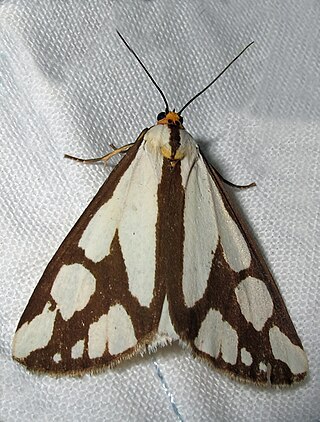
Haploa confusa, the confused haploa or Lyman's haploa, is a moth of the family Erebidae that occurs in North America. The species was first described by H. H. Lyman in 1887. The caterpillars feed on a hound's tongue.

Methona confusa, the giant glasswing, is a species of clearwinged butterfly in the order Lepidoptera and in the family Nymphalidae. It can be found in some Central and South American countries in regions with forests and mountains.
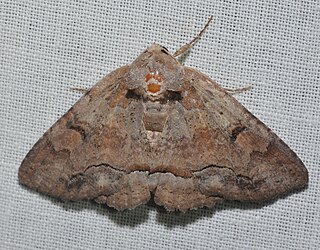
Zale confusa, the confused zale moth, is an owlet moth in the family Erebidae. The species was first described by James Halliday McDunnough in 1940. It is found in North America.
Anisostena is a genus of tortoise beetles and hispines in the family Chrysomelidae. There are at least 30 described species in Anisostena.

Trirhabda is a genus of skeletonizing leaf beetles in the family Chrysomelidae. There are more than 30 described species in Trirhabda. They are found in North America and Mexico.
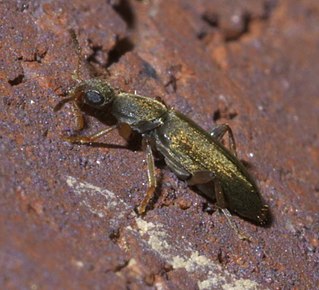
Macratria is a genus of antlike flower beetles in the family Anthicidae. There are more than 30 described species in Macratria.
Macratria confusa is a species of antlike flower beetle in the family Anthicidae. It is found in North America.
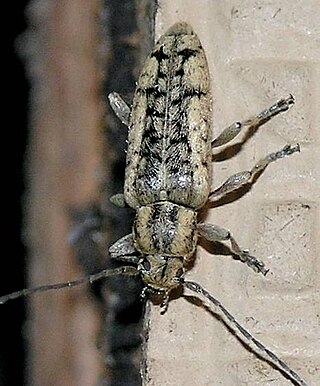
Atimia confusa, known generally as the small cedar borer or small cedar-bark borer, is a species of long-horned beetle in the family Cerambycidae. It is found in North America.
Trichocorixa is a genus of water boatmen in the family Corixidae. There are about 14 described species in Trichocorixa.
Buenoa margaritacea is a species of backswimmer in the family Notonectidae. It is found in Central America and North America.

Engytatus is a genus of plant bugs in the family Miridae. There are more than 20 described species in Engytatus.

Neogrotella confusa is a moth in the family Noctuidae. The species was first described by William Barnes and Foster Hendrickson Benjamin in 1922 and it is found in North America.
Nyholmia confusa is a species of marsh beetle in the family Scirtidae. It is found in North America.
Nyholmia is a genus of marsh beetles in the family Scirtidae. There are about five described species in Nyholmia.
Lema confusa is a species of leaf beetle in the family Chrysomelidae. It is found in the Caribbean Sea, Central America, North America, and South America.
Trirhabda confusa is a species of skeletonizing leaf beetle in the family Chrysomelidae. It is found in Central America and North America.
Opiona is a genus of millipedes in the family Caseyidae. There are about 16 described species in Opiona.

