
The okapi, also known as the forest giraffe, Congolese giraffe and zebra giraffe, is an artiodactyl mammal that is endemic to the northeast Democratic Republic of the Congo in central Africa. However, non-invasive genetic identification has suggested that a population has occurred south-west of the Congo River as well. It is the only species in the genus Okapia. Although the okapi has striped markings reminiscent of zebras, it is most closely related to the giraffe. The okapi and the giraffe are the only living members of the family Giraffidae.

Spilomelinae is a very species-rich subfamily of the lepidopteran family Crambidae, the crambid snout moths. With 4,135 described species in 344 genera worldwide, it is the most speciose group among pyraloids.
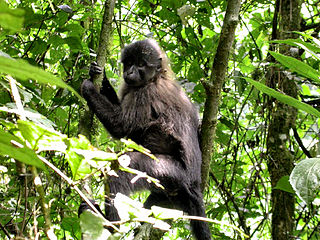
The Uganda mangabey is a subspecies of the grey-cheeked mangabey, an Old World monkey, found only in Uganda and in the Minziro Forest Reserve, just over the border in Tanzania. Colin Groves upgraded the Ugandan population of this crested mangabey to the new species L. ugandae on 16 February 2007, but this is not widely accepted. This subspecies is significantly smaller than the other subspecies of grey-cheeked mangabey, with a shorter skull and smaller face. 2018 was the most recent year in which the International Union for Conservation of Nature assessed the conservation status of L. albigena ugandae, describing it as being of vulnerable.
Johnston's mangabey is a subspecies of the gray-cheeked mangabey, a crested mangabey in the family Cercopithecidae. It was elevated to full species status in 2007, alongside Osman Hill's mangabey and the Uganda mangabey, but is still generally considered as a subspecies.
Isorropus is a genus of moths in the subfamily Arctiinae. The genus was erected by Arthur Gardiner Butler in 1880.
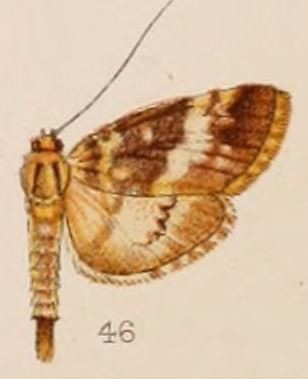
Lygropia is a genus of snout moths in the subfamily Spilomelinae of the family Crambidae. It currently comprises 66 species, which are mostly found in the tropical and subtropical regions of the Americas, Africa and Asia, but not in Australia.
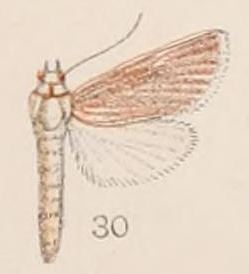
Patissa is a genus of moths of the family Crambidae erected by Frederic Moore in 1886.

Fodina is a genus of noctuoid moths in the family Erebidae erected by Achille Guenée in 1852.

Massaga is a genus of moths of the family Noctuidae. The genus was erected by Francis Walker in 1854.
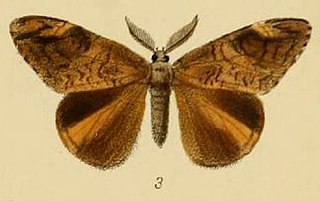
Aroa is a genus of moths in the subfamily Lymantriinae first described by Francis Walker in 1855. Species are distributed in South Africa, China, throughout India, Sri Lanka, Myanmar, and Java.

Semiothisa is a genus of moths in the family Geometridae. It was erected by Jacob Hübner in 1818.

Gorgyra is an Afrotropical genus of grass skippers in the family Hesperiidae. Larvae feed mainly on Connaraceae, including Rourea. Other recorded larval food plants include Drypetes and Macadamia. Their habitat is generally lowland tropical rain forest and savanna.
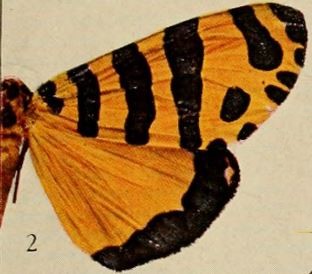
Amphicallia pactolicus is a moth of the subfamily Arctiinae first described by Arthur Gardiner Butler in 1888. It is found in Cameroon, the Democratic Republic of the Congo, Kenya, Nigeria, Rwanda, Tanzania, Togo and Uganda.
Labordea prasina is a moth of the family Erebidae first described by Arthur Gardiner Butler in 1882. It is found in central Madagascar.

Pirgula atrinotata is a moth in the subfamily Lymantriinae. It is found in Malawi, Mozambique, Zambia and Tanzania.
Eilema kingdoni is a moth of the subfamily Arctiinae first described by Arthur Gardiner Butler in 1877. It is found on Mayotte and Madagascar.
Eurozonosia inconstans is a moth of the subfamily Arctiinae. It was described by Arthur Gardiner Butler in 1896. It is found in Malawi and South Africa.
Drasteria yerburyi is a moth of the family Erebidae. It is found in Somalia, Eritrea, the United Arab Emirates, Yemen and Iran.


