Greenbank, Plymouth

Last updated

Greenbank
Greenbank Avenue, Plymouth - geograph.org.uk - 1776643.jpg
Greenbank Avenue
Devon UK location map.svg
Red pog.svg
Greenbank
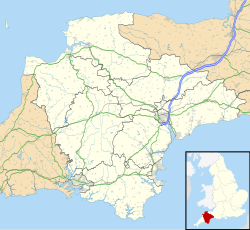
Location within Devon
Unitary authority
Shire county
Region
Country England
Sovereign state United Kingdom
Post town PLYMOUTH
Postcode district PL
Police Devon and Cornwall
Fire Devon and Somerset
Ambulance South Western
List of places
UK
England
Devon
50°22′39″N4°07′50″W / 50.37750°N 4.13056°W / 50.37750; -4.13056

Greenbank is part of the city of Plymouth in the county of Devon, England. [1] Greenbank, combined with University makes up the city's Drake ward. [2] It is a Victorian and Edwardian residential area with many small public houses and shops, and is now favoured by students due to its proxomity with the University of Plymouth.

Contents

History

The Greenbank area became host to the location of the city’s main workhouse in 1615. Following concerns over overcrowding and inadequate conditions at the Catherine Street workhouse, the Plymouth Incorporation selected a four-acre site at Specott’s Fields, near Greenbank Road. Construction of a new workhouse at Longfield Place began in 1852, and the building, designed by Arthur and Dwelly, was completed in 1858 at a cost of £12,500, with accommodation for up to approximately 700 inmates. [3]

In 1849, Plymouth Borough Gaol (now known as Greenbank Prison) opened adjacent to the workhouse, designed by Thomas Fuller and William Bruce Gingell and was constructed by William Clift. In 1935, the prison was converted into a police headquarters. [4]

In 1894 inspection by the British Medical Journal identified significant deficiencies in the infirmary, including poor internal layout, steep staircases, narrow passages, toilets being five floors away from some wards, and insufficient trained nursing staff. The report recommended building a new infirmary and increased staff members, between 1907 and 1910, the construction of new hospital facilities, comprising ward blocks, an administration building, and a nurses’ home. [3]

From 1909 to 1929, the hospital was called Greenbank Infirmary, [5] and was renamed in 1930 to Plymouth City (General) Hospital. In 1935 the city combined its various hospitals (including Plymouth City Hospital in Devonport) into Prince of Wales's Hospital. The hospital building was damaged by German bombing in 1943. [6] In 1951 the Greenbank site became known as Freedom Fields Hospital under the NHS.

The hospital site was demolished and redeveloped into housing in 2000 as it remains today, [3] but the central block of the former adjacent prison survived and was Grade II listed in 2007. [7]

Features

Greenbank lies to the west of Freedom Fields, a park preserving the approximate site of a battle during the English Civil War. It is home to a principal fire-station [8] and formerly of Plymouth's two main hospitals, both recently demolished and redeveloped. [9] It is a short walking distance from the city centre and sea front area as well as the university and Beaumont Park to the south.

References

  1. Oborn, Katie (18 February 2023). "Vibrant Plymouth community blighted by anti-social behaviour". Plymouth Live. Retrieved 22 February 2024.
  2. "Greenbank and University | PLYMOUTH.GOV.UK". Plymouth City Council. Retrieved 31 December 2025.
  3. 1 2 3 "The Workhouse in Plymouth, Devon". www.workhouses.org.uk. Retrieved 1 January 2026.
  4. "British Police History | BPH". british-police-history.uk. Retrieved 31 December 2025.
  5. Black, Erin (15 September 2019). "In search of the Plymouth workhouses airbrushed from history". Plymouth Live. Retrieved 1 January 2026.
  6. "Our History". Plymouth Medical Society. Retrieved 1 January 2026.
  7. "Central Block of Greenbank Prison (Formerly Longfield House) , Non Civil Parish - 1392324 | Historic England". historicengland.org.uk. Retrieved 31 December 2025.
  8. "Greenbank Fire Station". Devon and Somerset Fire and Rescue Service. Retrieved 31 December 2025.
  9. Bayley, Jon (29 March 2018). "Glorious old pictures of Freedom Fields Hospital - 1941 - 1998". Plymouth Live. Retrieved 31 December 2025.