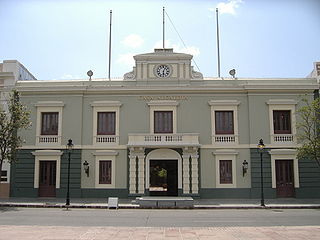
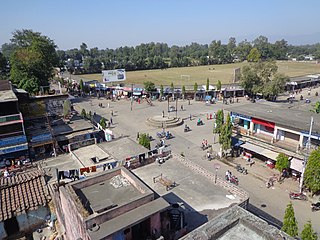
Mangalsen Nepali: मंगलसेन is a municipality and the headquarter of Achham District in Sudurpashchim Pradesh of Nepal that was established on 18 May 2014 by merging the former Village development committees Janalibandali, Kuntibandali, Oligau, Jupu into Old-Mangalsen. At the time of the 2011 Nepal census it had a population of 32,507 people living in 6,604 individual households.
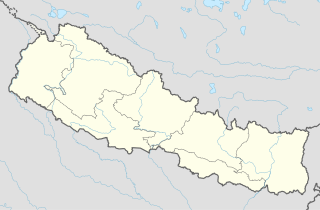
Chandisthan is a town and market place at Besishahar Municipality in Lamjung District in the Gandaki Zone of northern-central Nepal. The Besishahar Municipality was formed by merging the existing Village Development Committees i.e. Besishahar, Gaunshahar, Udipur & Chandisthan in May 15, 2014.
Dharampani, Gandaki is a market center in Bandipur Municipality in Tanahu District in the Gandaki Zone of central Nepal. The formerly Village Development Committee was merged to form new municipality since 18 May 2014. At the time of the 1991 Nepal census it had a population of 3444 people living in 616 individual households.
Dhaurkauli is a town and market center in Hariyon Municipality in Sarlahi District in the Janakpur Zone of south-eastern Nepal. The formerly village development committee was transformed into municipality merging the existing village development committees i.e. Atrouli, Sasapur, Dhaurkauli and Hariyon in May 18, 2014. At the time of the 1991 Nepal census it had a population of 7336 people living in 1253 individual households.
Lalbandi is a Municipality in Sarlahi District in the Janakpur Zone of south-eastern Nepal. The municipality was established on 18 May 2014 by merging the existing Jabdi, Lalbandi and Pattharkot VDCs. At the time of the 2011 Nepal Census it had a population of 14583 people living in 3295 individual households.
Phulbariya is a town in Mirchaiya Municipality in Siraha District in the Sagarmatha Zone of south-eastern Nepal. The formerly village development committee was merged to form new municipality since 18 May 2014 along with existing Rampur Birta, Malhaniyakhori, Radhopur, Ramnagar Mirchaiya, Phulbariya, Sitapur PraDa and Maheshpur Gamharia Village Development Committees. At the time of the 1991 Nepal census it had a population of 6710 people living in 1273 individual households.
Maheshpur Gamharia is a town in Mirchaiya Municipality in Siraha District in the Sagarmatha Zone of south-eastern Nepal. The formerly village development committee was merged to form new municipality since 18 May 2014 along with existing Rampur Birta, Malhaniyakhori, Radhopur, Ramnagar Mirchaiya, Fulbariya, Sitapur PraDa and Maheshpur Gamharia Village Development Committees. At the time of the 1991 Nepal census it had a population of 3174 people living in 589 individual households.
Sitapur Pra. Da. is a town in Mirchaiya Municipality in Siraha District in the Sagarmatha Zone of south-eastern Nepal. The formerly village development committee was merged to form new municipality since 18 May 2014 along with existing Rampur Birta, Malhaniyakhori, Radhopur, Ramnagar Mirchaiya, Fulbariya, Sitapur PraDa and Maheshpur Gamharia Village Development Committees. At the time of the 1991 Nepal census it had a population of 4671 people living in 899 individual households.
Shambhunath Municipality is a Town in Saptari District in the Sagarmatha Zone of south-eastern Nepal. Merging the existing Khoksar Parbaha, Shambhunath, Mohanpur, Bhangha, Basbalpur and Rampur Jamuwa village development committee this new municipality was formed on 18 May 2014. Kathauna Bazar is now finally head office of this new municipality. At the time of the 1991 Nepal census it had a population of 5168 people living in 933 individual households.
Laksmipur is a village development committee in Kanchanpur District in the Mahakali Zone of south-western Nepal. The former village development committee was converted into Municipality merging with existing Rampur Bilaspur, Laksmipur, Mahakali and Sripur village development committee on 18 May 2014. At the time of the 1991 Nepal census it had a population of 11,767.
Rampur Bilaspur is a town in Kanchanpur District in the Mahakali Zone of south-western Nepal. The former village development committee was converted into Municipality merging with existing Rampur Bilaspur, Laxmipur, Mahakali and Sreepur, Mahakali village development committee on 18 May 2014. At the time of the 1991 Nepal census it had a population of 11,841 people living in 1650 individual households.
Belauri, also known as Sripur is a Municipality in Kanchanpur District in the Mahakali Zone of south-western Nepal. The former village development committee was converted into Municipality merging with existing Rampur Bilaspur, Laxmipur, Mahakali and Sripur village development committee on 18 May 2014. At the time of the 1991 Nepal census it had a population of 14,280 people living in 1877 individual households.

Punarwas is a Municipality in Kanchanpur District in the Mahakali Zone of south-western Nepal. The new Municipality was established on 18 May 2014 by merging the existing 3 Village Development Committees i.e. Parasan, Tribhuwanbasti and Kalika. At the time of the 2011 Nepal census, it had a population of 43,996 people living in Punarwas.
Khaliban is a town in Rampur Municipality in Palpa District in the Lumbini Zone of southern Nepal. The municipality was established on 18 May 2014 by merging the existing Gadakot, Gegha, Khaliban, Darchha village development committee. At the time of the 1991 Nepal census it had a population of 2272 people living in 399 individual households.
Gunjanagar is a town in Chitrawan Municipality in Chitwan District in the Narayani Zone of southern Nepal. The formerly Village Development Committee was merged to form new municipality on 18 May 2014 by merging formerly Gunjanagar and Saradanagar village development committee. At the time of the 1991 Nepal census it had a population of 11,076 people living in 2025 individual households.
Saradanagar is a town in Chitrawan Municipality in Chitwan District in the Narayani Zone of southern Nepal. The formerly Village Development Committee was merged to form new municipality on 18 May 2014 by merging formerly Gunjanagar and Saradanagar village development committee. At the time of the 1991 Nepal census it had a population of 7133 people living in 1334 individual households.
Jayaprithvi is a municipality and the district headquarter of Bajhang District in Province No. 7 of Nepal that was established on 18 May 2014 by merging the two former Village development committees Rithapata, Chainpur, Hemantabada, Luyanta and Subeda. It lies on the bank of Seti River. At the time of the 2011 Nepal census it had a population of 22,191 people living in 4,015 individual households.
Mahakali is a municipality located in Kanchanpur District of Province No. 7 of Nepal. The municipality was formed by merging two existing Villages—Dodhara and Chandani—on 18 May 2014. The office of the municipality is that of the former Dodhara village development committee.

Sundar Haraicha is a municipality in Morang District of Province No. 1 in Nepal that was established on 10 March 2017 by merging the former municipalities Sundar Dulari and Koshi Haraicha. At the time of the 2011 Nepal census, the localities out of which Chaudandigadhi would be formed had a joint population of 80,518 people living in 18,610 individual households.