
Conocybe is a genus of mushrooms with Conocybe tenera as the type species and at least 243 other species. There are at least 50 different species in North America.

A cuniculus, plural cuniculi, is a diversionary water channel, used by ancient civilizations on the Italian Peninsula. As the general ancient Italian use derives from the Etruscan use, the term has a special significance of Etruscan cuniculi. The city of Veii was noted for them. The Italian community of Formello to the north of Veii was named after the numerous cuniculi there.
Coniella fragariae is a plant pathogen. It is known to be pathogenic on eucalypts in a number of countries, including Brazil, India, China and Australia. In 2015, Coniella fragariae was reported as the causal agent for strawberry crown rot in Latvia. In 2018, the fungus was isolated from a goose dung collected in a strawberry field near the sea coast in North Germany. Inferred from the author, it should be a typical plant pathogenic fungus not coprophilous fungus. The plants, strawberry that had been eaten by geese are expected to be the true source of Coniella fragariae. Chemical constitution study showed azaphilone were the main secondary metabolites from this fungus.

Psoroptes is a genus of mites, including the agents that cause psoroptic mange.
The Sporormiaceae are a family of fungi in the order Pleosporales. Taxa have a cosmopolitan distribution and are saprobic on dung (coprophilous) and rotting vegetation.
Encephalitozoon intestinalis is a parasite. It can cause microsporidiosis.

Coprophilous fungi are a type of saprobic fungi that grow on animal dung. The hardy spores of coprophilous species are unwittingly consumed by herbivores from vegetation, and are excreted along with the plant matter. The fungi then flourish in the feces, before releasing their spores to the surrounding area.

Encephalitozoon cuniculi is a microsporidial parasite of mammals with world-wide distribution. An important cause of neurologic and renal disease in rabbits, E. cuniculi can also cause disease in immunocompromised people.
Pyun Hye-young is a South Korean writer.
Moraxella cuniculi is a Gram-negative bacterium in the genus Moraxella, which was isolated from the oral mucosa of a rabbit in Germany. The previous name was Neisseria cuniculi.
Cuterebra cuniculi is a species of new world skin bot fly in the family Oestridae. Its range is restricted to the states of Georgia and Florida. Its larvae are parasites of the eastern cottontail and marsh rabbit.
Podospora appendiculata is a coprophilous fungus that is most commonly found in the dung of lagomorphs, such as hares and rabbits, in temperate to warm climates. A member of the division Ascomycota, P. appendiculata is characterized by ovoid, hair-studded perithecia which can bear a distinctive violaceous colouring and peridia which are coriaceous, or leathery, in texture. Podospora appendiculata has been shown to produce three compounds with antimicrobial properties.
Ascobolus immersus is a species of fungus belonging to the family Ascobolaceae.
Ascobolus brantophilus is a species of coprophilous fungus in the family Ascobolaceae. It grows on goose droppings.
Podospora decipiens is a species of coprophilous fungus in the family Podosporaceae. It is especially common on the islands around Greece, where it grows on the dung of sheep, goats and donkeys.
Schizothecium miniglutinans is a species of coprophilous fungus in the family Lasiosphaeriaceae. It is known to grow in the dung of goats and possibly on that of sheep.
Schizothecium tetrasporum is a species of coprophilous fungus in the family Lasiosphaeriaceae. It is known to grow in the dung of goats and rabbits.
Schizothecium vesticola is a species of coprophilous fungus in the family Lasiosphaeriaceae. In Greece, it is known to grow in the dung of goats and possibly on that of sheep, goats and donkeys. In Iceland, it has been reported from the dung of sheep, goose and horse.

Coprinopsis stercorea is a species of coprophilous fungus in the family Psathyrellaceae. It grows on the dung of sheep, goats and donkeys.
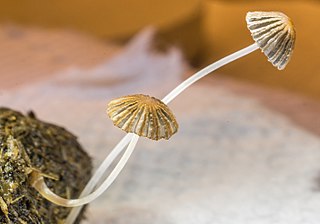
Parasola misera is a species of coprophilous fungus in the family Psathyrellaceae. It grows on the dung of goats and possibly on that of sheep.

