Lingayen Co-Cathedral

Last updated

Lingayen Co-Cathedral
Co-Cathedral Parish of the Epiphany of Our Lord
Concatedral-Parroquial de la Epifanía de Nuestro Señor (Spanish)
Lingayen Cathedral 2019.jpg
Lingayen Co-Cathedral in 2019
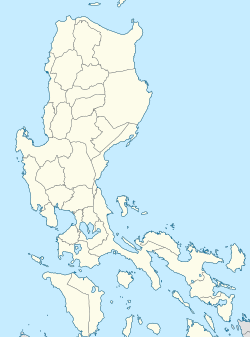
Philippines location map (Luzon mainland).svg
Red pog.svg
Lingayen Co-Cathedral
Location in Luzon
Philippines location map (square).svg
Red pog.svg
Lingayen Co-Cathedral
Location in the Philippines
16°01′19″N120°13′53″E / 16.021862°N 120.231306°E / 16.021862; 120.231306
Location Lingayen, Pangasinan
Country Philippines
Denomination Roman Catholic
History
Status co-cathedral
Founder Augustinian missionaries
Consecrated 1587
Architecture
Functional statusactive
ArchitectFather Miguel Aparicio
Architectural type Church building
Style Neo-Baroque
Groundbreaking1587
Administration
Archdiocese Lingayen-Dagupan
Clergy
Archbishop Socrates B. Villegas
Priest(s) Fidelis Layog
Christian Joy Bataoil
Laurence Mark Lucero
Camilo V. Natividad
Danille Chad C. Pecson

The Co-Cathedral Parish of the Epiphany of Our Lord, commonly known as Lingayen Church and formerly Los Tres Reyes or Three Kings Parish, is a historic Roman Catholic church and cathedral in Lingayen, Pangasinan in the Philippines. It is under the jurisdiction of the Archdiocese of Lingayen-Dagupan. The church is one of the oldest in the region, founded in 1587 in the same year Saint Dominic Basilica in San Carlos, Pangasinan was also founded. [1] It is famous for its architecture, including a dome designed by Father Miguel Aparicio and its bell tower. [2] [3] [4]

Contents

History

Pre-war structure of the Lingayen Church. Herencia Filipinas (cr.) Lingayen Church - Epiphany of Our Lord Co-Cathedral Parish (old photo).jpg
Pre-war structure of the Lingayen Church. Herencia Filipinas (cr.)

The Lingayen Church was founded by Spanish Augustinian missionaries in 1614. [3] The Dominicans ran the church from 1740 until replaced by Filipino priests after the U.S. drove out the Spanish in 1898. [5]

In 1928 the church was elevated to cathedral. [2] Along with its co-cathedral, Metropolitan Cathedral of St. John the Evangelist, it is the Roman Catholic Archdiocese of Lingayen–Dagupan. In 1933, the Columbans began supporting the development of the cathedral and the parish. [5]

The parish was consecrated in 1587 and established in 1616. On May 19, 1928, it became the Diocese of Lingayen.

In 1941 during World War II the Japanese fascist empire invaded the Philippines. During the war the bishop’s palace was ruined, and the parish was partially destroyed. The bishop’s residence was transferred from Lingayen to Dagupan.

The Diocese of Lingayen was reconstituted into the Archdiocese of Lingayen-Dagupan on February 16, 1963, encompassing the whole civil province of Pangasinan, and its seat was transferred from Lingayen to Dagupan.


Gallery: Historical Photographs

Gallery: Interior and Exterior Design

References

  1. Sotelo, Yolanda (April 1, 2015). "Pangasinan hosts oldest churches". Philippine Daily Inquirer . Retrieved April 5, 2015.
  2. 1 2 "Lingayen Church". Filipinas Heritage Library. c. 1915. Retrieved April 5, 2015.
  3. 1 2 "5 churches for your Pangasinan pilgrimage". ABS-CBN News . October 8, 2017. Retrieved May 29, 2022.
  4. "Brief History of Epiphany of Our Lord Parish" . Retrieved April 5, 2015.
  5. 1 2 Woodruff, Peter (August 11, 2011). "Last Man In and Last Man Out". Columban Fathers: Missionary Society of St. Columban. Archived from the original on April 12, 2015. Retrieved May 29, 2022.