George Franklin Barber was an American architect known for the house designs he marketed worldwide through mail-order catalogs. Barber was one of the most successful residential architects of the late Victorian period in the United States, and his plans were used for houses in all 50 U.S. states, and in nations as far away as Japan and the Philippines. Over four dozen Barber houses are individually listed on the National Register of Historic Places, and several dozen more are listed as part of historic districts.

This is a list of structures, sites, districts, and objects on the National Register of Historic Places in North Carolina:

The Alice Freeman Palmer Memorial Institute, better known as Palmer Memorial Institute, was a school for upper-class African Americans. It was founded in 1902 by Dr. Charlotte Hawkins Brown at Sedalia, North Carolina near Greensboro. The institute was named after Alice Freeman Palmer, former president of Wellesley College and benefactor of Dr. Brown.

Beaufort Historic District is a historic district in Beaufort, South Carolina. It was listed on the National Register of Historic Places in 1969, and was declared a National Historic Landmark in 1973.

The High Hampton Inn Historic District is a historic estate, resort, and national historic district nestled in the mountains of western North Carolina, in the Cashiers Valley in Jackson County, North Carolina. Originally the summer home of the prosperous Hampton family of South Carolina, the property was listed on the National Register of Historic Places in 1991.

Flat Rock Historic District is a national historic district located at Flat Rock, Henderson County, North Carolina. The district encompasses 55 contributing buildings and 1 contributing site associated with estates centering on the ambitious summer houses of the prominent Charlestonians. The homes includes notable examples of Stick Style / Eastlake movement, Second Empire, and Gothic Revival residential architecture. Located in the district is the separately listed Carl Sandburg Home National Historic Site, also known as Connemara. Other notable estates include Mountain Lodge, Argyle, Beaumont, Tall Trees (Greenlawn), Many Pines, Chanteloupe, Teneriffe, Rutledge Cottage, Dunroy, Treholm-Rhett House home of George Trenholm, Kenmure (Glenroy), Vincennes home of William Elliott, Sallie Parker House, Enchantment, Bonclarken (Heidleberg), Saluda Cottages, Tranquility, and the Rhue House. Also located in the district is St. John-in-the-Wilderness church and rectory, the Old Post Office, Woodfield Inn, The Lowndes Place.

Hillsborough Historic District is a national historic district located at Hillsborough, Orange County, North Carolina. The district encompasses 529 contributing buildings, 9 contributing sites, 13 contributing structures, and 2 contributing objects in the central business district and surrounding residential sections of Hillsborough. The district includes buildings dating to the late-18th and early-20th century and includes notable examples of Federal, Greek Revival, and Italianate style architecture. Located in the district are the separately listed Burwell School, Eagle Lodge, Hazel-Nash House, Heartsease, Montrose, Nash Law Office, Nash-Hooper House, Old Orange County Courthouse, Poplar Hill, Ruffin-Roulhac House, Sans Souci, and St. Matthew's Episcopal Church and Churchyard. Other notable buildings include Seven Hearths, the Presbyterian Church (1815-1816), Methodist Church (1859-1860), First Baptist Church (1862-1870), Twin Chimneys, and the Berry Brick House.

Richard Sharp Smith was an English-born American architect, noted for his association with George W. Vanderbilt's Biltmore Estate and Asheville, North Carolina. Smith worked for some of America's important architectural firms of the late 19th century—Richard Morris Hunt, Bradford Lee Gilbert, and Reid & Reid—before establishing his practice in Asheville. His most significant body of work is in Asheville and Western North Carolina, including dozens of buildings that are listed on the National Register of Historic Places or are contributing structures to National Register Historic Districts.

Halifax Historic District is a national historic district located at Halifax, Halifax County, North Carolina, US that was listed on the National Register of Historic Places in 1970. It includes several buildings that are individually listed on the National Register. Halifax was the site of the signing of the Halifax Resolves on April 12, 1776, a set of resolutions of the North Carolina Provincial Congress which led to the United States Declaration of Independence gaining the support of North Carolina's delegates to the Second Continental Congress in that year.
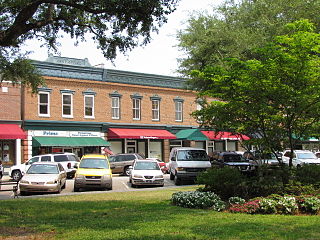
Summerville Historic District is a national historic district located at Summerville, Dorchester County, South Carolina. The district encompasses 700 contributing buildings in the village of Summerville. About 70 percent of the buildings predate World War I. The buildings include raised cottages, Greek Revival influenced, and Victorian / Queen Anne and other turn of the 20th century structures are found throughout. In addition to residential structures, the district includes churches and commercial buildings—most dating from around 1900. Notable buildings include Tupper's Drug Store, O. J. Sire's Commercial Building, White Gables, Pettigru-Lebby House Gazebo, Summerville Presbyterian Church, Wesley United Methodist Church, and the Squirrel Inn.

City of Camden Historic District is a national historic district located at Camden, Kershaw County, South Carolina. The district encompasses 48 contributing buildings, 8 contributing sites, 2 contributing structures, and 3 contributing objects in Camden. The district is mostly residential but also include public buildings, a church, and a cemetery. Camden's architecture is classically inspired and includes examples of Federal, Greek Revival, and Classical Revival, in addition to cottage-type, Georgian, Charleston-type with modifications, and mansion-type houses. Several of the city's buildings were designed by architect Robert Mills. Notable buildings include the Kershaw County Courthouse (1826), U.S. Post Office, Camden Opera House and Clock Tower, Camden Powder Magazine, Trinity United Methodist Church, St. Mary's Catholic Church, Gov. Fletcher House, Greenleaf Villa, The First National Bank of Camden, and the separately listed Bethesda Presbyterian Church and Kendall Mill.
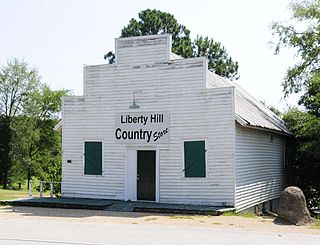
Liberty Hill Historic District is a national historic district located at Liberty Hill, Kershaw County, South Carolina. The district encompasses 34 contributing buildings and 2 contributing structures in the small rural community of Liberty Hill. The district includes several imposing Greek Revival structures, Greek Revival cottages, and an 1880s vernacular Gothic Revival church. The later, turn of the 20th century residences are primarily one-story, simple clapboard cottages. The town's history begins as early as ca. 1813 when Peter Garlick's store was a gathering place for surrounding farmers. Soon, impressive structures were built by planters in the area. Remaining from the 1830s are Cool Spring and the Joseph Cunningham House. The majority of the town's antebellum buildings, however, were built ca. 1840–1850. During this period Liberty Hill was a very wealthy community. However, the final days of the American Civil War ended that prosperity. Nevertheless, the town did eventually reassert itself and appears to have changed very little since the beginning of the 20th century.

Columbia Historic District II is a national historic district located at Columbia, South Carolina. The district encompasses 113 contributing buildings and 1 contributing site in a former residential section of Columbia. They were built between the early-19th century and the 1930s and are now mostly used for commercial purposes. The buildings are in the Greek Revival, Gothic Revival, Classical Revival, and the “Columbia Cottage” styles. Notable buildings include the Robert Mills House, Debruhl-Marshall House, Hampton-Preston House, Episcopal Church of the Good Shepherd, Crawford-Clarkson House, Maxcy Gregg House, Hale-Elmore-Seibels House, St. Paul's Lutheran Church, and Ebenezer Lutheran Church.

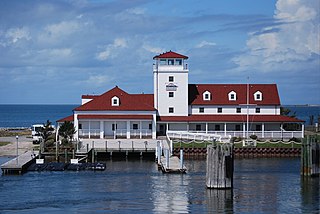
Southport Historic District is a national historic district located at Southport, Brunswick County, North Carolina. The district encompasses 161 contributing buildings, 3 contributing sites, and 1 contributing object. Over half of the structures in the historic district date from the 1885-1905 period. It includes residential, commercial, and institutional buildings and is considered the best example of a Victorian coastal town in North Carolina. Notable buildings include the River Pilots Tower and Building (1940s), Frying Pan Lightship, Fort Johnston Officers Quarters, Walker-Pike House, Brunswick Inn, Fort Johnston Hospital, Former Brunswick County Court House, Saint Philips Episcopal Church, Trinity Methodist Church (1888-1890), and the Adkins-Ruark House (1890).

Green Park Historic District is a national historic district located at Blowing Rock in Caldwell County and Watauga County, North Carolina, United States. The district includes 46 contributing buildings, three contributing sites, and two contributing structures associated with a residential summer resort in the town of Blowing Rock. It includes buildings largely built in the 1920s, in a variety of popular architectural styles including Bungalow / American Craftsman, Colonial Revival and Queen Anne. Notable contributing resources include the McDowell Cottage, Mt. Bethel Reformed Church, Blowing Rock Reception Center/Gift Shop, Robert A. Dunn Cottage, Gideon's Ridge, the James Ross Cannon House, the David Ovens Cottage, Blowing Rock, and the Blowing Rock Country Club Golf Course. Located in the district and separately listed is the Green Park Inn (1891).

Trinity Historic District, also called Trinity Park, is a national historic district and residential area located near the East Campus of Duke University in Durham, North Carolina. The district encompasses 751 contributing buildings in a predominantly residential section of Durham. They were built between the 1890s and 1960 and include notable examples of Queen Anne and Bungalow / American Craftsman style architecture. Located in the district are the separately listed "Faculty Row" cottages: the Bassett House, Cranford-Wannamaker House, Crowell House, and Pegram House. Other notable buildings include the George W. Watts School (1917), Julian S. Carr Junior High School (1922), Durham High School (1923), Durham Alliance Church (1927), Trinity Avenue Presbyterian Church (1925), Watts Street Baptist Church (1925), Great A & P Tea Company (1927-1929), Grace Lutheran Church, and the former Greek Orthodox Community Church.

Lake Landing Historic District is a national historic district located near Lake Landing, North Carolina. The district encompasses 226 contributing buildings, 2 contributing sites, and 4 contributing structures related to agricultural complexes near Lake Landing. The district includes notable examples of Greek Revival, Queen Anne, and Coastal Cottage style architecture dating from about 1785 to the early-20th century. The Dr. William Sparrow octagon house, also known as Inkwell, is listed separately. Other notable buildings include the Fulford-Watson House, Gibbs Family House, Young-Roper-Jarvis House, Joseph Young House, Swindell-Mann-Clarke House, Amity Methodist Church, Chapel Hill Academy, St. George's Episcopal Church, John Edward Spencer Store, and George Israel Watson House (1896).
Ocracoke Historic District is a national historic district located at Ocracoke, Hyde County, North Carolina. The district encompasses 228 contributing buildings, 15 contributing sites, and 4 contributing structures on Ocracoke Island in Ocracoke village. The district includes notable examples of Late Victorian, Shingle Style, Bungalow / American Craftsman, and Coastal Cottage style architecture dating from about 1823 to 1959. A number of the houses were constructed from salvaged ship timbers. Located in the district is the Ocracoke Light Station. Other notable contributing resources include the Simon and Louisa Howard House, the Kugler Cottage, Tolson-Rondthaler House, Simon and Sarah Garrish House (1888), Spencer Bungalow (1937), Benjamin Fulcher House, William Charles Thomas House (1899), Styron Store (1920s), Willis Store and Fish House, Coast Guard Station and British Cemetery, the United Methodist Church, Assembly of God Church, the Island Inn (1901), and Berkley Manor and Berkley Castle.

Westbrook–Ardmore Historic District is a national historic district located at Wilmington, New Hanover County, North Carolina. The district encompasses 467 contributing buildings in a predominantly residential section of Wilmington. The district developed as six interrelated early-20th century subdivisions between about 1914 and 1956 and includes notable examples of Colonial Revival and Bungalow / American Craftsman style architecture. Notable buildings include St. Matthew's Evangelical Lutheran Church (1942), Central Church of Christ, Saint Mark Freewill Baptist Church, the Mills Store (1947), "English Cottage Style" former Pure Oil station (1936), and Art Moderne style Traveler's Service Station #3.
Glen Royall Mill Village Historic District is a historic mill town and national historic district located at Wake Forest, Wake County, North Carolina. The district encompasses 82 contributing buildings and 1 contributing site built between about 1900 and 1949. It is located in a residential section of the town of Wake Forest. There are notable examples of Bungalow / American Craftsman style architecture. Located in the district is the separately listed Royall Cotton Mill Commissary. Other notable buildings include the Royall Cotton Mill (1899-1900), the Powell-White House (1909-1910), and pyramidal cottages, triple-A cottages, and shotgun houses.