List of fictional martial arts

Last updated

Many works of fiction such as movies and books have characters that practice martial arts. Usually they practice existing martial arts, such as judo or aikido, but sometimes a martial art is made up for dramatic purposes or to lend a fictional world a sense of authenticity. This is a list of such martial arts, sorted by the medium of the fictional work they appear in.
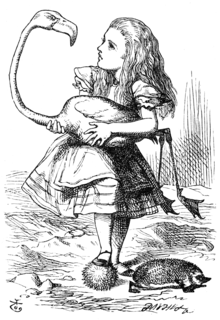
Fiction any story or setting that is derived from imagination, can be conveyed through any medium (films, books, audio plays, games, etc.)

Fiction broadly refers to any narrative that is derived from the imagination—in other words, not based strictly on history or fact. It can also refer, more narrowly, to narratives written only in prose, and is often used as a synonym for the novel.
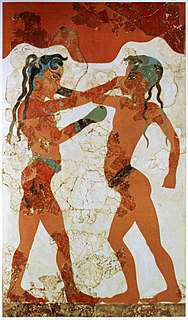
Martial arts codified systems and traditions of combat practices

Martial arts are codified systems and traditions of combat practiced for a number of reasons such as self-defense, military and law enforcement applications, physical, mental and spiritual development; as well as entertainment and the preservation of a nation's intangible cultural heritage.
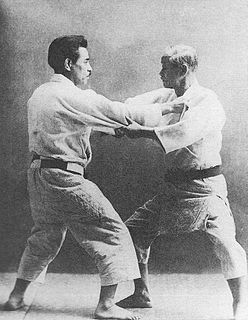
Judo modern martial art, combat and Olympic sport

Judo was originally created in 1882 by Jigoro Kano (嘉納治五郎) as a physical, mental, and moral pedagogy in Japan. It is generally categorized as a modern martial art, which later evolved into a combat and Olympic sport. Its most prominent feature is its competitive element, where the objective is to either throw or takedown an opponent to the ground, immobilize or otherwise subdue an opponent with a pin, or force an opponent to submit with a joint lock or a choke. Strikes and thrusts by hands and feet as well as weapons defenses are a part of judo, but only in pre-arranged forms and are not allowed in judo competition or free practice. A judo practitioner is called a judoka.

Contents

Books, comics and card games

Baritsu is the name given to a form of martial art described by Sir Arthur Conan Doyle in the Sherlock Holmes story "The Adventure of the Empty House", the first of The Return of Sherlock Holmes. Baritsu was used to explain how Holmes had managed to avoid falling into the Reichenbach Falls with Professor Moriarty as described in the story "The Final Problem". "The Adventure of the Empty House" was first published in Collier's on 26 September 1903.

Sherlock Holmes fictional private detective created by Arthur Conan Doyle

Sherlock Holmes is a fictional private detective created by British author Sir Arthur Conan Doyle. Referring to himself as a "consulting detective" in the stories, Holmes is known for his proficiency with observation, forensic science, and logical reasoning that borders on the fantastic, which he employs when investigating cases for a wide variety of clients, including Scotland Yard.

Expurgation

Expurgation, also known as bowdlerization, is a form of censorship which involves purging anything deemed noxious or offensive from an artistic work, or other type of writing of media.

Okidoki ("Just a lot of bunny hops.")
Shiitake ("If I wanted to thrust my hand into hot sand I would go to the seaside.")
Upsidazi ("A waste of good bricks.")
No kando ("You made that one up.")
Tung-pi ("Bad-tempered flower-arranging.")

White Wolf Publishing was a roleplaying game and book publisher. The company was founded in 1991 as a merger between Lion Rampant and White Wolf Magazine, and was initially led by Mark Rein·Hagen of the former and Steve Wieck and Stewart Wieck of the latter. White Wolf Publishing, Inc. merged with CCP Games in 2006, White Wolf Publishing operating as an imprint of CCP hf, but ceasing in-house production of any material, instead licensing their properties to other publishers. It was announced in October 2015 that White Wolf had been acquired from CCP by Paradox Interactive. In November 2018, after most of its staff were dismissed for making controversial statements, it was announced that White Wolf would no longer function as an entity separate from Paradox Interactive.

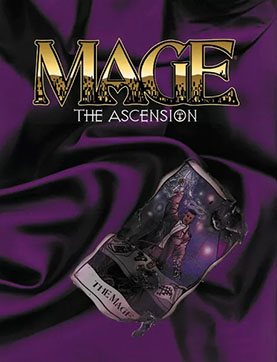
Mage: The Ascension

Mage: The Ascension is a role-playing game based in the World of Darkness, and was published by White Wolf Game Studio. The characters portrayed in the game are referred to as mages, and are capable of feats of magic. The idea of magic in Mage is broadly inclusive of diverse ideas about mystical practices as well as other belief systems, such as science and religion, so that most mages do not resemble typical fantasy wizards.

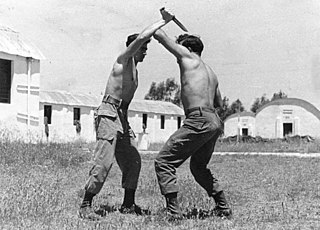
Krav Maga Jewish-Israeli martial art

Krav Maga is a military self-defence and fighting system developed for the Israel Defense Forces (IDF) and Israeli security forces derived from a combination of techniques sourced from boxing, wrestling, aikido, judo and karate, along with realistic fight training.

Video games

<i>Fist of the North Star</i> Japanese manga series

Fist of the North Star is a Japanese manga series written by Buronson and illustrated by Tetsuo Hara. Serialized in Weekly Shōnen Jump from 1983 to 1988, the 245 chapters were initially collected in 27 tankōbon volumes by Shueisha. Set in a post-apocalyptic world that has been destroyed by a nuclear war, the story centers on a warrior named Kenshiro, the successor of a deadly martial art known as Hokuto Shinken, which gives him the ability to kill most adversaries from within through the use of the human body's secret vital points, often resulting in an exceptionally violent and gory death. Kenshiro dedicates his life to fighting against the various gangs, bandits and warlords who threaten the lives of the weak and innocent, as well as rival martial artists, including his own "brothers" from the same school.

<i>Street Fighter: Assassins Fist</i> television series

Street Fighter: Assassin's Fist, known in Japan as Street Fighter: Ansatsuken, is a British live-action martial arts web series, TV series and feature film developed by Joey Ansah and Christian Howard. Based on the Capcom's popular Street Fighter video game series, the story focuses on Ryu and Ken as they uncover the past of their master, Gouken, and learn the secrets of their Dark Art, Ansatsuken.

Guy (<i>Final Fight</i>) video game character

Guy is a video game character who first appeared in the 1989 arcade beat-em-up Final Fight by Capcom. Guy, along with other Final Fight series characters, has also been a recurring player character in the Street Fighter fighting game series since Street Fighter Alpha: Warriors' Dreams in 1995. Guy is a crimson-clad ninpō master of Japanese descent who has been taught the Bushin form of ninjutsu. The kanji, 武神, written on Guy's top literally translates to "God of War".

Manga and anime

Himura Kenshin fictional character

Himura Kenshin, known as Kenshin Himura in the English-language anime dubs, is a fictional character and protagonist of the Rurouni Kenshin manga created by Nobuhiro Watsuki. Kenshin's story is set in a fictional version of Japan during the Meiji period. Kenshin is a former legendary assassin known as "Hitokiri Battōsai" (人斬り抜刀斎), more properly named Himura Battōsai (緋村抜刀斎). At the end of the Bakumatsu, he becomes a wandering swordsman, now wielding a sakabatō—a katana that has the cutting edge on the inwardly curved side of the sword, thus being nearly incapable of killing. Kenshin wanders the Japanese countryside offering protection and aid to those in need as atonement for the murders he once committed as an assassin. In Tokyo, he meets a young woman named Kamiya Kaoru, who invites him to live in her dojo, despite learning about Kenshin's past. Throughout the series, Kenshin begins to establish lifelong relationships with many people, including ex-enemies, while dealing with his fair share of enemies, new and old.

<i>Rurouni Kenshin</i> 1994 Japanese manga series written and illustrated by Nobuhiro Watsuki

Rurouni Kenshin: Meiji Swordsman Romantic Story, also known as Samurai X, is a Japanese manga series written and illustrated by Nobuhiro Watsuki. The story begins during the 11th year of the Meiji period in Japan (1878) and follows a former assassin from the Bakumatsu, known as Hitokiri Battosai. After his work against the bakufu, Hitokiri Battosai disappears to become Himura Kenshin: a wandering swordsman who protects the people of Japan with a vow to never take another life. Watsuki wrote the series upon his desire to make a shōnen manga different from the other ones that were published at the time, with Kenshin being a former assassin and the story taking a more serious tone as it continued. The manga revolves around themes of atonement, peace, and romance.

Kenshiro fictional human

Kenshiro is a fictional character and the protagonist of the Fist of the North Star manga series created by Tetsuo Hara and Buronson. According to Buronson, Kenshiro's character design was inspired by the martial artist Bruce Lee and the character Max Rockatansky from the Mad Max film series.

Movies and television

<i>Star Trek: The Next Generation</i> US-American science fiction television series from 1987–1994

Star Trek: The Next Generation is an American science fiction television series created by Gene Roddenberry. It originally aired from September 28, 1987 to May 23, 1994 on syndication, spanning 178 episodes over the course of seven seasons. The third series in the Star Trek franchise, it is the second sequel to Star Trek: The Original Series. Set in the 24th century, when Earth is part of a United Federation of Planets, it follows the adventures of a Starfleet starship, the USS Enterprise-D, in its exploration of the Milky Way galaxy.

William Riker fictional character in Star Trek

William Thomas "Will" Riker is a fictional character in the Star Trek universe appearing primarily as a main character in Star Trek: The Next Generation. Throughout the series and its accompanying films, he is the Enterprise's first officer, and briefly captain, until he accepts command of the USS Titan at the end of Star Trek: Nemesis. Riker is played by actor Jonathan Frakes.

The Legend of William Tell is a 16-part television fantasy/drama series produced in 1998 by Cloud 9 Productions in New Zealand. The basic premise of the series — a crossbow-wielding rebel defies a corrupt governor — and the name of the title character were adopted from the traditional story, but the series was set in a fantasy world and featured supernatural themes.

See also

References

  1. "A sneak preview of the next class up date!". Valve. April 1, 2009. Retrieved 2007-08-25.
  2. Capcom. Super Street Fighter II (in Japanese). Arcade. Level/area: Fei-Long's ending.
  3. "V: The Sanction". v.popapostle.com. Retrieved 2016-12-31.