The Jane K. Sather Professorship of Classical Literature is an endowed chair for the study of classics at the University of California, Berkeley. Established in 1914 after a donation by Jane K. Sather, widow of the Norwegian-American banker Peder Sather, the professorship requires its holder to spend one term at the university. Sather Professors would teach a full programme of classes. Since 1919, the post entails a set of lectures on a unified topic which is later published as a book by the University of California Press. According to classicist Oliver Taplin, the chair is "the most prestigious [professorship] in the subject in the world". [1]
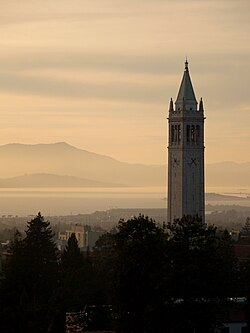
In 1886, the Norwegian-American banker Peder Sather died, leaving a substantial fortune to his second wife Jane K. Sather. [2] In 1900, after managing the bequest herself for some time, she decided to make an initial donation of $75,000 and other assets to the University of California at Berkeley. At this time, Sather stipulated that her donation be used to establish a professorship of the Classics and a fund for the study of law. Shortly before her death in 1911, she arranged for the funds to be consolidated; they were now to pay for what would become the Sather Tower and the establishment of two professorships: one in Classics and one in historiography. [3] The Regents of the University of California complied with Sather's wishes and divided her donation accordingly. $100,000 were allocated for each of the professorships. [4] Although her husband had accumulated the initial donation, both the tower and the professorships were named after her. [5] In 1914, [1] Benjamin Ide Wheeler, the university's president, appointed the British archaeologist John Myres to be the first holder of the chair. [6]
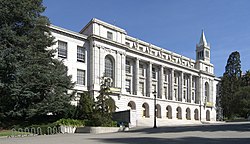
Initially, holder of the professorship would spend one term at Berkeley, teaching a full programme of classes. [7] In 1919, classicists Ivan Mortimer Linforth and George Calhoun modified the nature of the appointment: henceforth, holders would give a specified number of lectures (initially eight, later six) on a unified topic. The lectures should then be published as a book by the University of California Press. Until 1952, Sather Professors were given access to an office in the university's Wheeler Hall which included its own lavatory. [8] The office has since been replaced by rooms in Dwinelle Hall furnished with a dedicated library and portraits of past holders of the chair. [8]
The Sather Professorship has been held by numerous distinguished scholars including Cyril Bailey, E. R. Dodds, Denys Page, Geoffrey Kirk, Ronald Syme, Edward Rand, and Bernard Knox. [8] Appointments in the 21st century have included Latinists Philip Hardie, Alessandro Barchiesi, and Denis Feeney, Hellenists Helene P. Foley, and Gregory Nagy, and historians Mary Beard and Nicholas Purcell. [9] According to classicist Oliver Taplin, the chair is "the most prestigious [professorship] in the subject in the world". [1]
Beginning in 1919, the duties of the Sather Professorship included a series of six lectures preparatory to book-length publication. From 1967 to 2001, lecture series titles were not publicized; in these cases, the subsequent book title is given. Lecture series that did not or have not yet resulted in a book publication are indicated with a §.
| Year | Professor | Lecture Topic |
|---|---|---|
| 1913–14 | John Myres (I) | |
| 1914–15 | Henry W. Prescott | "The Classical Epic" |
| 1915–16 | no professor appointed due to World War I | |
| 1916–17 | Paul Shorey (I) | "The Broader Aspects of Platonism in European Literature" |
| 1916–17 | Gordon Jennings Laing | "Ancient Etruria" |
| 1917–18 | Francis Greenleaf Allinson | "The Greeks in Literature and Life" |
| 1917-18 | William Kelly Prentice | no formal series |
| 1918–19 | Paul Shorey (II) | no formal series |
| 1919–20 | Edward Kennard Rand | "The History of Classical Culture during the Middle Ages"; "The History of Pastoral Literature" |
| 1920–21 | John Adams Scott | "The Unity of Homer" |
| 1921–22 § | George L. Hendrickson | "Roman Satire" |
| 1922–23 | Herbert Weir Smyth | "Aeschylean Tragedy" |
| 1923–24 | Terrot R. Glover | "Herodotus" |
| 1924–25 | Duane R. Stuart | "Epochs of Greek and Roman Biography" |
| 1925–26 | John Burnet | "Platonism" |
| 1926–27 | John Myres (II) | "Who Were the Greeks?" |
| 1927–28 | Arthur L. Wheeler | "Catullus and the Traditions of Ancient Poetry" |
| 1928–29 | Paul Shorey (III) | "Platonism Ancient and Modern" |
| 1929–30 | Tenney Frank | "Life and Literature of the Roman Republic" |
| 1930–31 | Martin P. Nilsson | "The Mycenean Origins of Greek Mythology" |
| 1931–32 | Cyril Bailey | "Phases in the Religion of Ancient Rome" |
| 1932–33 | Robert J. Bonner | "Aspects of Athenian Democracy" |
| 1933–34 § | William Abbott Oldfather | "The Decline of Culture within the Roman Empire" |
| 1934–35 | Werner Jaeger | "Demosthenes: the Origin and Growth of his Policy" |
| 1935–36 | J. Wight Duff | "Roman Satire: Its Outlook on Social Life" |
| 1936–37 | Samuel Eliot Bassett | "The Poetry of Homer" |
| 1937–38 § | Benjamin Oliver Foster [A] | no regular series due to Foster's death |
| 1938–39 § | Henri Grégoire | "Constantine the Great and the Triumph of Christianity" |
| 1939–40 | H.J. Rose | "The Eclogues of Virgil" |
| 1940–41 | Axel W. Persson | "The Religion of Greece in Prehistoric Times" |
| 1941–42 § | John Beazley [B] (I) | no regular series due to World War II |
| 1942–43 | Hermann Fränkel | "Ovid: a Poet between Two Worlds" |
| 1943–44 | Gilbert Norwood | "Pindar" |
| 1944–45 | Rhys Carpenter | "Folk Tale, Fiction, and Saga in the Homeric Epic" |
| 1945–46 | Max Ludwig Wolfram Laistner | "The Greater Roman Historians" |
| 1946–47 | Lily Ross Taylor | "Party Politics in the Age of Caesar" |
| 1947–48 | Levi Arnold Post | "From Homer to Menander: Forces in Greek Poetic Fiction" |
| 1948–49 | Sir John Beazley (II) | "The Development of Attic Black-Figure" |
| 1949–50 | E.R. Dodds | "The Greeks and the Irrational" |
| 1950–51 | Ben Edwin Perry | "The Greek Romances" |
| 1951–52 | Arnold Wycombe Gomme | "The Greek Attitude to Poetry and History" |
| 1952–53 | André-Jean Fegustière | "Personal Religion among the Greeks" |
| 1953–54 | Jakob Larsen | "Representative Government in Greek and Roman History" |
| 1954–55 | Joshua Whatmough | "Poetic, Scientific, and Other Forms of Discourse" |
| 1955–56 | Sir Frank Adcock | "The Greek and Macedonian Art of War" |
| 1956–57 § | Georges Daux | "An International Organization in Antiquity: The Delphic Amphictiony" |
| 1957–58 | Denys Page | "History and the Homeric Iliad" |
| 1958–59 | Benjamin Dean Meritt | "The Athenian Year" |
| 1959–60 | Sir Ronald Syme | "Sallust" |
| 1960–61 | H.D.F. Kitto | "Poiesis, or Literary Structure" |
| 1961–62 | Arnaldo Momigliano | "The Classical Foundations of Modern Historiography" |
| 1962–63 | Bernard Knox | "The Heroic Temper: Studies in Sophoclean Tragedy" |
| 1963–64 | Bruno Snell | "Scenes from Greek Drama" |
| 1963–64 | Sterling Dow | "Knossos and Mycenae: the Great Powers in the Bronze Age" |
| 1964–65 § | Viktor Pöschl | "Man and Politics in Tacitus" |
| 1965–66 | William Bedell Stanford | "The Sound of Greek Poetry" |
| 1966–67 | Kenneth Dover | "Lysias and the Corpus Lysiacum" |
| 1967–68 | E. J. Kenney | The Classical Text |
| 1968–69 | Geoffrey Kirk | Myth: Meaning and Functions |
| 1969–70 | Hugh Lloyd-Jones | The Justice of Zeus |
| 1970–71 | F. W. Walbank | Polybius |
| 1971–72 | Moses Finley | The Ancient Economy |
| 1972–73 | Gordon Willis Williams | Change and Decline. Roman Literature in the Early Empire |
| 1973–74 | Albrecht Dihle | The Theory of Will in Classical Antiquity |
| 1974–75 | Emily Vermeule | Aspects of Death in Early Greek Art and Poetry |
| 1975–76 § | Ernst Badian | |
| 1976–77 | Walter Burkert | Structure and History in Greek Mythology and Ritual |
| 1977–78 | C. J. Herington | Poetry into Drama. Early Tragedy and the Greek Poetic Tradition |
| 1978–79 § | James Frank Gilliam | |
| 1979–80 § | G. E. L. Owen | |
| 1980–81 | Emilio Gabba | Dionysius and the History of Archaic Rome |
| 1981–82 | Wendell Clausen | Virgil's Aeneid and the Tradition of Hellenistic Poetry |
| 1982–83 | Christian Habicht | Pausanias' Guide to Ancient Greece |
| 1983–84 | G. E. R. Lloyd | The Revolutions of Wisdom : Studies in the Claims and Practice of Ancient Greek Science |
| 1984–85 | Anthony Snodgrass | An Archaeology of Greece |
| 1985–86 | Averil Cameron | Christianity and the Rhetoric of Empire : The Development of Christian Discourse |
| 1986–87 § | T. C. Gelzer | |
| 1988–89 | Bernard Williams | Shame and Necessity |
| 1989–90 § | Albert Heinrichs | |
| 1990–91 | Paul Zanker | The Mask of Socrates. The Image of the Intellectual in Antiquity |
| 1991–92 | Glen Bowersock | Fiction as History : Nero to Julian |
| 1992–93 | Alexander Nehamas | The Art of Living : Socratic Reflections from Plato to Foucault |
| 1993–94 | Anne Pippin Burnett | Revenge in Attic and Late Tragedy |
| 1994–95 | Gian Biagio Conte | Julian |
| 1995–96 § | Froma Zeitlin | |
| 1996–97 | Brunilde Ridgway | Prayers in Stone : Greek Architectural Sculpture ca. 600-100 B.C.E. |
| 1997–98 | Michael Frede | A Free Will. Origins of the Notion in Ancient Thought |
| 1998–99 | Henk Versnel | "Coping with the Gods; Wayward Readings in Greek Theology" |
| 1999–2000 § | Anna Morpurgo Davies | "Names and Naming in Ancient Greece: Language, Culture and Continuity" |
| 2000–01 | Brian Stock | Augustine's Inner Dialogue. The Philosophical Soliloquy in Late Antiquity |
| 2001–02 | Gregory Nagy | "Homer the Classic" |
| 2002–03 | Fergus Millar | "A Greek Roman Empire: Power, Belief and Reason under Theodosius II (A.D. 408-450)" |
| 2003–04 | Denis Feeney | "Charts of Roman Time: The Uses of Time in the Formation of Roman Culture" |
| 2004–05 | David Sedley | "Creationism and Its Critics in Antiquity" |
| 2005–06 | Roger S. Bagnall | "Everyday Writing in the Graeco-Roman East" |
| 2006–07 | Tonio Hölscher | "Visual Power in Ancient Greece and Rome" |
| 2007–08 | Helene P. Foley | "Reimagining Greek Tragedy on the U.S. Stage" |
| 2008–09 | Mary Beard | "Roman Laughter" |
| 2009–10 § | Heinrich von Staden | "The Scientific Lives of Animals: Ancient Greece and Rome" |
| 2010–11 § | Alessandro Barchiesi | "The War for Italia: Conflict and Collective Memory in Vergil's Aeneid" |
| 2011–12 § | Nicholas Purcell | "Venal Histories: The Character, Limits, and Historical Importance of Buying and Selling in the Ancient World" |
| 2012–13 | Robert Parker | "Greek Gods Abroad" |
| 2013–14 § | François Lissarrague | "Panta Kala: Heroic Warriors and the Aesthetics of Weaponry in Greek Art" |
| 2014–15 § | Richard P. Martin | "Comic Community: Laughter and Loathing in Athens" |
| 2015–16 | Philip Hardie | "Classicism and Christianity in Late Antique Latin Poetry" |
| 2016–17 § | M. M. McCabe | "Seeing and Saying: Plato on Virtue and Knowledge" |
| 2017–18 § | Maurizio Bettini | "City of the Spoken Word: Orality and the Foundations of Roman Culture" |
| 2018–19 | Jack L. Davis | "A Bronze Age Greek State in Formation" |
| 2019–20 | Josiah Ober | "The Greeks and the Rational: The Discovery of Practical Reason" |
| 2020–21 | no professor appointed due to COVID-19 pandemic | |
| 2021–22 | Emily Gowers | "The Small Stuff of Roman Antiquity" |
| 2022–23 § | Greg Woolf | "The Rhythms of Rome: Seasonality and society in the early empire" |
| 2023–24 § | Victoria Wohl | "The Poetry of Being and the Prose of the World in Early Greek Philosophy" |
Writing for The Times Literary Supplement , poet and author Robert Bringhurst states that the Sather Lectures and its associated publications "include many major works of classical scholarship". [10] The 1969 Lectures, given by Hellenist Hugh Lloyd-Jones, offered "an important re-examination of the religious beliefs of the Greeks in the pre-classical and classical periods". [11] They resulted in 1971 in the publication of Lloyd-Jones' first influential publication, The Justice of Zeus. [11] In 1970, [9] historian F. W. Walbank delivered the Sather Lectures on the Greek writer Polybius. His resulting book, Polybius (1972), was still considered the standard work on this topic in the early 21st century. [12] In 2007, Helene P. Foley gave the first Sather Lecture on the topic of classical reception studies. Analysing the re-performance of classical plays in the United States, her lectures are described by Taplin as "somewhat of a milestone" in moving the subject closer to the mainstream of classical scholarship. [1]