The Hood–Anderson Farm is a historic home and farm and national historic district located at Eagle Rock, Wake County, North Carolina, a suburb of the state capital Raleigh. The main house was built about 1839, and is an example of transitional Federal / Greek Revival style I-house. It is two stories with a low-pitched hip roof and a rear two-story, hipped-roof ell. The front facade features a large, one-story porch, built in 1917, supported by Tuscan order columns. Also on the property are the contributing combined general store and post office (1854), a one-room dwelling, a two-room tenant/slave house, a barn (1912), a smokehouse, and several other outbuildings and sites including a family cemetery.
Purdie House and Purdie Methodist Church is a historic home and Methodist church located near Tar Heel, Bladen County, North Carolina. The house was built about 1803–1806, and is a two-story, four bay by two bay, brick Federal-style dwelling. It has a steep gable roof and two-story gallery porches. Purdie Methodist Church is a mid-19th century temple-form Greek Revival-style frame building.
Willowdale, also known as Smith Place, Gunther Farm, and Willow Dale, is a historic home located at Painter, Accomack County, Virginia. It is a two-story, five-bay, gambrel roofed, frame dwelling with brick ends. There is a two-bay, single story extension that provides service from a 1+1⁄2-story kitchen with a large brick cooking fireplace at the south end. The wing dates to the early-19th century. The main block is an expansion of a 17th-century patent house of 1+1⁄2 stories that now forms the parlor at the north end of the main block. The house is representative of the vernacular "big house, little house, colonnade, kitchen" style that was common in colonial homes on the Eastern Shore of Virginia. Also on the property are the contributing ruins of a barn. Willowdale is one of the few remaining examples of the dwelling of an early colonial settler, landowner and farmer. The Smith family remained owners of Willowdale from 1666 until 2018.

Stagg House, also known as the Dr. Bradley House, is a historic home located at Burlington, Alamance County, North Carolina. It was built between 1857 and 1859, and is a two-story, T-shaped, frame dwelling. Connected to the main block are numerous one-story wings that appear to date to the late-19th century. It has a large wraparound porch and features a rectangular projecting front bay with tall and narrow windows. It is one of only a few antebellum houses surviving in Burlington.
Beallmont, also known as the Moore-Beall House, is a historic home located near Linwood, Davidson County, North Carolina. The main section dates to the late-18th or early-19th century, and is a two-story, Federal style frame dwelling. It has later additions of a one-story front porch, a two-story rear wing, and a one-story east side wing. The house was remodeled about 1840 in an approximation of Andrew Jackson Downing's "cottage" style.
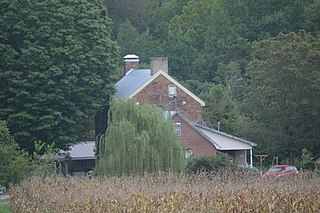
Shadrach Lambeth House, also known as Pennington Place and Shoaf House, is a historic home located near Thomasville, Davidson County, North Carolina. It was built about 1837, and is a two-story, three bay by two bay, Federal-style brick dwelling. It has a one-story brick kitchen addition added in the late-19th century.
Brummell's Inn is a historic inn and tavern near Thomasville, Davidson County, North Carolina. It was originally constructed as a small log house in the late 18th/early 19th century. It was expanded in about 1814 in a vernacular Late Georgian / Early Federal style, with later additions. The resultant building is two-stories and eight bays wide. Also on the property are a contributing smokehouse, barn, and cemetery. The stagecoach inn operated into the 1850s, after which it was used as a dwelling house.
Samuel B. Stauber Farm is a historic farm complex and national historic district located near Bethania, Forsyth County, North Carolina. The district encompasses five contributing buildings dated between about 1852 and 1900. They include the two-story, three bay Greek Revival style farmhouse (1852); barn ; a slave dwelling ; a mid-to-late 19th century smokehouse; and a corn crib / granary.
Baker Farm, also known as Perdue Farm, is a historic home and farm complex located near Bunn, Franklin County, North Carolina. The house was built in the first quarter of the 19th century and renovated in 1856 in the Greek Revival style. It is a two-story, three bay frame dwelling with a late-19th century two-story rear wing. Also on the property are 10 contributing outbuildings including a smokehouse, wash house, two barns, a storage shed, and three tobacco barns.

Joseph Freeman Farm is a historic farm complex and national historic district located near Gates, Gates County, North Carolina. The district encompasses six contributing buildings, one contributing site, and three contributing structures. The main house was built about 1821, and is a two-story, two-bay dwelling in a transitional Georgian / Federal style. A separate two-room kitchen/dining room ell was added about 1915. Associated with the house are the contributing smokehouse, privy, pump house, and domestic well. Contributing farm outbuildings include the lot well, equipment shelter, feed and livestock barn, and slave / tenant house.
Bell-Sherrod House is a historic home located at Enfield, Halifax County, North Carolina. It was built about 1859, and is a two-story, rectangular, Italianate-style frame dwelling, with a Greek Revival-style front porch. It has a shingled hip roof pierced by two interior chimneys and is sheathed in weatherboard. A conservatory was added about 1915. The house was restored about 1987.
Summer Villa and McKay–Salmon House is a historic plantation complex and national historic district located near Lillington, Harnett County, North Carolina. It encompasses seven contributing buildings on a rural farm complex. Summer Villa was built about 1849, and is a two-story, five-bay, Greek Revival style dwelling updated in the early 20th century Classical Revival style. It features a central, two-story pedimented portico supported by monumental Doric order columns with a one-story wraparound porch. The outbuildings associated with Summer Villa include the "Playhouse", carriage house, corn crib and three outbuildings. The McKay–Salmon House built in the last quarter of the 19th century and is a one-story decorated frame cottage.

Melrose is a historic home located in the Murfreesboro Historic District at Murfreesboro, Hertford County, North Carolina. It was built about 1805, as a two-story, Federal-style brick dwelling with a gable roof and interior end chimneys. Two-story, two-bay, Greek Revival-style wings were added in the mid-19th century. It is seven bays wide and features a tetrastyle portico supported by Ionic order columns and a Second story semi-circular balcony. It was built by Congressman William H. Murfree, son of Hardy Murfree.
The Black-Cole House is a historic plantation house located near Eastwood, Moore County, North Carolina.
Dr. Franklin Hart Farm, also known as Hidden Path, is a historic home and farm and national historic district located near Drake, Nash County, North Carolina. It includes a collection of well-preserved mid-19th to early-20th century dwellings and farm outbuildings. The main house was built about 1845, and is a two-story, three-bay, single pile I-house with Federal / Greek Revival style design elements. The front facade features a two-tier portico carried by massive, unusual turned and banded columns. Also on the property are the contributing detached kitchen building, smokehouse, seven tobacco barns, corn crib, mule barn, packhouse, and seven tenant houses. The Hart family owned and farmed the land from about 1770 until 1979.

Jacob Jackson Farm, also known as Maple Hill, is a historic home and farm and national historic district located near Hillsborough, Orange County, North Carolina. The Maple Hill dwelling consists of a single pen, hewn log cabin joined in 1940 by an ell to a two-story, weatherboarded log Federal farmhouse, and a 1 1/2-story, mid-19th century Greek Revival style wing. A frame dining room/kitchen block was added to the cabin in 1946. Also on the property are the contributing barn and agricultural landscape.
Benjamin May-Lewis House is a historic home located near Farmville, Pitt County, North Carolina. It was built in the 1830s, as a two-story, three-bay, single pile, Federal style frame dwelling with a rear shed wing. It was remodeled in the 1850s with Greek Revival style design elements. Also on the property are the contributing smokehouse and other farm related outbuildings.

Green River Plantation is a historic plantation house on over 360 acres located near Columbus, Polk County, North Carolina. The oldest section of the "Big House" was built between the years 1804–1807, and is a two-story, four-bay, Late Federal style frame dwelling. A later two-story, four-bay, brick Greek Revival style dwelling was built beside the original structure in the mid-19th century. The two sections were joined in the late 19th century by a two-story section and grand staircase to form a structure that is over 10,000 square feet in size and boasts over 42 rooms and spaces. The plantation house was built by Joseph McDowell Carson, son of Col. John Carson, who built Carson House at Marion, North Carolina. The later-built section of the home was the residence of Samuel Price Carson, North Carolina State Senator and U.S. Federal Representative, and younger brother of Joseph McDowell Carson.

Wilson Kindley Farm and Kindley Mine is a historic home, farm, gold mine, and national historic district located near Asheboro, Randolph County, North Carolina. The Wilson Kindley House was built around 1873, and is a two-story, single-pile, three-bay, vernacular Greek Revival style brick dwelling. It has a moderately pitched gable roof and overhanging eaves. Other contributing resources are the well, wheathouse, the agricultural landscape, and the Kindley Mine, which was dug in the later quarter of the 19th century.
Edmondson-Woodward House is a historic plantation house located near Stantonsburg, Wilson County, North Carolina. It was built about 1830, and is a two-story, three-bay, single pile, "L"-plan, Federal style frame dwelling. It has a two-story wing added in the mid-19th century, side gable roof, exterior end chimneys, and hipped-roof porch with flared columns.