| St John's Church | |
|---|---|
| | |
| Religion | |
| Affiliation | Church of England |
| Ecclesiastical or organizational status | Active |
| Year consecrated | 1882 |
| Location | |
| Location | Seaborough, Dorset, England |
| Geographic coordinates | 50°51′01″N2°48′40″W / 50.8502°N 2.8110°W |
| Architecture | |
| Architect(s) | George R. Crickmay |
| Type | Church |
St John's Church is a Church of England church in Seaborough, Dorset, England. Much of the church dates to a rebuild of 1882 and it now forms part of the Beaminster Area Team Ministry. [1] The church is a Grade II listed building. [2]
A church at Seaborough is known to have existed as early as the 13th century, with the first known rector being recorded in 1244. In 1415, John Golde, the owner of the manor and advowson of Seaborough, gave the rector Rev. John Threddar a plot of land to build a new church. The new church was subsequently built and a north transept was added in the late 15th-century, after the building had become too small for the congregation. In 1729–30, on account of the church's main body and roof being in poor condition, and the transept found to be defective, a new transept was built and the rest of the church was repaired, re-roofed and fitted with new seating. [3] [4]
In its final form, the church was made up of a nave, chancel, north transept and south porch. It had a gallery at the west end of the nave. [3] A new harmonium was installed in the church on 11 January 1857. It cost £10 and was played for the first time by Mr. H. Cole, the organist of St John's in Yeovil. [5]
As early as 1876, [6] the church was in a dilapidated state and its accommodation was also considered inadequate to serve the scattered population of the parish. A decision was made to rebuild, restore and enlarge the church. [7] The plans were drawn up in 1880 by George R. Crickmay of Westminster and Weymouth, with accommodation provided for 59 adults and 21 children. [8]
Funds were raised through the efforts of the rector of Seaborough, Rev. T. M. Shaw, and a number of supporters. Owing to the small size of the parish, an appeal was made for donations from further afield for "carrying out and completing this good and much-needed work". [9] In June 1880, the Bath and Wells Diocesan Church Building Society granted £40 towards the project. [10]
In October 1881, the tender of Mr. B. Chambers of Beaminster was accepted for rebuilding and restoring the church. [9] In April 1882, Rev. Shaw was granted use of St Mary's at Drimpton to hold morning services on alternate Sundays for his parishioners. Work on St John's began soon after. [11]
Much of St John's was rebuilt; both the chancel and west wall were completely rebuilt, as were parts of the north and south walls. [7] The church was lengthened by around 22 feet through the addition of the new chancel. [12] A vestry was added on the north side and a new porch on the south side, while the 1729 transept was retained. Three windows from the old church were reused and six new windows added. [7]
When pulling down the old church's porch, a 13th-century effigy of a crusader was discovered, having been used as a lintel over the door. As the clergy and contractors were unaware of its existence, the effigy's head was damaged and the arms broken off. However, it was retained and placed in the transept. [7] It is believed the effigy belongs to John Golde of Seaborough, a Somerset crusader who fought at the Siege of Damietta in 1219. [13] In recognition of his service, he was granted an estate at Seaborough in 1229. [14]
The cost of the work was initially expected to be £780 but unforeseen additional work saw the amount reach £980 in the end. [7] [15] With Mr. B. Chambers as the main contractor, W. A. Stoodley was the foreman of the works and Crickmay & Son supervised. Harry Hems of Exeter carried out the carved work. [16] St John's and its burial ground were consecrated by the Bishop of Bath and Wells, the Right Rev. Lord Arthur Hervey, on 5 December 1882. [7]
In 1902, the church was repaired and reseated by Captain Ralph Cecil Batley of Seaborough Court. [15] In 1988, the building was re-roofed and the bell-cot repaired and strengthened. [17] In 2019, the church's two bells were restored by John Taylor & Co of Loughborough. [18] They were rehung on new fittings and first used again on 29 September 2019. [19]
St John's is built of local stone, with Hamstone dressings and roofs covered with slate. It is made up of a nave, chancel, north transept, north vestry and south porch. On the west gable is a bell-cot for two bells, [7] and on the east gable is a stone cross. [2] Internally the walls of the church are rough-stuccoed. The 1882 barrel-vaulted roof uses panelled and varnished red deal from Oslo. [12]
The chancel arch of 1882 is supported by polished Devonshire marble columns, which rest on carved Bath stone corbels. [7] The nave has two reset windows of 15th-century date; the one in the north wall is of three-lights and the one in the west wall of two-lights. [20] The church's windows are filled with cathedral glass. [7]
The nave's flooring is made up of wood blocks, laid diagonally. Much of the church's 1882 internal paving uses tiles from the potteries of W. Carter of Poole. Encaustic tiles from Maw & Co of Broseley were used in the chancel. [16] The chancel steps are of Blue Pennant stone, as is the slab the altar rests on. During the 1882 work, seats of Oslo red deal were placed in the chancel area and the nave's old pews were replaced by chairs. [7]
The vestry has a communion table and coffin stool of 17th-century date. The effigy in the transept has been dated to the mid-13th century. The transept also contains a tablet and bust on a plinth to Adam Martin, dated 1738. The transept has a piscina formed from a shaft dating to the late 12th century. [20] The church's two bells date to 1712 and were cast at Thomas Knight. [18]
Many gifts were received as part of the 1882 work including an altar cloth presented by Mrs. Maynard Shaw, velvet drapery for the reredos by Miss Stephens, the lectern and hangings for the lectern and reading desk by Mrs. Joseph Studley, the brass cross and candlesticks by Mr. Edward Shaw (brother of the rector) and the carpet for the chancel steps by Mrs. Edward Shaw. The pulpit and font were retained from the old church. [7]
In 1928, a stained glass window was installed in the transept in memory of William Rowland Mitchell of Seaborough Court (died in 1925) by his wife and sons. As the Bishop of Taunton was unable to carry out the dedication service in July 1928, duties were shared by Prebendary Langham (vicar of Crewkerne) and Rev. Canon Rowling (rector of Seaborough). The window was unveiled on the day of dedication by Lieutenant-Commander Mitchell and Lieutenant-Commander Pawlett. [21]
St Martin in the Bull Ring is a Church of England parish church in the city of Birmingham, West Midlands, England. It is the original parish church of Birmingham and stands between the Bull Ring Shopping Centre and the markets.
All Saints' Church, Bakewell, is the parish church of Bakewell, Derbyshire, England. It is a Grade I listed building.
St Mary's Church is an Anglican parish church in Nantwich, Cheshire, England. The church is recorded in the National Heritage List for England as a designated Grade I listed building. It has been called the "Cathedral of South Cheshire" and it is considered by some to be one of the finest medieval churches, not only in Cheshire, but in the whole of England. The architectural writer Raymond Richards described it as "one of the great architectural treasures of Cheshire", and Alec Clifton-Taylor included it in his list of "outstanding" English parish churches.
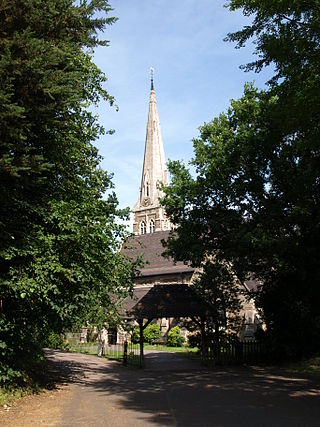
St. Mary's Church, Selly Oak is a Church of England parish church in Selly Oak, Birmingham, England.
The Church of St Mary Magdalene is the Church of England parish church for the village of Ditcheat, Somerset, England. There has been a church on the site since 824, and the present building owes much of its grandeur to the Abbots of Glastonbury. Historic England have designated it a Grade I listed building.
St James' Church is the Church of England parish church of Longborough, Gloucestershire, England. It is in the deanery of Stow, the archdeaconry of Cheltenham and the diocese of Gloucester. Its benefice is combined with those of St David, Moreton-in-Marsh, St Mary, Batsford, St Thomas of Canterbury, Todenham, and St Leonard, Lower Lemington. It contains fabric from the 12th century and is recorded in the National Heritage List for England as a designated Grade I listed building.
St Mark's Anglican Church is a heritage-listed church at 55 Albion Street, Warwick, Southern Downs Region, Queensland, Australia. It is the second church of that name on that site. It was designed by Richard George Suter and built in 1868 by John McCulloch. It was added to the Queensland Heritage Register on 21 October 1992.
St. Mary's Church is a Church of England church in Drimpton, West Dorset, England. The church opened in 1867 and now forms part of the Beaminster Area Team Ministry.
The Church of Saint Mary the Virgin is the Church of England parish church of Bampton, West Oxfordshire. It is in the Archdeaconry of Dorchester in the Diocese of Oxford.
The Church of St John the Evangelist is a Church of England church in Clevedon, Somerset, England. Designed by William Butterfield, it was built in 1876–78 at the expense of Sir Arthur Elton and has been a Grade II* listed building since 1976.
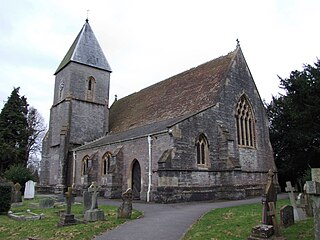
Holy Trinity Church is a Church of England church in Walton, Somerset, England. It was rebuilt in 1865–66 to the design of Rev. J. F. Turner and is a Grade II listed building.
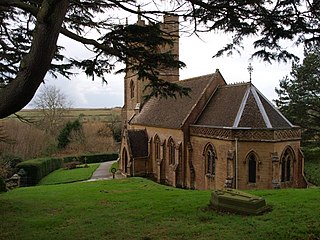
St Andrew's Church is a Church of England parish church in Corton Denham, Somerset, England. It was built in 1869–70 to replace an earlier church of 13th-century origin. The church is a Grade II listed building. Historic England describes the building as "relatively unaltered" with a "balanced, single-phase composition" and praises the quality of the architectural detailing. The church now forms part of the Cam Vale Benefice.
St Mary's Church is a Church of England parish church in Mosterton, Dorset, England. The church was designed by Edmund Pearce and built in 1832–33 to replace an earlier building. The church is now part of the Beaminster Area Team Ministry and is a Grade II listed building.
The Church of St John the Evangelist is a Church of England parish church in Tatworth, Somerset, England. It was built in 1850–51 to the design of Charles Pinch of Bath and is a Grade II listed building.
Christ Church was a Church of England church in Crewkerne, Somerset, England. It was constructed in 1852–1854 to the designs of James Mountford Allen. Christ Church was demolished in 1975 and the site is now occupied by a residential development, Christchurch Court.
St Mary's Church is a Church of England parish church in Frome, Somerset, England. It was built in 1862–1864 to the designs of C. E. Giles and is a Grade II listed building.
The Church of St Mary the Virgin, Ivinghoe, is a Church of England, Grade I listed church in the village of Ivinghoe, Buckinghamshire, in the United Kingdom. It stands on the main High Street of the village surrounded by a churchyard.
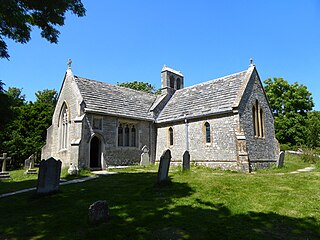
St Mary's Church is a former Church of England parish church in Tyneham, Dorset, England. The church, which is a Grade II listed building, has 13th-century origins, with later additions, alterations and restorations. It is now under the care of the Ministry of Defence and is used as a museum and monument.
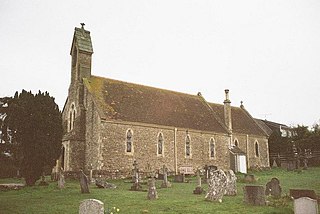
All Saints' Church is a former Church of England church in Stour Row, Dorset, England. The church, a Grade II listed building, was designed by John Hicks and built in 1867. The church formed part of the Stour Vale Benefice and was closed in 2015.
Holy Trinity Church is a Church of England church in Salway Ash, Dorset, England. The church was designed by George Crickmay and built in 1887–89. It now forms part of the Beaminster Area Team Ministry.