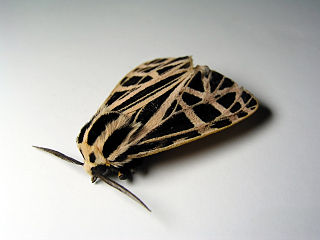
Grammia is a genus of tiger moths in the family Erebidae. The genus was described by Rambur in 1866.

Hadenella is a genus of moths of the family Noctuidae. It contains only one species, Hadenella pergentilis, which is found in North America, where it has been recorded from the Pacific Northwest and Alberta south at least to Utah and Colorado in the Rocky Mountains and southern California along the Pacific Coast. The habitat consists of sage steppes.
Apamea sora is a moth of the family Noctuidae. It is found in western North America, where it is distributed across the Pacific Northwest to the Alaska Panhandle and east to the Rocky Mountains of Alberta.

Autographa sansoni, the Alberta beauty, is a moth of the family Noctuidae. The species was first described by F. H. Wolley Dod in 1910. It is found in the western mountains of North America, from Alaska south to Oregon, Idaho and Arizona. Occurring mainly in the Pacific Northwest, it thrives in mid-to-high elevation conifer forest habitat, as well as some areas of coastal rain forest in the Coast range. However, it is also found in a non-contiguous range in sub-alpine forest in the Rocky Mountains, ranging from Alberta in the north, to New Mexico in the south. The wingspan of an adult ranges between 34 and 36 mm. It is widespread, and a relatively common species.
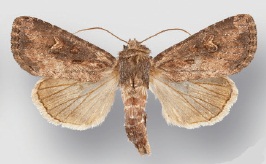
Resapamea passer, the dock rustic moth, is a moth in the family Noctuidae. It is found from central Alberta to northern Arizona in the Rocky Mountain region. In the mid-Continent it ranges from Minnesota and southern Ontario to Oklahoma and North Carolina, reaching the Atlantic Coast from Newfoundland to Maryland. The habitat consists of wetlands.

Hydraecia medialis is a moth in the family Noctuidae. It is found in western North America. East of the Cascades, it occurs as far north as the Cariboo region in south-central British Columbia. The range extends across the Rocky Mountains in Montana and then spreads north and south on the Great Plains to reach Alberta, the western Dakotas and northern New Mexico. The habitat consists of open ponderosa pine forests, drier sagebrush steppe and juniper woodlands.

Fishia yosemitae, the dark grey fishia or grey fishia, is a moth in the family Noctuidae. It is found from central Alberta to Colorado in the Rocky Mountain and Great Plains regions. It is also found in eastern, central, and southern California, as well as in the Intermountain region. The habitat consists of dry open areas, including open ponderosa pine forests, juniper woodlands and sagebrush steppe at low to middle elevations.

Manulea bicolor, the bicolored moth or yellow-edged footman, is a moth of the family Erebidae. It is found in boreal North America, from Labrador and Massachusetts to Yukon and British Columbia. In the Rocky Mountains, it ranges south to southern Colorado. The habitat consists of boreal forests, parklands and riparian cottonwoods in the prairies.
Grammia doris, the Doris tiger moth, is a moth of the family Erebidae. It was described by Jean Baptiste Boisduval in 1869. It is found in North America from British Columbia, northern Idaho, Alberta and western Montana. In the east, it is found in the Atlantic Coast provinces and from Nova Scotia to northern Florida and west to central Texas. The habitat consists of open willow/sedge fens and probably other open wetlands in the boreal forest.
Grammia margo is a moth of the family Erebidae. It was described by Schmidt in 2009. It is found in grassland and transitional habitats on the northern Great Plains and Southern Rocky Mountain Front ranges, south to east-central Arizona.
Grammia obliterata is a moth of the family Erebidae. It was described by Richard Harper Stretch in 1885. It is found in Russia, Mongolia and North America. The habitat consists of grasslands.

Grammia ornata, the ornate tiger moth or achaia moth, is a moth of the family Erebidae. It was described by Alpheus Spring Packard in 1864. It is found in western North America from southern British Columbia through the Pacific Northwest to southern California, northern Utah, and western Wyoming and Montana. It is found in a wide range of habitats, including open woodland.

Grammia phyllira, the phyllira tiger moth, is a moth of the family Erebidae. It was described by Dru Drury in 1773. It is found in North America from Quebec and New England south to Florida and west to Texas, Colorado and Alberta. The habitat consists of dry, open woodland and grassland. The species is listed as endangered in Connecticut.
Grammia speciosa is a moth of the family Erebidae. It was described by Heinrich Benno Möschler in 1864. It is found from Labrador west to British Columbia and Alaska. The habitat consists of wetlands, bogs and sub-Arctic tundra. The species is listed as endangered in Connecticut.
Grammia virguncula, the little virgin tiger moth, is a moth of the family Erebidae. It was described by W. Kirby in 1837. It is found across most of southern Canada and the United States, from the Rocky Mountains eastward. In the north, the range extends to northern Alberta and Newfoundland. In the south, it occurs along the Rocky Mountain to Apache County in Arizona and New Jersey in the east. It occurs in a variety of open wooded habitats, ranging from marshes, fens and bogs to transition parkland and prairie.
Grammia williamsii, or Williams' tiger moth, is a moth of the family Erebidae. It was described by Charles R. Dodge in 1871. It is found in North America from the Northwest Territories east to the northern Great Lakes region, New Brunswick and New England. It also occurs throughout the northern Great Plains, south at higher elevations to Arizona and New Mexico, west to south-eastern British Columbia and eastern California.
Grammia yukona is a moth of the subfamily Arctiinae. It was described by Schmidt in 2009. It is found in Yukon. The habitat consists of dry, rocky or eroding south-facing slopes.

Neoarctia beanii, or Bean's tiger moth, is a moth of the family Erebidae. It was described by Berthold Neumoegen in 1891. It is found in the Rocky Mountains, where it has been recorded from Alberta, British Columbia and southern Montana. The habitat consists of open forests, subalpine meadows and parklands.
Pararctia yarrowii, or Yarrow's tiger moth, is a moth of the family Erebidae. It was described by Richard Harper Stretch in 1874. It is found in North America from Hudson Bay to British Columbia and northern Arizona. The habitat consists of barren rocky fellfields and slides above the timberline. These moths are also found in the Pacific Northwest.
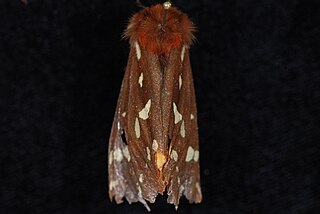
Platarctia parthenos, the St. Lawrence tiger moth, is a moth in the family Erebidae. It was described by Thaddeus William Harris in 1850. It is found in boreal North America, ranging from Alaska to Labrador, south to New Mexico and Arizona in the Rocky Mountains and to North Carolina in the Appalachian Mountains. The habitat consists of riparian areas and mixed hardwood-conifer forests at middle to high elevations.
