This is a list of structures, sites, districts, and objects on the National Register of Historic Places in North Carolina:
Aspen Hall is a historic plantation house located near Pittsboro, Chatham County, North Carolina. The original section was built in the 1790s, and took its present form between about 1830 and 1840. It is a two-story, weatherboarded gable roofed Federal style frame house, with a Greek Revival style facade. It was built by Joseph John "Chatham Jack" Alston, who enslaved as many as 163 people and also built the nearby Alston-DeGraffenried Plantation.
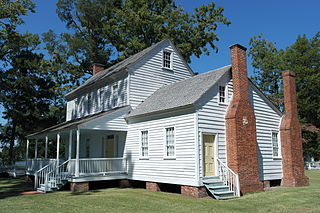
Bonner House is a historic home located at Bath, Beaufort County, North Carolina. It was built about 1835, and is a two-story frame dwelling with a one-story wing and rear shed addition. It sits on a brick pier foundation and has a side-hall plan. It is on land once owned by John Lawson, explorer and founder of Bath.

Sloop Point Plantation is a historic house located at Sloop Point, Pender County, North Carolina. It was built in 1729 according to dendrochronological dating and is possibly the oldest surviving framed building in the state of North Carolina. The house was built as a home for John Baptista Ashe and his wife Elizabeth Swann Ashe.

John Calvin Wilson House is a historic home located near Indiantown, Williamsburg County, South Carolina. It was built about 1847, and is a two-story, five-bay, frame central-hall plan I-house. It features a shed roofed, one-story "Carolina" or "rain porch" supported by four stuccoed brick columns. A one-story frame rear wing was added in 1939. John Calvin Wilson was a politician and a successful planter. He died at Richmond, Virginia of complications from a thigh wound sustained in the Battle of Cold Harbor.
Walston-Bulluck House, also known as the Pender Museum, is a historic home located at Tarboro, Edgecombe County, North Carolina. It was built about 1795, and is a one-story, three-bay, frame dwelling. It has a Hall and parlor plan and two reconstructed double-shouldered brick end chimneys. The house is sheathed in weatherboard, has a gable roof, and rests on a brick pier foundation. It was moved from its original location near Conetoe to its present site in 1969, and restored by the Edgecomb County Historical Society.

The Joseph P. Hunt Farm is an historic tobacco farm complex and national historic district located near Dexter, Granville County, North Carolina. Built about 1844 by Joseph Penn Hunt and Martha Michum Crews Hunt, the farmhouse is a two-story, three-bay, Greek Revival style dwelling. It has a two-story rear ell dated to the 1870s and a full-width front porch added in the 1920s. Also on the property are the contributing small frame outbuilding, potato house, corn crib, two tobacco barns, smokehouse, large horse barn, packhouse, and combination icehouse/carriage house. Representative of rural life during the brightleaf era, the farm was also the site of Breedlove Mill.
Woodstock is a historic plantation house located near Scotland Neck, Halifax County, North Carolina. The earliest section dates to about 1783, and is a two-story, vernacular frame dwelling with later rear additions. It was expanded in the mid-19th century to a romantic villa house three bays wide and two large bays deep with a shallow gable roof and one-story full-width front porch. The house is set in a formal landscape designed by Joseph B. Cheshire.
Thorbiskope, also known as the John Elliot House, is a historic plantation house located near Bunnlevel, Harnett County, North Carolina. It was built in two sections. The earliest section was built about 1820, and is a 1+1⁄2-story, Georgian / Federal style frame Coastal Cottage frame dwelling that forms the rear ell. About 1848, the two-story, five bay by two bay, Greek Revival style front section was added. It features a one-bay front portico.
The Gen. Joseph Arrington House is a historic plantation house located near Hilliardston, Nash County, North Carolina.
Bellemonte, also known as Dr. John F. Bellamy House, is a historic plantation house located at Rocky Mount, Nash County, North Carolina. The main block dates to 1817, and is a two-story, five-bay, late Georgian / Federal-style frame dwelling.

Burgaw Depot is a historic train station located at Burgaw, Pender County, North Carolina. It was built about 1850 by the Wilmington and Weldon Railroad, with a later 1898 T-shaped addition of passenger waiting rooms and offices and a 1916-1917 addition of freight and warehouse space. It is a long one-story rectangular frame building sheathed in a combination of lap and board and batten siding, and resting on cement, brick and wooden foundations. It is one of only two known surviving antebellum depots in North Carolina; the other is located at Selma, North Carolina.
Bannerman House is a historic plantation house located near Burgaw, Pender County, North Carolina. It was built about 1840, and is a large two-story, five-bay, L-shaped, Greek Revival style frame dwelling. It is sheathed in weatherboard and has a hipped roof pierced by three interior chimneys. The main facades each feature a one-bay pedimented portico, supported by colossal, flat-paneled pillars.
Beatty-Corbett House is a historic plantation house located near Ivanhoe, in Sampson County, Pender County, and Bladen County. The plantation is located at the tripoint of Sampson, Pender, and Bladen counties, with the house itself being located in Pender County. A two-story, side-hall Greek Revival style block was built about 1850, with a two-story, five-bay, double pile Classical Revival house added about 1900, and a two-room ell added about 1920. The central bay of the c. 1900 section features a two-story portico. Also on the property are the contributing round-notched log stable, smokehouse, tool shed, washhouse, a sulfur spring, tobacco barn, several sections of ornate cast iron fence, the site of a former turpentine still, the site of a former riverboat landing, and the site of a former cotton gin.

Penderlea Homesteads Historic District is a national historic district located near Willard, Pender County, North Carolina. The district encompasses 186 contributing buildings, two contributing sites, and nine contributing structures in a rural section of Pender County. The district includes a collection of community buildings and houses constructed as part of the Penderlea Homesteads New Deal project. It includes 88 one-story, frame dwellings constructed as part of the original homestead project. Penderlea was the first experimental farm-city colony established by the United States government through the United States Department of the Interior’s Division of Subsistence Homesteads.

Green River Plantation is a historic plantation house on over 360 acres located near Columbus, Polk County, North Carolina. The oldest section of the "Big House" was built between the years 1804–1807, and is a two-story, four-bay, Late Federal style frame dwelling. A later two-story, four-bay, brick Greek Revival style dwelling was built beside the original structure in the mid-19th century. The two sections were joined in the late 19th century by a two-story section and grand staircase to form a structure that is over 10,000 square feet in size and boasts over 42 rooms and spaces. The plantation house was built by Joseph McDowell Carson, son of Col. John Carson, who built Carson House at Marion, North Carolina. The later-built section of the home was the residence of Samuel Price Carson, North Carolina State Senator and U.S. Federal Representative, and younger brother of Joseph McDowell Carson.
John E. Wilson House is a historic home located near Dunn, Sampson County, North Carolina. It was built about 1878, and is a two-story, single pile, Italianate style frame dwelling with a rear ell. It has a center-false-gable roof and is sheathed in weatherboard. The front facade features an intricate double-tier porch. It was built as a boarding house for teachers and students in conjunction with Shady Grove School and has been moved twice, in 1975 and in 1984.

Davis-Whitehead-Harriss House is a historic home located at Wilson, Wilson County, North Carolina. It was built in 1858, and renovated in 1872 in the Italianate style. It is a two-story, three bays wide, "T"-plan, frame dwelling, with a rear ell. It has single-shouldered, brick end chimneys with stuccoed stacks and a one-story, hipped roof front porch. Also on the property is a two-story frame carriage house built in 1925.
Manalcus Aycock House is a historic home located at Black Creek, Wilson County, North Carolina. It was built in 1900, and is a large two-story, six-bay, rambling frame dwelling. It consists of a hipped-roof section with two-story cross-gable wings. It features a large front porch with half-timbering and sawnwork decoration and stained glass windows. Also on the property is a contributing hipped-roof garage.
Dr. H. D. Lucas House was a historic home located at Black Creek, Wilson County, North Carolina. It consisted of two sections: a one-story Greek Revival style doctor's office built about 1850, and a late-19th century, Victorian cottage dated to the early 1880s, which served as Dr. Lucas' residence. The cottage was a one-story, three-bay, single-pile frame dwelling with a steeply pitched gable roof. The house has been demolished.