Malaysian general election, 1964

Last updated

Malaysian general election, 1964
Flag of Malaysia.svg
  1959 25 April 1964 1969  

104 (of the 159) seats to the Dewan Rakyat
53 seats needed for a majority
Registered 2,681,895
Turnout 2,146,608 (78.9%)

 First partySecond partyThird party
  Tunku abd rahman.jpg SFPAS
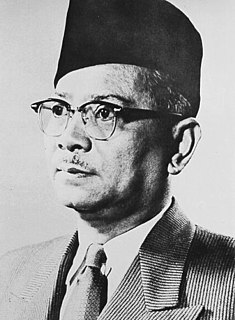
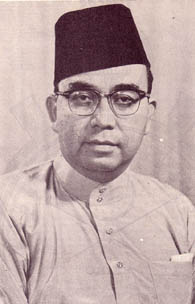
Leader Tunku Abdul Rahman Tan Chee Khoon Burhanuddin al-Helmy
Party Alliance Socialist Front PAS
Leader since23 August 195121 March 19641956
Leader's seat Kuala Kedah Batu No seat
Last election74 seats, 51.8%8 seats, 12.9%13 seats, 21.3%
Seats won8929
Seat changeIncrease2.svg 15Decrease2.svg 6Decrease2.svg 4
Popular vote1,204,340330,898301,187
Percentage58.5%16.1%14.6%
SwingIncrease2.svg 6.7%Increase2.svg 3.2%Decrease2.svg 6.7%

 Fourth partyFifth partySixth party
 UDPPPP Lee Kuan Yew.jpg
Leader Lim Chong Eu D. R. Seenivasagam Lee Kuan Yew
Party United Democratic Party People's Progressive Party PAP
Leader since196210 April 195321 November 1954
Leader's seat Tanjong Ipoh No seat
Last electionNew Party4 seats, 6.3%New Party
Seats won121
Seat changeDecrease2.svg 2
Popular vote88,22369,89842,130
Percentage4.3%3.4%2.0%

Pmap1964.gif

Prime Minister before election

Tunku Abdul Rahman
Alliance

Prime Minister-designate

Tunku Abdul Rahman
Alliance

A general election was held on Saturday, 25 April 1964 for members of the 2nd Parliament of Malaysia. Voting took place in 104 out of 159 parliamentary constituencies of Malaysia, each electing one Member of Parliament to the Dewan Rakyat, the dominant house of Parliament. [1] State elections also took place in 282 state constituencies in 11 (out of 14, except Sabah, Sarawak and Singapore) states of Malaysia on the same day, each electing one Member of the Legislative Assembly to the Dewan Undangan Negeri.

Parliament of Malaysia bicameral legislature of Malaysia

The Parliament of Malaysia is the national legislature of Malaysia, based on the Westminster system. The bicameral parliament consists of the Dewan Rakyat and the Dewan Negara (Senate). The Yang di-Pertuan Agong (King) as the Head of State is the third component of Parliament.
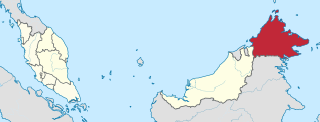
Sabah State of Malaysia

Sabah is a state of Malaysia located on the northern portion of Borneo. Sabah has land borders with the Malaysian state of Sarawak to the southwest and Indonesia's Kalimantan region to the south. The Federal Territory of Labuan is an island just off the Sabah coast. Sabah shares maritime borders with Vietnam to the west and the Philippines to the north and east. Kota Kinabalu is the state capital city, the economic centre of the state and the seat of the Sabah state government. Other major towns in Sabah include Sandakan and Tawau. As of the 2015 census in Malaysia, the state's population is 3,543,500. Sabah has an equatorial climate with tropical rainforests and abundant animal and plant species. The state has long mountain ranges on the west side which form part of the Crocker Range National Park. Kinabatangan River, second longest river in Malaysia runs through Sabah and Mount Kinabalu is the highest point of Sabah as well as of Malaysia.

Contents

The result was a victory for the Alliance Party, which won 89 of the 104 seats. Voter turnout was 78.9%. The result also contributed towards the eventual expulsion of Singapore from Malaysia. The Singaporean-based People's Action Party decided to run on the mainland, and although it attracted large crowds at its rallies, it won only one seat – that by Devan Nair, who represented the Bungsar constituency (now part of Seputeh and Lembah Pantai constituencies). It is thought by some historians that Finance Minister and MCA President Tan Siew Sin's appeal to the Chinese to avoid challenging the Malay special rights and risk merger with Indonesia helped the MCA retain its status as the "undisputed leader of the Chinese in the Malayan peninsula". Nevertheless, UMNO leaders were furious with the PAP.

Barisan Nasional right-wing political coalition founded in 1973

The National Front is a political coalition in Malaysia that was founded in 1973 as a coalition of right-wing and centre parties. They are currently the largest opposition coalition in the country's Dewan Rakyat.

Peoples Action Party ruling political party in Singapore

The People's Action Party is a major centre-right political party in Singapore. It was founded in 1954 as a pro-independence political party descended from an earlier student organization. It has gone on to dominate the political system of the nation.
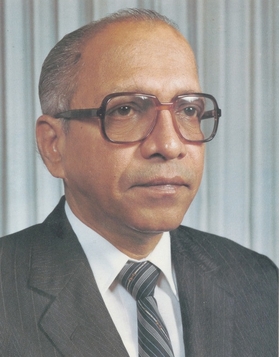
Devan Nair Malaysian politician

Devan Nair Chengara Veetil, also known as C. V. Devan Nair, was a Malaysian-Singaporean politician. He served as the third President of Singapore. Before his presidency, Nair led the Singaporean trade union movement and founded the National Trades Union Congress in 1961. He had also founded the Democratic Action Party along with Chen Man Hin in Malaysia. He was elected by the Parliament of Singapore on 23 October 1981, and served as President until his resignation on 28 March 1985.

It was the first parliamentary general election held after the formation of Malaysia in 1963. State elections were not held in Singapore, Sabah and Sarawak. Transitional provisions allowed the state legislatures of the three states to choose their parliamentary representatives until the next election. The three states have been allocated a total of 55 seats in the Malaysian Parliament: 15 seats for Singapore, 16 seats for Sabah and 24 seats for Sarawak. Together, the three states held 34% out the 159 seats in the parliament. This was intended to act as a check to prevent parliament from passing constitutional amendments (which require a two-thirds majority) without the agreement of representatives from the three new states. After Singapore left Malaysia, Sabah and Sarawak were only left with 25% of the seats, as a consequence Sabah and Sarawak were not able to stop the parliament from approving laws that would encroach on the special rights granted to Sabah and Sarawak upon merger to form Malaysia.
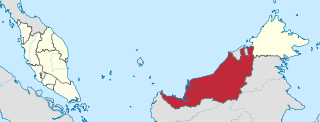
Sarawak State of Malaysia

Sarawak is a state of Malaysia. The largest among the 13 states, with an area almost equal to that of Peninsular Malaysia, Sarawak is located in northwest Borneo Island, and is bordered by the Malaysian state of Sabah to the northeast, Kalimantan to the south, and Brunei in the north. The capital city, Kuching, is the largest city in Sarawak, the economic centre of the state, and the seat of the Sarawak state government. Other cities and towns in Sarawak include Miri, Sibu, and Bintulu. As of the 2015 census, the population of Sarawak was 2,636,000. Sarawak has an equatorial climate with tropical rainforests and abundant animal and plant species. It has several prominent cave systems at Gunung Mulu National Park. Rajang River is the longest river in Malaysia; Bakun Dam, one of the largest dams in Southeast Asia, is located on one of its tributaries, the Balui River. Mount Murud is the highest point in Sarawak.

A constitutional amendment is a modification of the constitution of a polity, organization or other type of entity. Amendments are often interwoven into the relevant sections of an existing constitution, directly altering the text. Conversely, they can be appended to the constitution as supplemental additions (codicils), thus changing the frame of government without altering the existing text of the document.

Two Alliance candidates were returned unopposed.

Results

Dewan Rakyat

e    d  Summary of the 25 April 1964 Malaysian Dewan Rakyat election results
PartyVoteSeats
Votes%Won%+/–
Alliance Party [lower-alpha 1] Alliance1,204,34058.538985.58+15
United Malays National Organisation UMNO38.15956.73+7
Malaysian Chinese Association MCA18.72725.96+8
Malaysian Indian Congress MIC1.632.880
Malayan Peoples' Socialist Front [lower-alpha 2] SF330,89816.0821.92-6
Labour Party of Malaya Lab21.92-4
Parti Ra'ayat Ra'ayat00.00-2
Pan-Malayan Islamic Party PMIP301,18714.6498.65-4
United Democratic Party UDP88,2234.2910.96New
People's Progressive Party PPP69,8983.4021.92-2
People's Action Party PAP42,1302.0510.96New
National Party Negara7,3190.3600.00-1
IndependentsIND13,5090.6600.00-3
Valid votes2,057,504
Invalid/blank votes 89,104
Total (turnout: 78.9%)2,146,608100.00104100.000
Did not vote 535,287
Registered voters 2,681,895
Source: Nohlen et al.
  1. Contested using kapal layar election symbol on the ballot papers.
  2. Contested using kepala lembu, cangkul, pen, rantai election symbol on the ballot papers.

Results by state

State Assemblies

Related Research Articles

1999 Malaysian general election election

A general election was held on Monday, 29 November 1999 for members of the 10th Parliament of Malaysia. Voting took place in all 193 parliamentary constituencies of Malaysia, each electing one Member of Parliament to the Dewan Rakyat, the dominant house of Parliament. State elections also took place in 394 state constituencies in 11 out of 13 states of Malaysia on the same day.

2004 Malaysian general election

A general election was held on Sunday, 21 March 2004 for members of the 11th Parliament of Malaysia. Voting took place in all 219 parliamentary constituencies of Malaysia, each electing one Member of Parliament to the Dewan Rakyat, the dominant house of Parliament. State elections also took place in 505 state constituencies in 12 out of 13 states of Malaysia on the same day.

1969 Malaysian general election

A general election was held on Saturday, 10 May 1969 for members of the 3rd Parliament of Malaysia, although voting was postponed until between 6 June and 4 July 1970 in Sabah and Sarawak. This election marked the first parliamentary election held in Sabah and Sarawak after the formation of Malaysia in 1963.

Elections in Malaysia

Elections in Malaysia exist at two levels: federal level and state level. Federal level elections are those for membership in the Dewan Rakyat, the lower house of Parliament, while state level elections are for membership in the various State Legislative Assemblies. The heads of executive branch at both the federal and state levels, the Prime Minister and Menteri Besar/Chief Ministers respectively, are indirectly elected, usually filled by a member of the majority party/coalition in the respective legislatures.

1978 Malaysian general election

A general election was held between Saturday, 8 July and Saturday, 22 July 1978 for members of the 5th Parliament of Malaysia. Voting took place in all 154 parliamentary constituencies of Malaysia, each electing one Member of Parliament to the Dewan Rakyat, the dominant house of Parliament. State elections also took place in 276 state constituencies in 10 states of Malaysia on the same day.

1959 Malayan general election

A general election was held on Wednesday, 19 August 1959 for members of the first Parliament of the Federation of Malaya, the first parliamentary election in Malaya. It was the third national-wide election held in Malaya since the end of World War II. Malaya later formed Malaysia with three other states in 1963. Voting took place in all 104 parliamentary constituencies of Malaya, each electing one Member of Parliament to the Dewan Rakyat, the dominant house of Parliament. Voter turnout was 73.3%.

1995 Malaysian general election

A general election was held between Monday, 24 April and Tuesday, 25 April 1995 for members of the 9th Parliament of Malaysia. Voting took place in all 192 parliamentary constituencies of Malaysia, each electing one Member of Parliament to the Dewan Rakyat, the dominant house of Parliament. State elections also took place in 394 state constituencies in 11 out of 13 states of Malaysia on the same day.

1986 Malaysian general election

A general election was held between Saturday, 2 August and Sunday, 3 August 1986 for members of the 7th Parliament of Malaysia. Voting took place in all 177 parliamentary constituencies of Malaysia, each electing one Member of Parliament to the Dewan Rakyat, the dominant house of Parliament. State elections also took place in 351 state constituencies in 11 states of Malaysia on the same day.

1990 Malaysian general election

A general election was held between Saturday, 20 October and Sunday, 21 October 1990 for members of the 8th Parliament of Malaysia. Voting took place in all 180 parliamentary constituencies of Malaysia, each electing one Member of Parliament to the Dewan Rakyat, the dominant house of Parliament. State elections also took place in 351 state constituencies in 11 states of Malaysia on the same day.

1982 Malaysian general election

A general election was held between Thursday, 22 April and Monday, 26 April 1982 for members of the 6th Parliament of Malaysia. Voting took place in all 154 parliamentary constituencies of Malaysia, each electing one Member of Parliament to the Dewan Rakyat, the dominant house of Parliament. State elections also took place in 293 state constituencies in 11 states of Malaysia on the same day.

1974 Malaysian general election

A general election was held between Saturday, 24 August and Saturday, 14 September 1974 for members of the 4th Parliament of Malaysia. Voting took place in all 154 parliamentary constituencies of Malaysia, each electing one Member of Parliament to the Dewan Rakyat, the dominant house of Parliament. State elections also took place in 360 state constituencies in 12 states of Malaysia on the same day.

Alliance Party (Malaysia) political coalition in Malaysia

The Alliance Party was a political coalition in Malaysia. The Alliance Party, whose membership comprised United Malays National Organisation (UMNO), Malaysian Chinese Association (MCA) and Malaysian Indian Congress (MIC), was formally registered as a political organisation on 30 October 1957. It was the ruling coalition of Malaya from 1957 to 1963, and Malaysia from 1963 to 1973. The party became the Barisan Nasional in 1973.

The first Sarawak state election was held from Saturday, 10 May 1969 and scheduled to be completed on Saturday, 7 June 1969 which lasted for 4 weeks and was carried out in staggered basis. This was due to the lack of transportation and communication systems in the state at that time. The state election was held at the same time as the 1969 general election. The Dewan Rakyat of the Malaysian Parliament and all the state assemblies were dissolved on 20 March 1969, except for Kelantan and Sabah. The nomination date was set on Saturday, 5 April 1969. However, because of the riot occurred during 13 May incident and the declaration of emergency and the promulgation of Emergency Ordinance No. 1 of 1969 on 15 May 1969, all the ongoing polls were suspended until 1970. During when the suspension was enforced, polling in 9 out of 48 constituencies in Sarawak had started. None of the elections in Sarawak was completed at that time.

This article provides summaries of the federal and state election results for the Malaysian state of Perlis since 1954, together with links to the names of Perlis’s elected representatives in the Dewan Rakyat and Dewan Undangan Negeri.

The following is a list of electoral results in the State of Penang since the independence of Malaya from the British Empire in 1957. The results for both parliamentary and state constituencies, which return representatives to the Malaysian Parliament and the Penang State Legislative Assembly respectively, are as categorised below. The most recent state election was held on 9 May 2018.

This article provides summaries of the federal and state election results for the Malaysian state of Johor since 1954, together with links to the names of Johor’s elected representatives in the Dewan Rakyat and Dewan Undangan Negeri.

2018 Malaysian state elections

State elections were held in all states and territories in Malaysia except Sarawak on 9 May 2018, alongside general elections. Pakatan Harapan alliance received over 50% of the vote across the 12 states and territories where elections took place and won the most seats. They emerged as the largest faction in all states and territories except Kelantan, Terengganu, Perlis and Pahang.

References

  1. Dieter Nohlen, Florian Grotz & Christof Hartmann (2001) Elections in Asia: A data handbook, Volume II, p152 ISBN   0-19-924959-8