2028 Lebanese general election

Last updated

2028 Lebanese general election
Flag of Lebanon.svg
  2022
May 2028

All 128 seats to the Parliament of Lebanon
65 seats needed for a majority
 
Samir Geagea 7 (cropped).jpg
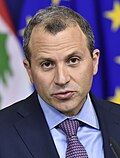
Visit of Gebran Bassil to the EC - P032956000201-452157 (cropped).jpg
Naim Qassem Visits Tasnim Office (3x4 cropped).jpg
Leader Samir Geagea Gebran Bassil Naim Qassem
Party Lebanese Forces FPM Hezbollah
Leader's seatDid not stand Batroun Did not stand
Last election191715

 
Nabih Berri, Speaker of the Lebanese Parliament - 2024.jpg
Minister of Health of Lebanon Russia meeting (cropped Taymour Jumblatt).jpg
EPP Political Assembly, 21 & 22 November 2024 (54155884258) (cropped).jpg
Leader Nabih Berri Taymur Jumblatt Samy Gemayel
Party Amal Movement PSP Kataeb
Leader's seat Zahrani Chouf Metn
Last election1584

 
Sleiman Frangieh 2.jpg
MICHEL MOAWAD - PHOTO 2021.jpg
Leader Hagop Pakradounian Suleiman Frangieh Michel Moawad
Party Tashnag Marada Movement Independence Movement
Leader's seat Metn Did not stand Zgharta
Last election322

Lebanese General election map 2026.png

Incumbent Prime Minister

Nawaf Salam
Independent


General elections in Lebanon are scheduled for 2028 to elect all 128 members of the Lebanese Parliament. The elections were originally scheduled for May 2026, but were postponed by Parliament for two years due to the attacks on the country by Israel in the 2026 Lebanon war. [1]

Contents

Background

Election of Aoun and appointment of Salam

On 9 January 2025, Aoun was elected president in the second round of the electoral session. [2] In his inaugural address, he vowed to fight the mafias, drug trafficking, interference in the justice system, corruption, poverty, and sectarianism. He also stated that he would promote economic, political, and judicial reform. [3] [4]

In one of his first acts as president, Aoun nominated Nawaf Salam, the head of the International Court of Justice, as Prime Minister of Lebanon after winning the majority of votes by the members of parliament. [5] Salam and Aoun's election is seen as a manifestation of Hezbollah's diminished influence in Lebanese politics, partly due to the group's military and financial losses in the conflict with Israel and the fall of the Assad regime in Syria. [6] [7] Aoun formally appointed Salam as Prime Minister on 8 February 2025. [8]

On 2 February 2026 President Aoun and Interior Minister Ahmad Hajjar, signed Decree No. 2438, setting the election dates between May 1st to May 10th. Lebanese living abroad were scheduled vote on May 1st and on May 3rd, depending on the country they live in. Citizens inside Lebanon were to vote on May 10th. [9] [10]

Disarming of Hezbollah

Hezbollah, facing regional pressures and internal challenges, expressed willingness to discuss its armament, contingent upon Israel's withdrawal from contested territories in southern Lebanon and the cessation of military strikes. Aoun emphasized direct talks between the presidency and Hezbollah to establish "modalities" for transferring weapons to state control. [11] He stated that he aims to make 2025 the year of "state monopoly on arms". The Lebanese Army, under president Aoun’s direction, was tasked with confiscating weapons and dismantling unauthorized military facilities in southern Lebanon. [12] This is in line with the ceasefire agreement following the 2024 Israel-Hezbollah conflict, which requires the army to extend state authority and remove all unauthorized arms caches and outposts, regardless of the group controlling them.

Postponement

On the 9th of March 2026, the Lebanese Parliament approved a 2-year term extension during a plenary session, as the war between Israel and Hezbollah escalated. At the time of the extension, over 400 people had been killed and almost half a million displaced. [13] The postponement of the elections by two years was opposed by the majority of Christian parties, who preferred a shorter extension, or one without a fixed date. [14]

Electorate

Electoral system

In accordance with the Lebanese practice of political confessionalism, the Lebanese religious communities distribute reserved seats in the different constituencies according to their demographic weight. The distribution of votes is proportional. [15] Once all the ballot papers have been counted, the total of valid votes in each constituency is divided by the number of seats to be filled, which gives the electoral threshold necessary for a list to obtain a seat. [16] The distribution of seats is done between the lists having reached this quorum proportionally according to the percentage of votes obtained, then within the lists in accordance with the denominational quotas and the number of preferential votes obtained by the candidates. [16]

Electoral district under 2017 Election Law
Seats
Beirut I (East Beirut)8111311
Beirut II (West Beirut)1162111
Bekaa I (Zahle)7111121
Bekaa II (West Bekaa-Rachaya)621111
Bekaa III (Baalbek-Hermel)102611
Mount Lebanon I (Byblos-Kesrwan)817
Mount Lebanon II (Metn)84211
Mount Lebanon III (Baabda)6213
Mount Lebanon IV (Aley-Chouf)1324511
North I (Akkar)73112
North II (Tripoli-Minnieh-Dennieh)118111
North III (Bcharre-Zghorta-Batroun-Koura)1073
South I (Saida-Jezzine)5221
South II (Zahrany-Tyre)761
South III (Marjaayoun-Nabatieh-Hasbaya-Bint Jbeil)111811
Total128272782341485111
Source: elections.gov.lb

Registered voters

Preliminary lists of the numbers of voters (Feb 2026):

DistrictResident registersNon-resident registersTotal
Akkar 331,9434,893336,836
Aley 136,3155,649141,964
Baabda 175,0918,200183,291
Baalbek-Hermel 365,1086,279371,387
Batroun 62,9464,35667,302
Beirut I 133,1685,109138,277
Beirut II 384,52113,777398,298
Bint Jbeil 172,8256,158178,983
Bsharre 51,4874,03155,518
Chouf 220,4789,255229,733
Dinnieh 80,9941,42782,421
Jbeil 87,8204,01591,835
Jezzine 63,1993,34166,540
Keserwan 97,2925,096102,388
Koura 63,4543,30166,755
Marjaayoun-Hasbaya 185,4286,423191,851
Metn 184,2818,434192,715
Minnieh 51,85252052,372
Nabatieh 169,9665,693175,659
Sidon (City)70,2111,60671,817
Tripoli 269,1674,271273,438
Tyre 217,48210,593228,075
West Bekaa-Rachaya 162,0803,905165,985
Zahle 190,0576,291196,348
Zahrani 130,2566,421136,677
Zgharta 83,6825,35489,036
Total4,141,103144,4064,285,509
Source: Directorate General of civil status &

Debate of changing the electoral law

The electoral system has been a matter of significant debate within Lebanese politics. The key question is whether elections will be held under the current proportional representation system with amendments or under an entirely new law, such as the "single electoral district" proposal by Parliament Speaker Nabih Berri. The proposed single electoral district system raises concerns among Christian parties and independent Christian MPs, who argue that it would significantly diminish the Christian political influence. [17]

Lebanese living abroad

Lebanese citizens living abroad are eligible to participate in legislative elections. [18] Although the Lebanese diaspora is estimated to number several million, a significant portion no longer holds Lebanese nationality due to decades of emigration. Registration for the 2026 elections indicated continued engagement among expatriates, building on trends observed in previous electoral cycles.

Under the 2017 electoral law, six parliamentary seats are allocated specifically for the diaspora; however, expatriate votes are still counted within their respective domestic constituencies. [19] Voting for Lebanese abroad was organized in multiple phases, with citizens residing in Arab countries casting their ballots prior to the main election day in Lebanon, and those living in other regions voting shortly thereafter. Lebanese expatriates were reported to participate from dozens of countries worldwide.

Voter turnout for Lebanese living abroad
Electoral DistrictDistrictVotesRegisteredTotal votesTotal Registered% Participation
Beirut 1East Beirut5,1095,109
Beirut 2West Beirut13,77713,777
Bekaa 1Zahle6,2916,291
Bekaa 2Rachaya – West Bekaa3,9053,905
Bekaa 3Baalbek – Hermel6,2796,279
Mount Lebanon 1Keserouane5,0969,111
Byblos/Jbeil4,015
Mount Lebanon 2Metn8,4348,434
Mount Lebanon 3Baabda8,2008,200
Mount Lebanon 4Aley5,64914,904
Chouf9,255
North 1Akkar4,8934,893
North 2Minieh5206,226
Tripoli4,279
Denieh1,427
North 3Zgharta5,35417,042
Bcharre4,031
Koura3,301
Batroun4,356
South 1Saida1,6064,947
Jezzine3,341
South 2Tyre10,59317,014
Zahrani6,421
South 3Hasbaya – Marjayoun6,42318,274
Bint Jbail6,158
Nabateye5,693
TotalLebanon144,406144,406

Registered voters per country

RankCountryRegistered voters (2022)Registered voters (2026) 1
Europe70,43253,194Decrease2.svg
1Flag of France.svg France 28,142 [a] 21,303 Decrease2.svg
2Flag of Germany.svg Germany 16,17114,698 Decrease2.svg
3Flag of the United Kingdom (1-2).svg United Kingdom 6,5353,922 Decrease2.svg
4Flag of Sweden.svg Sweden 4,0233,020 Decrease2.svg
5Flag of Belgium.svg Belgium 3,0922,593 Decrease2.svg
6Flag of Switzerland.svg Switzerland 2,6012,183 Decrease2.svg
7Flag of Italy.svg Italy 2,1281,457 Decrease2.svg
8Bandera de Espana.svg Spain 1,226722 Decrease2.svg
9Flag of Netherlands.svg Netherlands 965651 Decrease2.svg
10Flag of Cyprus.svg Cyprus 840601 Decrease2.svg
11Flag of Denmark.svg Denmark 706433 Decrease2.svg
12Flag of Romania.svg Romania 696498 Decrease2.svg
13Flag of Greece.svg Greece 528264 Decrease2.svg
14Flag of Ukraine.svg Ukraine 341N/aDecrease2.svg
15Flag of Russia.svg Russia 323261 Decrease2.svg
16Flag of Austria.svg Austria 282243 Decrease2.svg
17Flag of Ireland.svg Ireland 233203 Decrease2.svg
18Flag of Hungary.svg Hungary 221N/aDecrease2.svg
19Flag of Poland.svg Poland 215N/aDecrease2.svg
20Flag of Luxembourg.svg Luxembourg 200322 Increase2.svg
21Flag of Belarus.svg Belarus 172N/aDecrease2.svg
22Flag of Norway.svg Norway 162N/aDecrease2.svg
23Flag of Czechia.svg Czech Republic 153N/aDecrease2.svg
24Flag of Portugal.svg Portugal 148N/aDecrease2.svg
25Flag of Europe.svg Rest of Europe 329N/aDecrease2.svg
Asia56,87428,655Decrease2.svg
1Flag of the United Arab Emirates.svg UAE 25,06612,739 Decrease2.svg
2Flag of Saudi Arabia.svg Saudi Arabia 13,1056,459 Decrease2.svg
3Flag of Qatar.svg Qatar 7,3444,562 Decrease2.svg
4Flag of Kuwait.svg Kuwait 5,760514 Decrease2.svg
5Flag of Syria.svg Syria 1,018N/aDecrease2.svg
6Flag of Turkey.svg Turkey 999255 Decrease2.svg
7Flag of Oman.svg Oman 903475 Decrease2.svg
8Flag of Iran.svg Iran 642498 Decrease2.svg
9Flag of Bahrain.svg Bahrain 638451 Decrease2.svg
10Flag of Jordan.svg Jordan 483N/aDecrease2.svg
11Flag of Iraq.svg Iraq 327N/aDecrease2.svg
12Flag of Armenia.svg Armenia 192N/aDecrease2.svg
13 Rest of Asia 397N/aDecrease2.svg
North America56,68034,397Decrease2.svg
1Flag of the United States of America.svg USA 27,98215,345 Decrease2.svg
2Flag of Canada.svg Canada 27,44718,658 Decrease2.svg
3Flag of Mexico.svg Mexico 1,242394 Decrease2.svg
4 Rest of North America 9N/aDecrease2.svg
Oceania20,80811,009Decrease2.svg
1Flag of Australia.svg Australia 20,66111,009 Decrease2.svg
2Flag of New Zealand.svg New Zealand 147N/aDecrease2.svg
Africa18,86914,898Decrease2.svg
1Flag of Ivory Coast.svg Ivory Coast 6,0705,512 Decrease2.svg
2Flag of Nigeria.svg Nigeria 2,5801,910 Decrease2.svg
3Flag of the Democratic Republic of the Congo.svgFlag of Congo.svg Congos 1,4281,355 Decrease2.svg
4Flag of Ghana.svg Ghana 1,012885 Decrease2.svg
5Flag of Gabon.svg Gabon 848989 Increase2.svg
6Flag of Sierra Leone.svg Sierra Leone 724435 Decrease2.svg
7Flag of Senegal.svg Senegal 707514 Decrease2.svg
8Flag of Egypt.svg Egypt 709441 Decrease2.svg
9Flag of Benin.svg Benin 518532 Increase2.svg
10Flag of Togo.svg Togo 458451 Decrease2.svg
11Flag of Zambia.svg Zambia 409441 Increase2.svg
12Flag of South Africa.svg South Africa 406200 Decrease2.svg
13Flag of Liberia.svg Liberia 376218 Decrease2.svg
14Flag of Guinea.svg Guinea 532208 Decrease2.svg
15Flag of Angola.svg Angola 332475 Increase2.svg
16Flag of Mali.svg Mali 317N/aDecrease2.svg
17Flag of Burkina Faso.svg Burkina Faso 293144 Decrease2.svg
18Flag of Morocco.svg Morocco 248N/aDecrease2.svg
19Flag of Cameroon.svg Cameroon 228188 Decrease2.svg
20Flag of Equatorial Guinea.svg Equatorial Guinea 178N/aDecrease2.svg
21Flag of Gambia.svg Gambia 166N/aDecrease2.svg
22 Rest of Africa 330N/aDecrease2.svg
South America4,6932,261Decrease2.svg
1Flag of Brazil.svg Brazil 2,8611,447 Decrease2.svg
2Flag of Venezuela.svg Venezuela 991814 Decrease2.svg
3Flag of Colombia.svg Colombia 273N/aDecrease2.svg
4Flag of Ecuador.svg Ecuador 219N/aDecrease2.svg
5Flag of Argentina.svg Argentina 118N/aDecrease2.svg
6Flag of Paraguay.svg Paraguay 67N/aDecrease2.svg
7 Rest of South America 164N/aDecrease2.svg
Other countries2,740 [20] 12,661Increase2.svg
Total228,356144,406Decrease2.svg

Online Voter Registration for the Diaspora

The registration process for Lebanese expatriates to vote in the 2026 Lebanese parliamentary elections saw the launch of a new dedicated online platform by the Ministry of Foreign Affairs and Emigrants. The initiative aimed to significantly increase diaspora participation and streamline the logistical process for voting abroad. [21]


Launch and Mechanism

On October 2, 2025, the Minister of Foreign Affairs and Emigrants, Youssef Rajji, officially announced the opening of the digital voter registration platform. [22] This launch was a collaborative effort with the Ministry of Interior and Municipalities, designed to implement the provisions of Lebanon’s electoral law concerning non-resident citizens.

The registration period commenced immediately following the announcement, running from October 2, 2025, until November 20, 2025 (midnight Beirut time). Eligible citizens—those born on or before March 30, 2005—are required to register their intent to vote at a specific Lebanese embassy or consulate in their country of residence.

The online platform, accessible via the Foreign Ministry’s official website, requires applicants to provide personal details, verify their existing information on the electoral rolls, and upload mandatory documentation:

- A Lebanese identification document (ID card, valid or expired passport, or civil status record).

- A proof of residency outside Lebanon (e.g., residency permit, foreign ID, or foreign driver's license).

The platform was intended to clarify and accelerate the registration process, particularly in anticipation of a high turnout following the significant participation observed in the 2022 elections. [23]

See also

Notes

  1. Including 3 Lebanese registered in Adelie Land and 3 registered in Wallis and Futuna

References

  1. "Parliament Approves Two-Year Extension". Beirut Today. Retrieved 10 March 2026.
  2. "Lebanon's army chief Joseph Aoun elected president". Al Arabiya. 9 January 2025. Retrieved 9 January 2025.
  3. "Joseph Aoun, elected president, wants Lebanese state to invest in its army to protect its borders, combat smuggling, terrorism, Israeli aggression | Our live coverage of the parliamentary session". L'Orient Today. 9 January 2025. Retrieved 9 January 2025.
  4. "انتخاب جوزيف عون رئيسا للبنان". الجزيرة نت (in Arabic). Retrieved 10 January 2025.
  5. "Head of the International Court of Justice is named Lebanon's new prime minister". AP News. 14 January 2025. Retrieved 14 January 2025.
  6. Todman, Will (2025-01-10). "Lebanon Finally Elects a President". csis.org.
  7. Bassam, Laila (14 January 2025). "PM-designate Salam extends hand to Hezbollah, aims to rebuild Lebanon". Reuters.
  8. "War-torn Lebanon forms its first government in over 2 years". AP News. Retrieved 2025-02-08.
  9. "Decree calling for elections: Elections will be held from May 1st to 10th over four days in Lebanon and abroad". dearborn.org. Retrieved 2026-02-03.
  10. "Diaspora to vote May 1 and 3, residents on May 10". L'Orient Today. 2026-01-30. Retrieved 2026-02-03.
  11. "Lebanese president says Hezbollah disarmament will come through dialogue not 'force'". AP News. 2025-04-14. Retrieved 2025-04-15.
  12. "2025 to be 'year of state monopoly on arms': Joseph Aoun". L'Orient Today. 2025-04-15. Retrieved 2025-04-15.
  13. "Parliament extends its mandate by two years". L'Orient Today. Retrieved 10 March 2026.
  14. "To prepare for 'post-war' period, Lebanese Parliament extends mandate by two years". L'Orient Today. 2026-03-09. Retrieved 2026-03-09.
  15. Lebanon passing parliamentary law is a step in right direction Gulf News, 16 June 2017
  16. 1 2 Electoral system Inter-Parliamentary Union
  17. "Lebanons 2026 elections: Debate over electoral law sparks political tensions". LBCIV7. Retrieved 2025-04-23.
  18. "Articles of the Election Law 44/2017 and its amendments related to the suffrage of non-resident Lebanese on Lebanese territory". Elections.gov.lb (in Arabic).
  19. "Hacking Lebanese Politics #15: The diaspora vote explained, only a few hours left to register". L’orient today. Retrieved 2025-07-02.
  20. figure including Lebanese registered in countries where the number of registered individuals is less than 200 : Belarus,Norway,Czech Republic, Portugal,Armenia,New Zealand, Equatorial Guinea, Gambia,Argentina,Paraguay and Other countries
  21. "تسجيل اللبنانيين غير المقيمين للاقتراع في الانتخابات النيابية 2026". diasporavote.mfa.gov.lb. 2025.
  22. "Lebanese expatriates: How to register to vote in the 2026 parliamentary elections". L'Orient Today. October 3, 2025.
  23. Dagher, Georgia (February 2024). "HOW DID THE LEBANESE DIASPORA VOTE IN THE 2022 PARLIAMENTARY ELECTIONS?" (PDF). Arab Reform Initiative.