 | This article needs additional citations for verification .(February 2020) |
Bungal | |
|---|---|
  Bungal 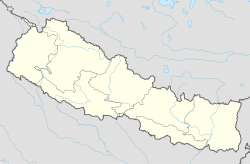 Bungal | |
| Coordinates: 29°35′N80°52′E / 29.58°N 80.87°E | |
| Country | Nepal |
| Province | Sudurpashchim |
| District | Bajhang |
| No. of wards | 11 |
| Established | 10 March 2017 |
| Incorporated (VDC) | Dahbagar, Khidatari, Deulikot, Pipalkot and Kaflaseri [1] |
| Admin HQ. | Khiratadi |
| Government | |
| • Type | Mayor–council |
| • Body | Bungal Municipality |
| • Mayor | Jay Bahadur Dhami (Nepali Congress) |
| • Deputy Mayor | Dhan Bahadur Bohara (CPN (US) |
| Area | |
• Total | 447.59 km2 (172.82 sq mi) |
| Population (2011) [1] | |
• Total | 33,224 |
| Human Development Index | |
| • Literacy | 51.64 [1] |
| Time zone | UTC+05:45 (NPT) |
| Website | bungalmun |
Bungal is a municipality located in the Bajhang District of Sudurpashchim Province, Nepal. [2] It is bordered by Darchula District to the west, Baitadi District to the south, Surma, Chabispathivera, Durgathali, Kedarseu and Bithadchir to the East and Saipal to the North. [1]
Contents
On 10 March 2017, the Government of Nepal announced 744 local-level units under the new constitution of Nepal 2015. [3] establishing Bungal as a municipality. The municipality covers a total area of 447.59 square kilometres (172.82 sq mi) and has a population (according to 2011 Nepal census) is 33224. It is divided into 11 wards. Dahbagar, Khidatari, Deulikot, Pipalkot and Kaflaseri are the previous villages which were merged to form this new local level unit. [1]
Atpali Village is a village in Bungal municipality and is also the ancestral place of the Kamalbathyal family.

