Louis Botha became Prime Minister of the Transvaal Colony on 4 March 1907, following the results of the election of 1907, with his Het Volk Party winning 37 out of 69 seats (including three affiliated independents) to the Legislative Assembly, ahead of the Progressive Party (21 seats), the National Association (16), Labour (3 seats) and 2 independents.[1] On the results, the Governor, The Earl of Selbourne, wrote to the Colonial Office: "The clear majority which Het Volk has won over all other parties combined, together with the defeat of Sir Richard Solomon by Sir Percy FitzPatrick, has of course made it necessary for me to send for General Botha, and I have very little doubt that he will form a Ministry consisting mainly, if not entirely, of members of his own party".[2]
After having initially considered a fully Het Volk ministry, at the instigation of former Colonial Attorney-General, Sir Richard Solomon (who declined to serve in the cabinet and was appointed to be Agent-General in London), Botha subsequently formed a 6-member cabinet (maximum allowed) with members of the Nationalist Party, who "were all men of progressive, in some respects democratic, views, and in thus forming his cabinet General Botha showed his determination not to be dominated by the “back veld” Boers".[3][4][5] Among the members of Het Volk who were originally considered for positions were diamond mine manager, Thomas Cullinan (Lands/Public Works) and Andries Stockenstrom (Speaker).[6]
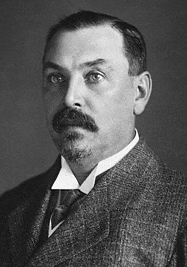
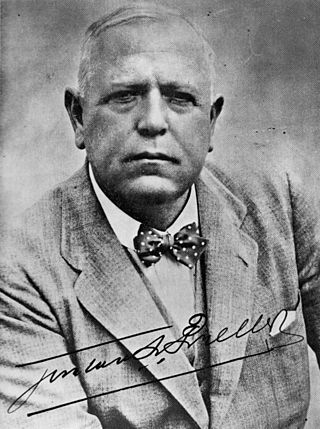
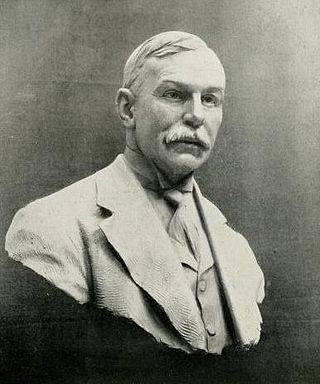
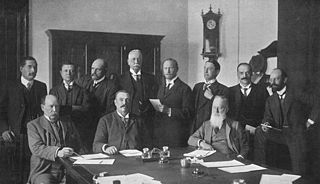
The ministry was formally sworn into office in Parliament Hall, Pretoria by the Governor, The Earl of Selborne, on 4 March 1907.[7][8] The Cabinet was involved in discussions to form the Union of South Africa, with Botha, Smuts and Hull attending the 1908–09 National Convention as delegates, and which was finally achieved on 31 May 1910. The Cabinet was the only body of the Transvaal Colony from the granting of responsible self-government by letters patent on 6 December 1906, and was superseded by the Transvaal Provincial Executive Committee of the Transvaal Provincial Council with Rissik as the first Provincial Administrator.
↑ Garson, N. G. (1966). "'Het Volk': The Botha-Smuts Party in the Transvaal, 1904-11". The Historical Journal. 9 (1): 115. doi:10.1017/S0018246X0002639X.
↑ Garson, N. G. (1966). "'Het Volk': The Botha-Smuts Party in the Transvaal, 1904-11". The Historical Journal. 9 (1): 115–116. doi:10.1017/S0018246X0002639X.
The Transvaal Colony was the name used to refer to the Transvaal region during the period of direct British rule and military occupation between the end of the Second Boer War in 1902 when the South African Republic was dissolved, and the establishment of the Union of South Africa in 1910. The borders of the Transvaal Colony were larger than the defeated South African Republic. In 1910 the entire territory became the Transvaal Province of the Union of South Africa.
The Orange River Colony was the British colony created after Britain first occupied (1900) and then annexed (1902) the independent Orange Free State in the Second Boer War. The colony ceased to exist in 1910, when it was absorbed into the Union of South Africa as the Orange Free State Province.
Field Marshal Jan Christian Smuts, was a South African statesman, military leader and philosopher. In addition to holding various military and cabinet posts, he served as prime minister of the Union of South Africa from 1919 to 1924 and 1939 to 1948.
Sir Patrick Duncan, was the sixth Governor-General of the Union of South Africa, holding office from 1937 until his death in 1943.
Louis Botha was a South African politician who was the first prime minister of the Union of South Africa – the forerunner of the modern South African state. A Boer war veteran during the Second Boer War, he eventually fought to have South Africa become a British Dominion.
The Treaty of Vereeniging was a peace treaty, signed on 31 May 1902, that ended the Second Boer War between the South African Republic and the Orange Free State, on the one side, and the United Kingdom on the other.
The Cabinet of South Africa is the most senior level of the executive branch of the Government of South Africa. It is made up of the president, the deputy president, and the ministers.
The South African Party was a political party that existed in the Union of South Africa from 1911 to 1934.
General elections were held in South Africa on 15 September 1910 to elect the 121 members of the House of Assembly. They were the first general election after the Union of South Africa was created on 31 May 1910.
Jan Christiaan Smuts, OM was a prominent South African and Commonwealth statesman and military leader. He served as a Boer General duning the Boer War, a British General during the First World War and was appointed Field Marshal during the Second World War. In addition to various Cabinet appointments, he served as Prime Minister of the Union of South Africa from 1919 to 1924 and from 1939 to 1948. He played a leading part in the post war settlements at the end of both world wars, making significant contributions towards the creation of both the League of Nations and the United Nations.
Jan Christiaan Smuts, OM served served as Prime Minister of the Union of South Africa from 1919 to 1924 and from 1939 to 1948. He played a leading part in the post war settlements at the end of both world wars, making significant contributions towards the creation of both the League of Nations and the United Nations.
Het Volk was a Transvaal political party, established in May 1904 under the leadership of Louis Botha and his deputy Jan Smuts. Upon the creation of the Union of South Africa in May 1910, it merged with Afrikaner Bond, the South African Party, and the Orangia Unie, the dominant political parties of the Cape Colony and Orange River Colony, creating the pan-Union South African Party.
Gustav Schoeman Preller was a journalist, historian, writer and literary critic. He fought for the recognition of Afrikaans. Preller helped the Afrikaner to awake to the importance of the history of South Africa. He made great contributions to the writing of South African history, through his research and the literature. He also contributed greatly to making South Africans aware of the legacy of the Voortrekkers and also played an early part in planning the Voortrekker Monument.
Christiaan Frederik Beyers was a Boer general during the Second Boer War.
Sir Edward Phillip Solomon was a successful lawyer and politician of the Transvaal Colony and the Union of South Africa.
Sir Richard Solomon, was a South African attorney and legislator. He was a member of Parliament and the Attorney General of the Cape Colony and Attorney General, Lieutenant-Governor, and Agent-General of the Transvaal Colony. After serving as Agent-General of the Transvaal from 1907 to the creation of the Union of South Africa in 1910, Solomon was the first High Commissioner of South Africa to the United Kingdom to his death in 1913.
The Louis Botha government appointed the members of the government in South Africa led by Prime Minister Louis Botha between 31 May 1910 and 3 September 1919.
The National Convention, also known as the Convention on the Closer Union of South Africa or the Closer Union Convention, was a constitutional convention held between 1908 and 1909 in Durban, Cape Town and Bloemfontein. The convention led to the adoption of the South Africa Act by the British Parliament and thus to the creation of the Union of South Africa. The four colonies of the area that would become South Africa - the Cape Colony, Natal Colony, the Orange River Colony and the Transvaal Colony - were represented at the convention, along with a delegation from Rhodesia. There were 33 delegates in total, with the Cape being represented by 12, the Transvaal eight, the Orange River five, Natal five, and Rhodesia three. The convention was held behind closed doors, in the fear that a public affair would lead delegates to refuse compromising on contentious areas of disagreement. All the delegates were white men, a third of them were farmers, ten were lawyers, and some were academics. Two-thirds had fought on either side of the Second Boer War.
Ewald Auguste Esselen was a South African barrister who served as State Attorney of the South African Republic from 1894 to 1895.
Henry Charles Hull was the first South African Minister of Finance when the Union of South Africa was formed in March 1910. He served in the first Louis Botha cabinet. He assisted in drafting of South Africa's first constitution. He was a lawyer, politician, and mining financier. He assisted in the formation of Anglo American plc.
This page is based on this Wikipedia article Text is available under the CC BY-SA 4.0 license; additional terms may apply. Images, videos and audio are available under their respective licenses.