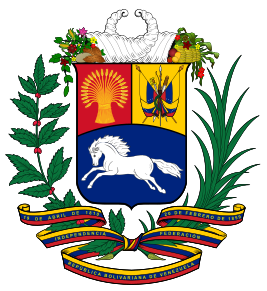
Elections in Venezuela are held at a national level for the President of Venezuela as head of state and head of government, and for a unicameral legislature. The President of Venezuela is elected for a six-year term by direct election plurality voting, and is eligible for re-election. The National Assembly (Asamblea Nacional) has 165 members (diputados), elected for five-year terms using a mixed member majoritarian system. Elections also take place at state level and local level.

Elections in Kuwait are held for both the National Assembly and for the Municipality. Kuwait's constitution calls for elections to the unicameral National Assembly at a maximum interval of four years. Elections are held earlier if the Constitutional Court or Emir dissolve the parliament.

Parliamentary elections were held in Morocco on 7 September 2007, the second of King Mohammed VI's reign. Voter turnout was estimated to be 37%, the lowest in Moroccan political history. There were 33 different parties and 13 independent candidates competing for 325 assembly seats. An amount of $61 million was allocated by the Moroccan government to organize the 2007 elections.

Parliamentary elections were held in Senegal on 3 June 2007. They had originally been planned to be held together with the presidential election on 25 February 2007, but were postponed. Fourteen parties or coalitions participated in the elections, but they were marked by a major opposition boycott. The ruling Sopi Coalition won 131 seats, including all 90 of the seats elected by majority voting.

The 2002 Algerian Legislative election was held in Algeria on 30 May 2002 to elect members of the People's National Assembly. The governing National Liberation Front (FLN) won a majority of seats in the election. The election suffered from a low turnout, violence and boycotts by some opposition parties.
The Sixth National Parliamentary Elections 1996 was held in Bangladesh on 15 February 1996. They were boycotted by most opposition parties, and saw voter turnout drop to just 21%. The result was a victory for the Bangladesh Nationalist Party (BNP), which won 300 of the 300 elected seats. This administration was short lived however, only lasting 12 days before the installation of caretaker government and fresh elections held in June.
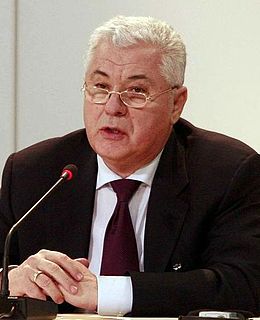
Parliamentary elections were held in Moldova on 5 April 2009. The Party of Communists of the Republic of Moldova (PCRM) won a majority of seats for the third consecutive occasion. Turnout was 59%, exceeding the 50% necessary for the election to be valid.

A parliamentary election to the People's Assembly of Egypt was held from 28 November 2011 to 11 January 2012, following the revolution that ousted President Hosni Mubarak, after which the Supreme Council of the Armed Forces (SCAF) dissolved the parliament of Egypt. However the dissolution was ruled unconstitutional and Parliament was reinstated. Originally, the elections had been scheduled to be held in September 2011, but was postponed amid concerns that established parties would gain undue advantage.
The Kuwaiti protests refers to the series of 2011–12 demonstrations for government reforms in the state of Kuwait. In November 2011, the government of Kuwait resigned in response to the protests, making Kuwait one of several countries affected by the Arab Spring to experience major governmental changes due to unrest. The protests began with stateless people (Bedoon).
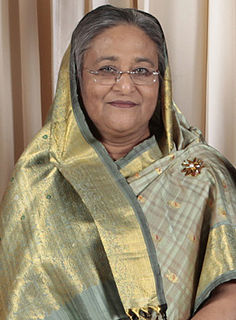
General elections were held in Bangladesh on 5 January 2014, in accordance with the constitutional requirement that the election must take place within the 90-day period before the expiration of the term of the Jatiya Sangshad on 24 January 2014. The elections were controversial, with almost all major opposition parties boycotting and 153 of the total 300 seats being uncontested. Around 21 people were killed on election day.
A parliamentary by-election was held in Bahrain on 24 September 2011 following the withdrawal of 18 members of the largest political party in parliament, al Wefaq, in protest at governmental actions during the Bahraini uprising. Security forces closed Pearl Roundabout and attacked protestors in the village of Sanabis. The second round of elections were held on October 1, 2011

Early general elections were held in Kuwait on 2 February 2012, the country's second general election in a three-year period. The election's turnout rate was 59%. However, in June 2012 Kuwait's Constitutional Court declared the elections invalid and reinstated the former parliament. The court said the dissolution of Parliament in December 2011 by Emir Sabah Al-Sabah was unconstitutional. In response, opposition MPs resigned from parliament and demanded a full parliamentary system.
Constituent Assembly elections were held in Nepal on 19 November 2013. The vote was repeatedly delayed, having previously been planned for 22 November 2012 following the dissolution of the 1st Constituent Assembly on 27 May 2012, but it was put off by the election commission. The Nepali Congress emerged as the largest party in the 2nd Nepalese Constituent Assembly, winning 196 of the 575 elected seats.

A referendum on impeaching President Traian Băsescu was held in Romania on 29 July 2012. The referendum was required after Parliament voted in favour of impeaching Băsescu on 6 July, and had to take place within a month. It was the second referendum on impeaching Băsescu, the first having been held in May 2007, in which 74% of voters chose to keep him in office. Băsescu was later narrowly re-elected in 2009.

A constitutional referendum was held in Egypt in two rounds on 15 and 22 December 2012. Egyptians living abroad were scheduled to vote between 8 and 11 December. Voting for expatriates had been delayed until 12 December 2012 and was extended until 17 December 2012. Voters were asked whether they approve of the draft constitution that was approved by the Constituent Assembly on 30 November 2012.

Early general elections were held in Kuwait on 27 July 2013. The elections were required after the Constitutional Court dissolved Parliament and annulled the results of the December 2012 elections. Voter turnout was an estimated 52.5%, which was higher than expected despite an opposition boycott, and only 7% lower than the non-boycotted February 2012 elections.
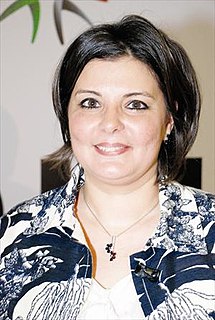
Aseel al-Awadhi is a former member of the National Assembly of Kuwait. She was a professor of philosophy at Kuwait University before moving into politics. Al-Awadhi first stood for a seat on the National Assembly in 2008, losing the election but gaining the highest number of votes for a female candidate since women were allowed to stand. She was elected representative of Kuwait's Third District in 2009; a post that she held until 2012.

General elections were held in Cambodia on Sunday, 29 July 2018 to elect members of the sixth National Assembly. Polling stations opened at 07:00 and closed at 15:00. The number of registered voters has decreased for the first time since 1993 and was down 13% from the 2013 general elections.

General elections were held in Bahrain on 22 November 2014, with a second round on 29 November in constituencies where no candidate received at least 50% of the vote. The elections were boycotted by the Shiite Islamist opposition. The government announced the voter turnout as 52.6%, although the opposition claimed it was only 30%.
Early general elections were held in Kuwait on 26 November 2016. They follow the dissolution of the parliament elected in 2013 by Emir Sabah Al-Ahmad Al-Jaber Al-Sabah in October 2016. Under the constitution, elections must be held within two months. Opposition candidates won 24 of the 50 seats in the National Assembly. Voter turnout was around 70 percent.