Neil Gordon Kinnock, Baron Kinnock, is a Welsh Labour Party politician. He served as a Member of Parliament from 1970 until 1995, first for Bedwellty and then for Islwyn. He was the Leader of the Labour Party and Leader of the Opposition from 1983 until 1992.

The 1997 United Kingdom general election was held on Thursday 1 May 1997, five years after the previous general election on 9 April 1992, to elect 659 members to the British House of Commons. Under the leadership of Tony Blair, the Labour Party ended its eighteen-year spell in opposition and won the general election with a landslide victory, winning 418 seats, the most seats the party has ever held to date, and the highest proportion of seats held by any party in the post-war era. For the first time since 1931, the outgoing government lost more than half its parliamentary seats in an election.

The 1992 United Kingdom general election was held on Thursday 9 April 1992, to elect 651 members to the House of Commons of the United Kingdom. The election resulted in the fourth consecutive victory for the Conservative Party since 1979 and the last time that the Conservatives would win a majority at a general election until 2015. This election result took many by surprise, as opinion polling leading up to the election day had shown the Labour Party, under leader Neil Kinnock, consistently, if narrowly, ahead.

John Smith was a British Labour politician who served as Leader of the Labour Party from July 1992 until his death from a heart attack in May 1994.

Democratic Left was a left-wing political party in Ireland between 1992 and 1999. It came into being after a split in the Workers' Party, and after seven years in existence it was incorporated into the Irish Labour Party in 1999. The Democratic Left served in a three-party coalition government with Fine Gael and the Labour Party from December 1994 to June 1997.
The Labour Party is a social-democratic political party in the Republic of Ireland. Founded in 1912 in Clonmel, County Tipperary, by James Larkin, James Connolly, and William X. O'Brien as the political wing of the Irish Trades Union Congress, it describes itself as a "democratic socialist party" in its constitution. Labour continues to be the political arm of the Irish trade union and labour movement and seeks to represent workers interests in the Dáil and on a local level.

The 1945 United Kingdom general election was held on 5 July 1945, with polls in some constituencies delayed until 12 July and in Nelson and Colne until 19 July, because of local wakes weeks. The results were counted and declared on 26 July, to allow time to transport the votes of those serving overseas.

The Irish general election of 1992 was held on Wednesday, 25 November 1992, almost three weeks after the dissolution of the Dáil on 5 November. The newly elected 166 members of the 27th Dáil assembled at Leinster House on 14 December 1992, but a new Taoiseach was not elected. A new Fianna Fáil-Labour Party coalition government was not appointed until 12 January 1993 after Albert Reynolds was re-elected Taoiseach.

The 1993 New Zealand general election was held on 6 November 1993 to determine the composition of the 44th New Zealand Parliament. It saw the governing National Party, led by Jim Bolger, win a second term in office, despite a major swing away from National in both seats and votes. The opposition Labour Party, despite a slight drop in their support, managed to make gains in terms of seats. The new Alliance and New Zealand First parties gained significant shares of the vote, but won few seats. The election was New Zealand's last under the non-proportional first past the post electoral system.

East Lothian is a constituency in Scotland which returned one Member of Parliament (MP) to the House of Commons of the Parliament of the United Kingdom, elected by the first past the post voting system.

Barrow and Furness is a constituency in Cumbria represented in the House of Commons of the UK Parliament since 2010 by John Woodcock. On 30 April 2018, he was suspended from the Labour Party following a sexual harassment allegation made against him. On 18 July 2018, Woodcock resigned from Labour and now sits as an Independent MP.

Brighton Kemptown is a constituency created in 1950 in the House of Commons of the UK Parliament covering the eastern portion of the city of Brighton and Hove including Kemptown and part of the Lewes District.
The 2005 United Kingdom general election was held on Thursday 5 May 2005, to elect 646 members to the House of Commons. The Labour Party led by Tony Blair won its third consecutive victory, with Blair becoming the only Labour leader beside Harold Wilson to form three majority governments. However, its majority now stood at 66 seats compared to the 160-seat majority it had previously held. As of 2019, it remains the last general election victory for the Labour Party.

The 1992 Labour Party leadership election followed the Labour Party's failure to win the 1992 general election and the subsequent resignation of party leader Neil Kinnock.
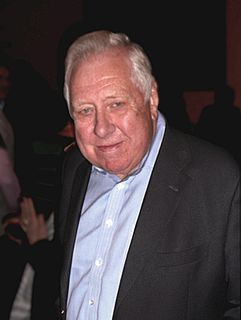
A deputy leadership election for the Labour Party in the United Kingdom took place on 2 October 1988 when John Prescott and Eric Heffer challenged Labour's incumbent Deputy Leader Roy Hattersley. Hattersley had served in the position since 1983.
The Labour Party is a centre-left political party in the United Kingdom which has been described as an alliance of social democrats, democratic socialists and trade unionists. The party's platform emphasises greater state intervention, social justice and strengthening workers' rights.

The 1992 Labour Party deputy leadership election followed the Labour Party's failure to win the 1992 general election and the subsequent resignation of deputy party leader Roy Hattersley. The ballot took place on 18 July 1992 at Labour Party Conference. Affiliated organisations had 40% of the vote, while Constituency Labour Parties and the Parliamentary Labour Party had 30% each in the electoral college.
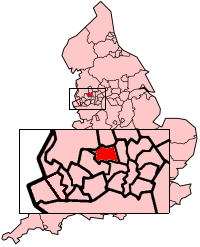
The 1992 Bolton Metropolitan Borough Council election took place on 7 May 1992 to elect members of Bolton Metropolitan Borough Council in Greater Manchester, England. One third of the council was up for election and the Labour party kept overall control of the council.
The 1992 York City Councils elections were held in May 1992 to elect members of York City Council in North Yorkshire, England. Fifteen seats, previously contested in 1988, were up for election: eleven were won by the Labour Party, three by the Conservative Party and one by the Liberal Democrats. The Labour Party retained overall control of the council; the composition of the council after the election was: Labour Party 34 seats, Conservative Party seven seats and Liberal Democrats four seats.