
Menemerus bivittatus is a spider in the family Salticidae commonly known as the gray wall jumper. It is a pantropical species and is usually found on the walls of buildings or on tree trunks where it stalks its prey.

Menemerus davidi is a species of jumping spider in the genus Menemerus that lives in North Africa and the Middle East. The species was first identified in 1999 by Jerzy Prószyński and Wanda Wesołowska working initially independently, and then together. The first description was published by Wesołowska, one of over 500 descriptions she produced during her lifetime. The spider is small, with a carapace that ranges between 2.3 and 3.0 millimetres long and an abdomen that is 2.2 and 3.2 millimetres long, although the female is larger than the male. The carapace is generally a uniform dark brown while the abdomen has a pattern of a light brown stripe and white patches that serves to distinguish it from the related Menemerus animatus. Otherwise, it is its copulatory organs that most distinguish the species from others in the genus. It has distinctive internal structure to the female epigyne. The wide copulatory openings lead down the centre of the spider to the spermathecae while there is also a short narrower channel that runs to the rear of the spider with a prominent scent pore at the end. The male has a noticeably smaller embolus and a distinctive dorsal tibial apophysis.

Menemerus desertus is a species of jumping spider in the genus Menemerus that lives in Algeria. The species was first described in 1999 by Wanda Wesołowska, one of over 500 descriptions she produced during her lifetime. The spider is small, with a carapace that ranges between 2.5 and 2.7 millimetres long and an abdomen that is 2.7 and 4.7 millimetres long, although the female is larger than the male. The carapace is generally a uniform dark brown while the abdomen has a yellow stripe. Otherwise, it is its copulatory organs that most distinguish the species from others in the genus. The female epigyne has ridges at the entrance to the insemination ducts. The male has a distinctive dorsal tibial apophysis.

Menemerus modestus is a species of jumping spider in the genus Menemerus that lives in Tunisia. The species was first identified in 1999 by Wanda Wesołowska, one of over 500 descriptions she produced during her lifetime. The spider is mainly a diurnal hunter. It is small, with a brown carapace that is typically 2.2 mm (0.09 in) long and a light abdomen 2.1 mm (0.08 in) long. The male's copulatory organs have a distinctive configuration of two appendages at the base of the palpal bulb, or apophyses, one larger and bulbous, the other a short spike. The female has not been described.
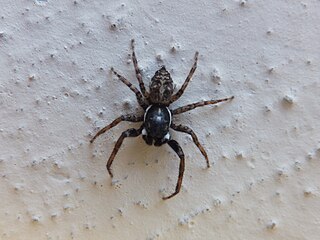
Menemerus guttatus is a species of jumping spider in the genus Menemerus that lives in Morocco. The spider has been found in the High Atlas mountains in gravel rivers. It displays complex courtship patterns. The species was first described in 1999 by Wanda Wesołowska, one of over 500 descriptions she has made during her lifetime. The spider is small, with a dark brown, nearly black carapace that is between 2.8 and 3.5 millimetres long and a dark brown abdomen between 2.5 and 5.6 millimetres long. The female is larger than the male. It can be distinguished from other species in the genus by the pattern on its abdomen, which consists of two lines of white patches that converge to the back of the spider. Otherwise, it is the copulatory organs that most identify the species. The male has a distinctive relatively wide and short embolus and lamella and two similar appendages at the base of the palpal bulb, or apophyses. The female has a complex internal structure of the epigyne including crescent-shaped chambers and circular spermathecae.
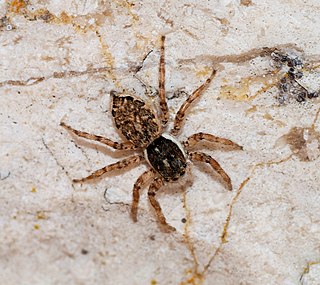
Menemerus bifurcus is a species of jumping spider in the genus Menemerus that lives in South Africa, Zambia and Zimbabwe. The species was first described in 1999 by Wanda Wesołowska, one of over 500 descriptions she has written during her lifetime. The spider lives in groups in Acacia, Combretum, Jacaranda, Spathodea and Trichilia trees as well as in houses and other areas of human habitation. It descends to attack prey on long threads of silk. It is a small spider, with a carapace that is between 1.9 and 2.3 millimetres long and an abdomen between 1.9 and 2.5 millimetres long. The female is larger than the male and generally lighter, ranging generally from fawnish-brown to dark brown. The species is similar to Menemerus formosus and Menemerus transvaalicus but differs in the design of its copulatory organs. The male has a short embolus with a longer lamella, which is recalled in the species name, and two distinctive tibial appendages, or apophyses, one with a characteristic triangular lobe. Examples found in Zimbabwe have one longer tibial apophysis. The female has a heart-shaped depression in the epigyne and an unusual insemination duct morphology.

Menemerus transvaalicus is a species of jumping spider in the genus Menemerus that lives in Lesotho and South Africa. The species was first identified in 1999 by Wanda Wesołowska, one of over 500 descriptions she has written during her lifetime. The spider often lives on Eucalyptus trees and the walls of buildings. It is small, with a dark brown hairy carapace that is between 2.1 and 2.5 millimetres long and a fawn to dark brown abdomen that is between 2.0 and 3.6 millimetres in length. The female is larger than the male. It has a yellowish leaf-shaped pattern on its abdomen and orange to brown legs. The male has a conductor on its double embolus, which helps to distinguish the spider from the related Menemerus bifurcus.

Menemerus formosus is a species of jumping spider in the genus Menemerus that lives in Kenya. The species was first described in 1999 by Wanda Wesołowska, one of over 500 descriptions she has written during her lifetime. It is a small spider, with a brown carapace that is between 2.0 and 2.3 millimetres long, with a darker eye field that is between 1.0 and 1.2 millimetres long, and a yellowish abdomen between 1.9 and 2.3 millimetres long. The female is larger than the male and has a pattern of silver patches on its abdomen. The legs are yellow. The species is similar to Menemerus bifurcus, Menemerus magnificus and Menemerus transvaalicus but differs in the design of its copulatory organs. The male has a conductor that curves over its short embolus. The female has an epigyne that has a shallow depression and a furrow with a wide pocket.

Menemerus minshullae is a species of jumping spider in the genus Menemerus that lives in South Africa, Malawi and Zimbabwe. The species was first described in 1999 by Wanda Wesołowska, one of over 500 descriptions she has completed during her lifetime. She originally identified the male as a different species, named Menemerus manicus, but merged the two in 2007. It is small to medium-sized spider with a cephalothorax that is between 1.9 and 2.2 millimetres long and an abdomen between 2.1 and 3.3 millimetres long. The female is larger than the male and lighter, with a dark brown rather than black carapace and lighter brown abdomen. The abdomen has a large, leaf-shaped, pattern. It lives on Vachellia xanthophloea trees, using its flattened shape to hide under flakes of bark. The copulatory organs distinguish the species from others in the genus. The male has a very short embolus with a larger accompanying conductor. The female epigyne has two pockets that have strongly sclerotized edges.
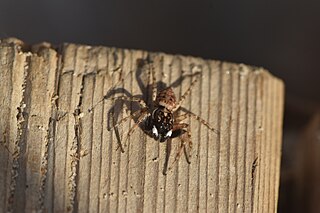
Menemerus meridionalis is a species of jumping spider in the genus Menemerus that lives in South Africa. The species was first described in 1999 by Wanda Wesołowska, one of over 500 descriptions she produced during her lifetime. The spider is small, with a carapace that is typically 2.8 millimetres (0.11 in) long and an abdomen 3.3 millimetres (0.13 in) long. The carapace is generally dark brown with a white stripe down the middle while the abdomen has a dark brown stripe. Otherwise, it is its copulatory organs that most distinguish the species from others in the genus. The male has a lumpy retrolateral tibial apophysis, similar to but smaller than Menemerus tropicus, and a very small spiked ventral tibial apophysis.
Menemerus natalis , the Natal Menemerus Jumping Spider, is a species of jumping spider in the genus Menemerus that lives in South Africa. The species was first described in 1999 by Wanda Wesołowska based on a holotype found in KwaZulu-Natal. The spider is medium-sized, with a carapace that is between 3.1 and 3.3 millimetres long and an abdomen between 2.0 and 2.3 mm long. The carapace is very dark brown, nearly black.while the abdomen is russet-brown. There are three white dots between the eyes on the black eye field. Otherwise, it is its copulatory organs that most distinguish the species from others in the genus. The male has a long embolus and small narrow tibia. The female has not been described.

Menemerus zimbabwensis is a species of jumping spider in the genus Menemerus that lives in South Africa and Zimbabwe. The Polish arachnologist Wanda Wesołowska first described the female in 1999 and the male in 2007. The spider is large, with a cephalothorax that is between 1.9 and 3.2 millimetres long and an abdomen that is between 2.1 and 4.6 millimetres in length. The female is larger than the male. It also lacks the light stripe down the centre of its dark brown carapace and has a less distinct pattern on its abdomen. Its legs and pedipalps are yellow, while on the male they are brown. The male can be distinguished from the similar Menemerus nigli by the wide stripe on its abdomen. The female is harder to identify without looking at its copulatory organs. These are distinctive. It has characteristic large entrance bowls on its epigyne, which are larger than the insemination ducts and spermathecae combined. Its internal organs are very sclerotized.
Menemerus animatus is a species of jumping spider in the genus Menemerus that lives across the Mediterranean Basin and into the Afrotropical realm. The species was first described in 1876 by Octavius Pickard-Cambridge based on an example from Egypt. It has subsequently been found living across many countries from Algeria to Greece and Senegal to Yemen. It prefers living in sandy environments.

Menemerus regius is a species of jumping spider in the genus Menemerus that lives in Ethiopia. The species was first identified in 1999 by Wanda Wesołowska. The spider has been found living in low vegetation, on trees and in houses. It is small, with a brown hairy carapace that is between 1.9 and 2.4 millimetres long and a yellowish-grey or greyish-beige abdomen that is between 2.1 and 3.0 millimetres in length. The female is slightly larger than the male. The carapace has a large yellowish patch and the abdomen a stripe down the middle. The spider has yellow legs. The spider is similar to others in the genus. However, its copulatory organs are distinctive. The male lacks the ventral tibial apophysis normally found on its palpal bulb and instead has an unusual double tibial apophysis with one bulbous appendage and the other shaped like a horn. The female has a characteristic shape to its epigyne with two rounded depressions to the front and a noticeable notch to the rear.
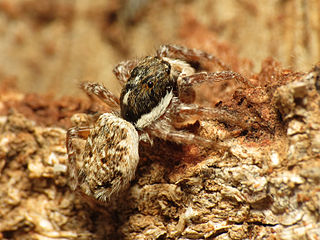
Menemerus utilis is a species of jumping spider in the genus Menemerus that lives in Tunisia. The species was first identified in 1999 by Wanda Wesołowska, one of over 500 descriptions she produced during her lifetime. The spider is mainly a diurnal hunter. It is small, with a brown carapace that is between 2.9 and 3.3 mm long and a yellowish abdomen is between 4.8 and 6.5 mm long. The female has a distinctive epigyne that lacks the pocket common in other species. Instead, it has a large and deep central depression. The copulatory openings are also unusual and the short insemination ducts and position of the spermathecae at the edge of the rear of the epigyne are also characteristic of the species. The male has not been described.
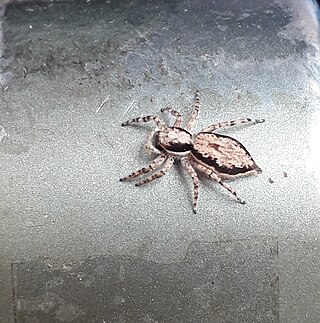
Menemerus nigeriensis is a species of jumping spider in the genus Menemerus that lives in Nigeria. The species was first described in 2011 by Wanda Wesołowska and Anthony Russell-Smith based on a holotype found near Ibadan. The spider is medium-sized, with a cephalothorax that is typically 2.5 millimetres (0.10 in) long and an abdomen 2.6 millimetres (0.10 in) long. The carapace is generally a uniform dark brown, the eye field black and the abdomen greyish-brown. As with other Menemerus spiders, it is its copulatory organs that most distinguish the species from others in the genus. The male has a distinctive dorsal tibia that has a very long and pointed apophysis or appendage. The female has not been identified.
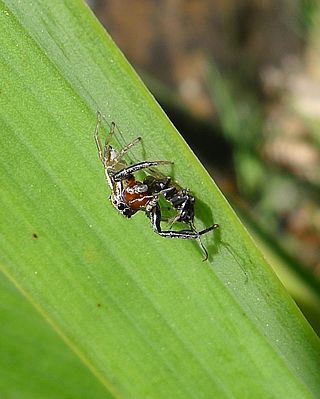
Menemerus tropicus is a species of jumping spider in the genus Menemerus that lives in Kenya and Uganda near Lake Victoria. The spider lives in large nest complexes that can stretch between trees in mangrove savannas. The species was first described in 2007 by Wanda Wesołowska, one of over 500 descriptions she has written during her lifetime. It is a small spider, with a flattened cephalothorax that is between 1.7 and 2.1 mm and a rounded abdomen between 1.7 and 2.9 mm long. The female is larger than the male and has a darker abdomen and lighter carapace. The male abdomen has a pattern that includes a brown streak and silver spots. The female has a yellowish streak, in some examples, with yellow patches. The legs are brown and yellow. The copulatory organs help distinguish the species from others in the genus. The male has a very short double embolus and very large retrolateral apophysis. The female has a narrower pocket in its epigyne, narrow insemination ducts and small spherical spermathecae.
Menemerus nigli is a species of jumping spider in the genus Menemerus that originates in Asia. The male was identified in 2012 by Wanda Wesołowska and Mario Freudenschuss, and the female by Pir Asmat Ali, Wayne Maddison. Muhammad Zahid and Abida Buttin in 2018. The spider is medium-sized, typically 4.89 millimetres (0.193 in) in length, with a dark brown carapace and grey-brown abdomen that has a distinctive cream and white pattern created by small hairs. It was originally found in India, Pakistan and Thailand but was also found to have been introduced into Latin America, the first specimens being identified in Brazil in 2020. It seems to thrive amongst the sunlit stucco walls that are common in cities across the region. Menemerus nigli is used as an example of the ability of species that adapt to human habitation to expand their ecological niche and become global species.
Menemerus paradoxus is a species of jumping spider in the genus Menemerus that lives in Yemen. The spider was first described in 1994 by Wanda Wesołowska and Anthony van Harten. Only the female has been described. The spider is small, with an oval and rather flattened carapace that is typically 2.5 mm (0.10 in) long and an oval abdomen typically 3.2 mm (0.13 in) long. The carapace is brown with a darker, nearly black, eye field and the abdomen is yellowish-grey. The spider's legs are also yellowish-grey. The spider is hard to distinguish from others in the genus, particularly Menemerus tropicus. However, its copulatory organs are distinctive. Menemerus paradoxus is characterised by its large epigyne that has a notch in its rear edge, the way that its copulatory openings are hidden in pockets and its heavily sclerotized spermathecae.
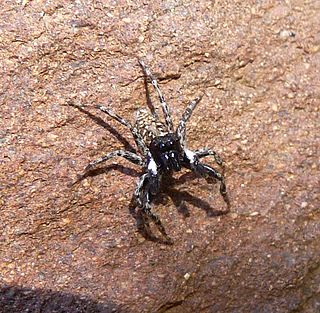
Menemerus plenus is a species of jumping spider in the genus Menemerus that lives in Yemen. The spider was first described in 1994 by Wanda Wesołowska and Anthony van Harten. Only the female has been described. The spider is small, with a carapace that is typically 2.0 mm (0.08 in) long and an abdomen typically 3.3 mm (0.13 in) long. The carapace is brown, convex and higher than many related spiders. The abdomen is wide and rounded. It is externally similar to Menemerus pulcher and can only be reliably distinguished by comparing the internal structure of the copulatory organs. Menemerus plenus is distinctive for its lack of accessory glands and the thick wall of its insemination ducts.


