
The Nuremberg trials were held by the Allies against representatives of the defeated Nazi Germany, for plotting and carrying out invasions of other countries, and other crimes, in World War II.

The Doctors' Trial was the first of 12 trials for war crimes of high-ranking German officials and industrialists that the United States authorities held in their occupation zone in Nuremberg, Germany, after the end of World War II. These trials were held before US military courts, not before the International Military Tribunal, but took place in the same rooms at the Palace of Justice. The trials are collectively known as the "subsequent Nuremberg trials", formally the "Trials of War Criminals before the Nuremberg Military Tribunals" (NMT).

Oswald Ludwig Pohl was a German SS functionary during the Nazi era. As the head of the SS Main Economic and Administrative Office and the head administrator of the Nazi concentration camps, he was a key figure in the Final Solution, the genocide of the European Jews.
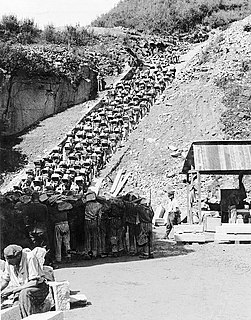
German Earth and Stone Works was an SS-owned company created to procure and manufacture building materials for state construction projects in Nazi Germany. DEST was a subsidiary company of Amtsgruppe W of SS Main Economic and Administrative Office (WVHA). Both Amt. W and the WVHA were headed by Waffen-SS generals Oswald Pohl and Georg Lörner.

The Judges' Trial was the third of the 12 trials for war crimes the U.S. authorities held in their occupation zone in Germany in Nuremberg after the end of World War II. These twelve trials were all held before U.S. military courts, not before the International Military Tribunal, but took place in the same rooms at the Palace of Justice. The twelve U.S. trials are collectively known as the "Subsequent Nuremberg Trials" or, more formally, as the "Trials of War Criminals before the Nuremberg Military Tribunals" (NMT).

The subsequent Nuremberg trials were a series of 12 military tribunals for war crimes against members of the leadership of Nazi Germany between December 1946 and April 1949. They followed the first and best-known Nuremberg trial before the International Military Tribunal which concluded in October 1946. In contrast, the subsequent trials were conducted before U.S. military courts rather than an international court. They are also collectively known as the Nuremberg Military Tribunals.

The Milch Trial was the second of the twelve trials for war crimes the U.S. authorities held in their occupation zone in Germany in Nuremberg after the end of World War II. These twelve trials were all held before U.S. military courts, not before the International Military Tribunal, but took place in the same rooms at the Palace of Justice. The twelve U.S. trials are collectively known as the "Subsequent Nuremberg Trials" or, more formally, as the "Trials of War Criminals before the Nuremberg Military Tribunals" (NMT).

The United States of America vs. Alfried Krupp, et al., commonly known as the Krupp Trial, was the tenth of twelve trials for war crimes that U.S. authorities held in their occupation zone at Nuremberg, Germany after the end of World War II. It concerned the forced labor enterprises of the Krupp concern and other crimes committed by the concern.

The United States of America vs. Friedrich Flick, et al. or Flick Trial was the fifth of twelve Nazi war crimes trials held by United States authorities in their occupation zone in Germany (Nuremberg) after World War II. It was the first of three trials of leading industrialists of Nazi Germany; the two others were the IG Farben Trial and the Krupp Trial.
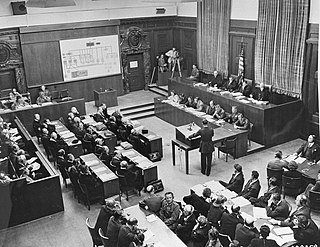
The United States of America vs. Carl Krauch, et al., also known as the IG Farben Trial, was the sixth of the twelve trials for war crimes the U.S. authorities held in their occupation zone in Germany (Nuremberg) after the end of World War II. IG Farben was the private German chemicals company allied with the Nazis that manufactured the Zyklon B gas used to commit genocide against millions of European Jews in the Holocaust.

The RuSHA Trial against the SS racial policies was the eighth of the twelve trials held in Nuremberg by the U.S. authorities for Nazi war crimes after the end of World War II. These twelve trials were all held before U.S. military courts in their occupation zone in Germany, not before the International Military Tribunal, although they took place in the same rooms, at the Palace of Justice. The twelve U.S. trials are collectively known as the "Subsequent Nuremberg Trials" or, more formally, as the "Trials of War Criminals before the Nuremberg Military Tribunals" (NMT).

The Einsatzgruppen Trial was the ninth of the twelve trials for war crimes and crimes against humanity that the US authorities held in their occupation zone in Germany in Nuremberg after the end of World War II. These twelve trials were all held before US military courts, not before the International Military Tribunal. They took place in the same rooms at the Palace of Justice. The twelve US trials are collectively known as the "Subsequent Nuremberg trials" or, more formally, as the "Trials of War Criminals before the Nuremberg Military Tribunals" (NMT).
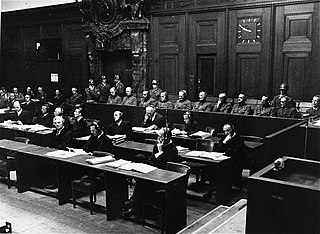
The Hostages Trial was held from 8 July 1947 until 19 February 1948 and was the seventh of the twelve trials for war crimes that United States authorities held in their occupation zone in Germany in Nuremberg after the end of World War II. These twelve trials were all held before US military courts, not before the International Military Tribunal, but took place in the same rooms at the Palace of Justice. The twelve US trials are collectively known as the "Subsequent Nuremberg Trials" or, more formally, as the "Trials of War Criminals before the Nuremberg Military Tribunals" (NMT).

The High Command Trial, also known initially as Case No. 12, and later as Case No. 72, was the last of the twelve trials for war crimes the U.S. authorities held in their occupation zone of Germany in Nuremberg after the end of World War II. These twelve trials were all held before U.S. military courts, not before the International Military Tribunal, but took place in the same rooms at the Palace of Justice. The twelve U.S. trials are collectively known as the "subsequent Nuremberg trials" or, more formally, as the "Trials of War Criminals before the Nuremberg Military Tribunals" (NMT).

The Ministries Trial was the eleventh of the twelve trials for war crimes the U.S. authorities held in their occupation zone in Germany in Nuremberg after the end of World War II. These twelve trials were all held before U.S. military courts, not before the International Military Tribunal, but took place in the same rooms at the Palace of Justice. The twelve U.S. trials are collectively known as the "Subsequent Nuremberg Trials" or, more formally, as the "Trials of War Criminals before the Nuremberg Military Tribunals" (NMT).

The Dachau trials handled the prosecution of almost every war criminal captured in the U.S. military zones in Allied-occupied Germany and in Allied-occupied Austria, and the prosecutions of military personnel and civilian persons who committed war crimes against the American military and American citizens. The war-crime trials were held within the compound of the former Dachau concentration camp by military tribunals authorized by the Judge Advocate General of the U.S. Third Army.
A war crimes trial is the trial of persons charged with criminal violation of the laws and customs of war and related principles of international law committed during armed conflict.
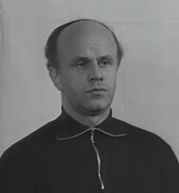
August Franz Frank was a German SS functionary in the SS Main Economic and Administrative Office, generally known by its German initials WVHA. The WVHA was, among other things, responsible for the administration of the Nazi concentration camps. After the war, the higher WVHA officials, including Frank, were tried and convicted of crimes against humanity.

Deutsche Wirtschaftsbetriebe, abbreviated DWB, was a project launched by Nazi Germany in World War II. Organised and managed by the Allgemeine SS, its aim was to profit from the use of slave labour extracted from the Nazi concentration camp inmates.


