Melanophidium punctatum, commonly known as Beddome's black shieldtail or Beddome's black earth snake, is a species of shieldtail snake endemic to the Western Ghats of India.
Uropeltis beddomii, commonly known as Beddome's earth snake, is a species of snake in the family Uropeltidae. The species is endemic to India.
Uropeltis broughami, commonly known as Brougham's earth snake or the Sirumalai shieldtail, is a species of snake in the family Uropeltidae. The species is endemic to the Western Ghats in southern India.
Uropeltis ceylanica is a species of nonvenomous shieldtail snake in the family Uropeltidae. The species is endemic to the Western Ghats of South India. No subspecies are currently recognized as being valid, but the presence of several synonyms, many recently resurrected, calls for further taxonomic studies of this species complex. It is a burrowing snake with a pointy head equipped to penetrate the soil. It has a thick tail which looks as if it has been cut at an angle. In Kerala it's called iru thala moori, which means two headed organism, as the tail end looks like another head. It primarily eats earth worms.
Uropeltis dindigalensis, commonly known as the Dindigul uropeltis and the Sirumalai Hills earth snake, is a species of snake in the family Uropeltidae. The species is endemic to Sirumalai and surrounding hill ranges of the southern Eastern Ghats, in Dindigul district of Tamil Nadu state in South India.
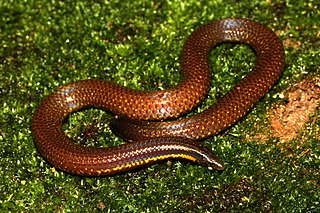
Uropeltis ellioti, commonly known as Elliot's earth snake and Elliot's shieldtail, is a species of snake in the family Uropeltidae. The species is endemic to India.
Uropeltis liura, commonly known as the Ashambu shieldtail and Günther's earth snake, is a species of snake in the family Uropeltidae. The species is endemic to India.
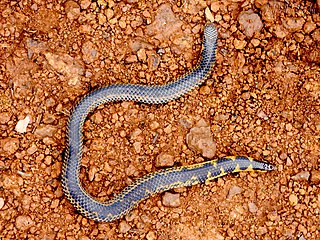
Uropeltis macrolepis, commonly known as the Bombay earth snake, is a species of snake in the family Uropeltidae. It is endemic to southern India.
Uropeltis macrorhyncha is a nonvenomous shield tail snake species endemic to India. No subspecies are currently recognized.

Uropeltis maculata is a nonvenomous shield tail snake species endemic to southern India. No subspecies are currently recognized. Its common name is spotted earth snake.
Uropeltis myhendrae, commonly known as Mahendragiri earth snake or the Myhendra Mountain Uropeltis, is a species of snake in the family Uropeltidae. It is endemic to Western Ghats.
Uropeltis nitida is a species of nonvenomous shield tail snake. It is endemic to southern India. No subspecies are currently recognized.
Uropeltis ocellata is a non-venomous shield tail snake species found in southern India.
Uropeltis petersi, commonly known as the Peter's earth snake, is a species of nonvenomous snake in the family Uropeltidae. It is endemic to India.

Uropeltis phipsonii, commonly known as Phipson's shieldtail, is a species of snake in the family Uropeltidae. The species is endemic to India.

Uropeltis pulneyensis, commonly known as the Palni shieldtail, is a species of uropeltid snake endemic to the Western Ghats of India.
Uropeltis rubrolineata is a nonvenomous shield tail snake species endemic to southern India. No subspecies are currently recognized.

Uropeltis rubromaculata is a nonvenomous shield tail snake species endemic to southern India. No subspecies are currently recognized.
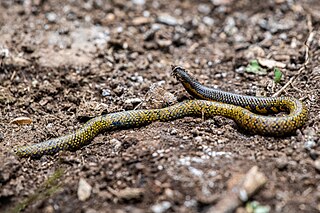
Uropeltis woodmasoni, commonly known as Wood-Mason's earth snake or Woodmason's earth snake, is a species of snake in the family Uropeltidae. The species is endemic to India.
Uropeltis melanogaster, or Gray's earth snake, is a species of small snake in the family Uropeltidae, endemic to Sri Lanka.