Wiltshire (district)

Last updated

Wiltshire
Catedral de Salisbury, Salisbury, Inglaterra, 2014-08-12, DD 03.JPG
Market Place, Chippenham, Wiltshire - geograph.org.uk - 5179874.jpg
Trowbridge Town Hall - geograph.org.uk - 5894421.jpg
Stonehenge, Condado de Wiltshire, Inglaterra, 2014-08-12, DD 12.JPG
Lacock Abbey, Wiltshire - geograph.org.uk - 2131396.jpg
Clockwise from top: Salisbury Cathedral; Trowbridge Town Hall; Lacock Abbey; Stonehenge; and Chippenham Market Place
Arms of Wiltshire County Council.svg
Wiltshire Council UK locator map.svg
Shown within the ceremonial county of Wiltshire
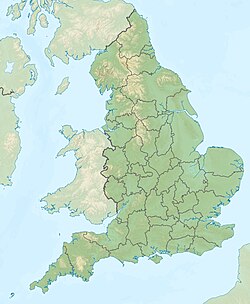
England relief location map.jpg
Red pog.svg
Wiltshire
Location within England
United Kingdom relief location map.jpg
Red pog.svg
Wiltshire
Location within the United Kingdom
Europe relief laea location map.jpg
Red pog.svg
Wiltshire
Location in Europe
Coordinates: 51°21′07″N1°58′41″W / 51.352°N 1.978°W / 51.352; -1.978
Sovereign state United Kingdom
Country England
Region South West England
County Wiltshire
Unitary Authority1 April 2009
Government
  Type Non-metropolitan district
  Local Authority Wiltshire Council
  Council LeaderIan Thorn
Population
 (2024)
  Total
523,700 (Ranked 11th)
Ethnicity (2021)
   Ethnic groups
List
Religion (2021)
   Religion
List
Time zone UTC+0 (Greenwich Mean Time)
Postcode
Post town
Bath, Salisbury, Swindon and Reading
Dialling code 01249 and others
ISO 3166 code GB-WIL
Police Wiltshire Police
Fire Dorset & Wiltshire Fire and Rescue Service
Ambulance South Western
Website www.wiltshire.gov.uk

Wiltshire is a unitary authority area [1] [2] in the ceremonial county of Wiltshire, [3] South West England. It was formed on 1 April 2009 following the abolition of Wiltshire County Council and the districts of Kennet, North Wiltshire, Salisbury, and West Wiltshire, all of which were replaced by Wiltshire Council, [4] which is based at County Hall in Trowbridge. The remaining part of the ceremonial county is the Borough of Swindon, administered by a separate unitary authority. In 2024, the population was 523,700.

Contents

Salisbury, the district's only city, is its largest settlement, [5] followed by Chippenham and Trowbridge.

History

Until 2009, Wiltshire had four districts – Kennet, North Wiltshire, Salisbury, and West Wiltshire [6] – together with the Borough of Swindon, which had been made a separate unitary authority in 1997. Proposals were made to abolish the four districts and form a unitary area covering the whole of the county outside the Borough of Swindon. In April 2009, Wiltshire Council assumed the roles and responsibilities of the four former districts. [7] [8]

Main settlements

Demographics

Ethnicity

The population of the ceremonial county of Wiltshire (district) was historically ethnically homogeneous, White British, but is now becoming less homogeneous, with the largest ethnic group, White British, constituting 90.1% of the population in the 2021 census. This proportion has consistently declined in each modern census, down from 96.2% in the 2001 census.

In the 2021 census, the ethnic composition of Wiltshire (district) comprised: 94.3% White, 2.1% Asian, 1.1% Black, 1.7% Mixed, and 0.7% Other.

Note: Sub-group totals may not sum exactly to the group total due to rounding.

Ethnic groups in Wiltshire (district)
Ethnic Group2001 Census [9] 2011 Census [10] 2021 Census [11]
White98.4%96.6%94.3%
Asian0.5%1.3%2.1%
Black0.3%0.7%1.1%
Mixed0.7%1.2%1.7%
Other0.2%0.2%0.7%

Note: The 2001 census figures for 'Asian' and 'Other' have been adjusted to reflect the 2011 reclassification of the Chinese ethnic group from 'Other' to 'Asian' to allow comparison across census years.

Religion

Religion in Wiltshire (district) (2021 United Kingdom census)
  1. Christian (50.2%)
  2. No religion (41.3%)
  3. Muslim (0.70%)
  4. Hindu (0.50%)
  5. Buddhist (0.50%)
  6. Sikh (0.10%)
  7. Jewish (0.10%)
  8. Other religion (0.60%)
  9. Not stated (6.00%)

References

  1. "Wiltshire Council". Business South. Retrieved 18 August 2024.
  2. "Wiltshire Council - view and make Freedom of Information requests". WhatDoTheyKnow. 16 August 2024. Retrieved 18 August 2024.
  3. "Lieutenancies Act 1997", legislation.gov.uk , The National Archives, 1997 c. 23, retrieved 21 August 2024
  4. "Written evidence submitted by Wiltshire Council [OSG 034]". committees.parliament.uk. committees.parliament.uk. Retrieved 18 August 2024.
  5. "Salisbury - Market Town". Visit Wiltshire. Retrieved 18 August 2024.
  6. Archives, The National. "The Discovery Service". discovery.nationalarchives.gov.uk. Retrieved 18 August 2024.
  7. "This Order provides for the establishment, on 1st April 2009, of a single tier of local government in Wiltshire (article 3). The area of the county remains unchanged. A new district is created, with the same area as the county". www.legislation.gov.uk. www.legislation.gov.uk. Retrieved 18 August 2024.
  8. "Plans for solar farm outside Salisbury refused by Wiltshire Council". Salisbury Journal. 16 August 2024. Retrieved 18 August 2024.
  9. "KS006 - Ethnic group". Nomis. Office for National Statistics. Retrieved 27 October 2025.
  10. "KS201EW - Ethnic group". Nomis. Office for National Statistics. Retrieved 27 October 2025.
  11. "TS021 - Ethnic group". Nomis. Office for National Statistics. Retrieved 27 October 2025.
  12. "KS007 - Religion". Nomis. Office for National Statistics. Retrieved 27 October 2025.
  13. "KS209EW - Religion". Nomis. Office for National Statistics. Retrieved 27 October 2025.
  14. "TS030 - Religion". Nomis. Office for National Statistics. Retrieved 27 October 2025.