This article is an orphan, as no other articles link to it . Please introduce links to this page from related articles . (November 2025) |
Indian prime minister Manmohan Singh carried out the third significant reshuffle of his second ministry between 28 October and 2 November 2012, having last done so in July 2011.
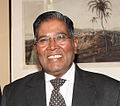
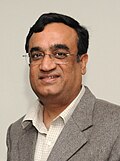
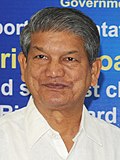
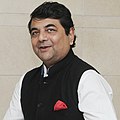
The cabinet reshuffle was carried out in three phases, first on 28 October 2012, second on 31 October 2012, and the third on 2 November 2012. The first phase was the major phase of the reshuffle in which the prime minister dropped four cabinet ministers and three ministers of state. Two parliamentarians were inducted to the ministry as cabinet ministers and five ministers of state were promoted to cabinet rank. Five ministers of state were assigned independent charge of ministries, and two new ministers of state with independent charge were appointed. Thirteen new ministers of state were also inducted. The portfolios of several ministers were also changed. [1] [2] [3]
Finance Minister Pranab Mukherjee resigned from the ministry following his nomination for the presidential election along with Micro, Small and Medium Enterprises Minister Virbhadra Singh on 26 June 2012. [4] [5] Prime Minister Manmohan Singh assumed the charge of finance ministry while Science and Technology and Earth Sciences Minister Vilasrao Deshmukh was assigned the additional portfolio of Micro, Small and Medium Enterprises. [6]
A minor reshuffle of the ministry took place on 31 July 2012 in which Home Minister P. Chidambaram was appointed as the finance minister, Power Minister Sushilkumar Shinde was appointed as the home minister, and Corporate Affairs Minister Veerappa Moily was assigned the additional portfolio as power minister. [7]
Science and Technology, Earth Sciences, and Micro, Small and Medium Enterprises Minister Vilasrao Deshmukh became critically ill and ultimately died on 14 August 2012. The portfolios held by him were assigned to Overseas Indian Affairs Minister Vayalar Ravi. [8] On 22 September 2012, all ministers belonging to the Trinamool Congress resigned from the ministry. [9] Road Transport and Highways Minister C. P. Joshi was assigned the additional charge of the Minister of Railways, earlier held by Mukul Roy of the Trinamool Congress. [10]
| Colour key |
|---|
|
| Colour key |
|---|
|
Another reshuffle took place on 31 October 2012 in which Milind Deora was assigned the additional charge as minister of state in the Ministry of Shipping, Lalchand Kataria was moved to the Ministry of Rural Development, and Panabaka Lakshmi to the Ministry of Petroleum and Natural Gas. [11] [12]
| Minister | Position before reshuffle | Position after reshuffle | |
|---|---|---|---|
| | Milind Deora | Minister of State for Communications and Information Technology | |
| | Lalchand Kataria | Minister of State for Defence | Minister of State for Rural Development |
| | Panabaka Lakshmi | Minister of State for Textiles | Minister of State for Petroleum and Natural Gas |
S. Jagathrakshakan, who was assigned the portfolio as minister of state in the Ministry of New and Renewable Energy after being moved from the Ministry of Information and Broadcasting, was re-assigned the portfolio of minister of state in the Ministry of Commerce and Industry on 2 November 2012. [13]
| Minister | Position before reshuffle | Position after reshuffle | |
|---|---|---|---|
| | S. Jagathrakshakan | Minister of State for New and Renewable Energy | Minister of State for Commerce and Industry |
Months after the major reshuffle in October 2012, on 5 March 2013, Panabaka Lakshmi, Minister of State in the Ministry of Petroleum and Natural Gas was assigned the additional portfolio as minister of state in the Ministry of Textiles, a portfolio she had held prior to the reshuffle between 2009 and 2012. [14]
| Minister | Position before reshuffle | Position after reshuffle | |
|---|---|---|---|
| | Panabaka Lakshmi | Minister of State for Petroleum and Natural Gas | |