2019 Bangsamoro Autonomous Region creation plebiscite

Last updated

2019 Bangsamoro Autonomous Region creation plebiscite
Bangsamoro Organic Law (BOL) Plebiscite
Location Mindanao, Philippines
DateJanuary 21 and February 6, 2019
Results by locality
Bangsamoro plebiscite map.svg
  Yes    No
Results
Ratify the BOL
88.57%
Don't ratify the BOL
11.43%
Turn-out
87.8%
Figures above only show votes for the ratification of the Bangsamoro Organic Law (BOL) and excludes votes to join the Bangsamoro Autonomous Region (BAR).
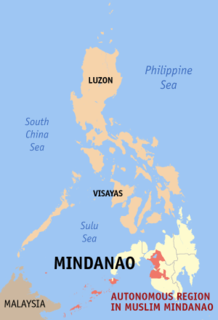
Map shows the results of the first round of the plebiscite. The Autonomous Region in Muslim Mindanao voted for the ratification of the BOL, and Cotabato City (inset) voted for the inclusion to the BAR while Isabela City in Basilan voted against. Note that voters in the rest of Basilan had to consent for Isabela to be included in the BAR aside from voters in Isabela itself. Results are unofficial results.

The 2019 Bangsamoro Autonomous Region creation plebiscite was a two-part plebiscite to decide on the ratification of the Bangsamoro Organic Law (BOL) in the Philippines, serving to replace the Autonomous Region in Muslim Mindanao (ARMM) with a proposed Bangsamoro Autonomous Region in Muslim Mindanao (BARMM), as well as the scope of the said region.

Bangsamoro Organic Law

The Bangsamoro Organic Law, also known as Bangsamoro Basic Law and often referred to by the acronym "BOL" and "BBL", is a Philippine law providing for the establishment of an autonomous political entity known as the Bangsamoro Autonomous Region, replacing the Autonomous Region in Muslim Mindanao (ARMM).

Philippines Republic in Southeast Asia

The Philippines, officially the Republic of the Philippines, is an archipelagic country in Southeast Asia. Situated in the western Pacific Ocean, it consists of about 7,641 islands that are categorized broadly under three main geographical divisions from north to south: Luzon, Visayas, and Mindanao. The capital city of the Philippines is Manila and the most populous city is Quezon City, both part of Metro Manila. Bounded by the South China Sea on the west, the Philippine Sea on the east and the Celebes Sea on the southwest, the Philippines shares maritime borders with Taiwan to the north, Vietnam to the west, Palau to the east, and Malaysia and Indonesia to the south.

Autonomous Region in Muslim Mindanao former autonomous region of the Philippines

The Autonomous Region in Muslim Mindanao was an autonomous region of the Philippines, located in the Mindanao island group of the Philippines, that consisted of five predominantly Muslim provinces: Basilan, Lanao del Sur, Maguindanao, Sulu, and Tawi-Tawi. It was the only region that had its own government. The region's de facto seat of government was Cotabato City, although this self-governing city was outside its jurisdiction.

Contents

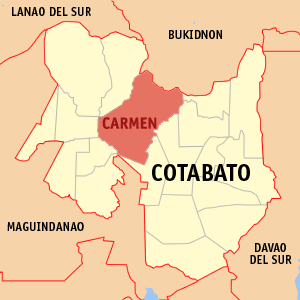
Under the organic law, the government would have to hold the plebiscite not more than 150 days from the signing of the BOL into law (July 26, 2018) but not earlier than 90 days from the law's signing. [1] The first part of the plebiscite was held on January 21 where voters from the ARMM voted in regards of the BOL's ratification and residents of Cotabato City and Isabela, Basilan voted for or against their cities' inclusion to the proposed region. The second part was held on February 6 to potentially expand the BARMM; with voters from six municipalities in Lanao del Norte and 67 barangays in Cotabato province voting for or against their localities' inclusion to the BARMM.

Cotabato City Independent Component City in Bangsamoro Autonomous Region in Muslim Mindanao, Philippines

Cotabato City, officially the City of Cotabato is an independent component city in the newly created Bangsamoro Autonomous Region in Muslim Mindanao. According to the 2015 census, it has a population of 299,438.

Isabela, Basilan Component City in Zamboanga Peninsula, Philippines

Isabela, officially the City of Isabela or simply known as Isabela City, is a 4th class city in Basilan, Philippines. According to the 2015 census, it has a population of 112,788 people.

Lanao del Norte Province in Northern Mindanao, Philippines

Lanao del Norte officially the Province of Lanao del Norte, is a province in the Philippines located in the Northern Mindanao region. Its capital is Tubod.

The Commission on Elections announced on January 25, 2019 that the BOL was "deemed ratified" after results in the first part of the plebiscite showed majority support for the law's ratification. The election body also officially announced that majority of voters in Cotabato City voted in favor of joining the proposed autonomous region while voters of Isabela City in Basilan rejected their inclusion. During the February 6 referendum, however, 63 of the 67 Cotabato barangays and 9 of 22 towns in Lanao del Norte saw voters in favor of joining the new region. [2] [3] [4] [5] Despite the fact that the six municipalities in Lanao del Norte which petitioned to join were among the 9 voting in favor of inclusion, [5] a majority of support was required from not only from voters in the individual municipality, but also from voters throughout the rest of the province as well. As a result, no municipality in Lanao del Norte would join the autonomous region. [6] All of the barangays in Cotabato province which saw voters vote in favor of joining, however, will join the new region. [2] [4]

Scope

Bangsamoro 'core' territory

Voters in localities referred to as the core territory of the proposed Bangsamoro Autonomous Region are eligible to participate in the plebiscite. [7] The core territory covers:

Basilan Province in Bangsamoro Autonomous Region in Muslim Mindanao, Philippines

The Province of Basilan is an island province of the Philippines in the Bangsamoro Autonomous Region. Basilan Island is the largest and northernmost of the major islands of the Sulu Archipelago. It is just off the southern coast of the geographic Zamboanga Peninsula.

Tangcal, Lanao del Norte Municipality in Northern Mindanao, Philippines

Tangcal, officially the Municipality of Tangcal, is a 5th class municipality in the province of Lanao del Norte, Philippines. According to the 2015 census, it has a population of 15,181 people.

Munai, Lanao del Norte Municipality in Northern Mindanao, Philippines

Munai, officially the Municipality of Munai, is a 4th class municipality in the province of Lanao del Norte, Philippines. According to the 2015 census, it has a population of 32,973 people.

Voters in the whole provinces of Lanao del Norte and North Cotabato will also have to vote if they consent the localities' secession from their parent province to join the proposed Bangsamoro Autonomous Region.

Other areas

Additionally adjacent local government units bordering the localities above can opt for a voluntary inclusion in the plebiscite through their local governments or a petition by its registered voters. The Comelec has released guidelines regarding this concern on October 22, 2018 and gave local government units aspiring to participate in the plebiscite until October 31, 2018 to comply. Voters or the local government of the petitioning locality had to pay a ₱10,000 filing fee and a ₱100 research fee which were among the requirements imposed by the election body. [8]

A total of 62 localities was initially announced to have made bids to participate in the plebiscite although not all of them are contiguous to the defined Bangsamoro core territory. 56 of these petitions were initiated by local governments while six were made by registered voters of the petitioning localities. The Comelec plans to decide on all of these petitions by mid-November 2018 [7] and later moved their target to December 15, 2018. [9] Due to the large number of petitions, December 7, 2018 the Comelec decided to schedule the planned plebiscite into two separate dates; on January 21 and February 6, 2019 since they concluded they won't be able to process all petitions by December 15 with localities with successful petitions taking part in the February vote. [10] [9]

A total of 103 petitions were filed but only 28 was accepted. Petitions which were not accepted either due to the petitioning locality not being adjacent to the defined core territory of the proposed Bangsamoro Autonomous Region or failure to submit sufficient requirements for their bid to get included in the plebiscite. Voters from the 28 accepted barangays will participate in the February polling. [11] [12]

Approved additional areas

By early January 2019, the Comelec has approved the petition of 20 barangays in North Cotabato and they will participate in the plebiscite. These barangays are: [13]

  • Aleosan (1) — Pagangan
  • Carmen (5) — Pebpoluan, Kibayao, Kitulaan, Tupig, and Langogan
  • Pigcawayan (4) — Libungan Torreta, Pangankalan, Datu Mantil, and Simsiman
  • Pikit (10) — Rajahmuda, Barungis, Gli-Gli, Nalapaan, Panicupan, Bualan, Nabundas, Nunguan, Manaulanan, and Bulol

On January 11, 2019, the Comelec has announced the final list of additional participating localities for the plebiscite. The petitions of eight more barangays, all from North Cotabato, to join the plebiscite were approved by the election body. [11] [12]

  • Pikit (2) — Pamalian and Fort Pikit
  • Kabacan (4) — Pedtad, Buluan, Simone, and Tamped
  • Midsayap (1) — Tumbras
  • Tulunan (1) — Galidan

Unapproved petitions

At least twelve localities in Zamboanga del Sur filed petition for their participation in the plebiscite. [14] Three island barangays of Zamboanga City has also reportedly filed petition for their participation, a supposed move which was condemned by city mayor Maria Isabelle Climaco. [15] The barangay captains of the three Zamboanga City barangays later denied filing petitions. [16]

Preparations

Voters' registration

The Commission on Elections (COMELEC) has conducted a three-day satellite voter registration in select venues in the constituent provinces of the Autonomous Region in Muslim Mindanao as well as in the provinces of Lanao del Norte and North Cotabato, and in the cities of Cotabato and Isabela, Basilan from September 11 to 13, 2018. Alongside with voter's registration, residents were able to transfer, reactivate, or correct their registration, as well as have their records included or reinstated. Those who have registered for the most recent barangay and Sanggunian Kabataan elections were not required to undergo the registration process. [17] 15 satellites centers were set by the COMELEC, one of which was in a camp by the rebel group Moro Islamic Liberation Front (MILF) who played a major part in the conception of the BOL. MILF members were also among those who registered for the plebiscite with some of them lacking government-issued IDs such as birth certificates. However their own identification documents issued by their group was accepted as valid IDs for the purpose of registration [18]

The Comelec has recorded a total of 2,839,659 registered voters from 3,273 in certain areas in Mindanao. The election body is expecting 75% turn-out for the vote. [19]

Campaign and plebiscite period

President Rodrigo Roa Duterte speaks at the Peace Assembly for the Ratification of the Bangsamoro Organic Law at the Shariff Kabunsuan Cultural Complex Compound in Cotabato City on January 18, 2019. Rodrigo Durtete Peace Assembly for the Ratification of Bangsamoro Organic Law b.jpg
President Rodrigo Roa Duterte speaks at the Peace Assembly for the Ratification of the Bangsamoro Organic Law at the Shariff Kabunsuan Cultural Complex Compound in Cotabato City on January 18, 2019.

The campaign period for the Bangsamoro Autonomous Region creation plebiscite began on December 7, 2018 [20] and ended in January 19, 2019 while the plebiscite period is scheduled to cover December 7, 2018 to February 5, 2019. The voting for the plebiscite took place on January 21, 2019 as per an en banc decision by the Commission on Elections. [21]

During the campaign period, a gun ban was imposed in localities which will be participating in the plebiscite. During the same period the following acts were also prohibited: establishment of a new voting precinct or alteration of the territory of an existing one will be prohibited; transfer or detail of officers and civil service employees; organization and maintenance of "strike forces" or similar entities; and the suspension of any elective public official from the barangay to the provincial level including as well as elective officials in independent cities. [22]

The Comelec was also tasked to aid in holding information campaigns in every participating local government units as well as allow the conduct of information dissemination and public advocacy events by other government agencies, non-government organizations and private individuals in relation to the plebiscite. Every barangay was also directed to hold at least one assembly during the campaign period so that its constituents are informed regarding the BOL. [22]

On January 6, 2019, a rally was organized in Jolo, Sulu as an expression of support to the ratification of the BOL which was attended by former Sulu governor Benjamin Loong as well as former and incumbent mayors of some of the towns of Sulu. Similar action is planned in Basilan, Tawi-Tawi, and other parts of Sulu. [23]

There is also reluctance or opposition against the ratification of the BOL. ARMM Governor Mujiv Hataman allayed concerns of Christian living in the city of Isabela in Basilan of potential marginalization if their city becomes part of the Bangsamoro Autonomous Region reasoning that the neighboring town of Lamitan has been govern by Christians despite being part of the ARMM. [24] Hataman has also said that Christian practices such as fiestas and eating pork will not be made illegal if the BOL gets ratified contrary to what people against the legislation is saying in their campaign. [25] Basilan Governor Jim Hataman on his part claims that the BOL is a "sure win" in his province. [24]

The provincial government of Lanao del Norte is campaigning for a "No" vote since it opposes the inclusion of six of its municipalities in the proposed Bangsamoro Autonomous Region. Lanao del Norte Governor Imelda Quibranza Dimaporo as well as her husband Abdullah and son Mohammad Khalid, who are both members of the House of Representatives leads the provincial government's campaign. Abdullah Makapaar, the leader of the Moro Islamic Liberation Front's North Western Mindanao Command who is also known as Commander Bravo, is campaigning for a "Yes" vote promising to double the salary of teachers and the establishment of orphanage centers in the province. [26]

Question

BOL ballot sample ARMM except Basilan.jpg
BOL ballot sample Isabela, Basilan.jpg
BOL ballot sample Basilan except Isabela City.jpg
BOL ballot sample Cotabato city.jpg
Ballot paper samples for the plebiscite from left to right: For voters in the ARMM except Basilan, Isabela City in Basilan, the rest of Basilan, and Cotabato City

The crafting of the questions to be use in the plebiscite by the Comelec was already being finalized by mid-September 2018. [27]

In October 2018, it was reported that in the defined core territories of the proposed Bangsamoro Autonomous Region, voters will be asked to answer "Yes" or "No" if they approve the Bangsamoro Organic Law or not while in surrounding areas and non-core areas, voters will be presented a "two-folded" question. [28]

The plebiscite question will be in Arabic and Filipino; both languages will be used in the existing Autonomous Region in Muslim Mindanao areas while only Filipino will be used in the rest of the plebiscite's scope. No ballots with English questions was printed. [29]

Voters in the existing ARMM will be only asked to answer one question: [19]

In Filipino:

"Payag ba kayo na pagtibayin ang Batas Republika Blg.11054 na kilala din bilang "Organic Law for the Bangsamoro Autonomous Region in Muslim Mindanao"?

In Arabic:

ه‍ل أنت توُد الموافقة على القرار الجمه‍ورى رقم ١١٠٥٤ المعروف باسم: "القانون العضوى للحكم الذاتى امنطقة بانجسامورو فى مسلمى مينداناو".

English translation:

Are you willing to adopt the Republic Act No. 11054 also known as "Organic Law for the Bangsamoro Autonomous Region in Muslim Mindanao"?

Voters in Basilan will also be asked whether if they wanted to include the city of Isabela in the proposed Bangsamoro Autonomous Region in addition to the question above regarding their stance on the ratification of the BOL. The question will be presented as follows:

In Filipino:

"Payag ba kayo na isama ang Lungsod Isabela, Basilan sa Rehiyong Awtonomo ng Bangsamoro?"

In Arabic:

هل انت توافق على ادراج مدينة ايسابيلا، باسيلان فى الحكم الداتى لمنطقة بانجسامورو؟


English Translation:

"Are you willing to include the city of Isabela, Basilan in the Bangsamoro Autonomous Region?"

Plebiscite participants in the city of Isabela itself and Cotabato City will only answer one question; regarding if they favor their locality to be part of the proposed Bangsamoro Autonomous Region or not. [30]

Organization

Voters look for their names inside Basak Malutlut Elementary Schoo in Marawi during the January 21 plebiscite. Bangsamoro plebiscite voting Basak Malutlut Elementary School.jpg
Voters look for their names inside Basak Malutlut Elementary Schoo in Marawi during the January 21 plebiscite.

The Comelec held a simulation of the plebiscite on October 23, 2018 at its main office in Intramuros, Manila. [28] Ballot printing started on December 7, 2018 and lasted for three days. Around 2.8 million ballots were printed. [29] [31]

The plebiscite was originally planned to held at a single date on January 21, 2019. However the Comelec announced on December 7, 2018 that the plebiscite will be held in two separate days instead; on January 21 and February 6, 2019. [32] The election body reasoned that the move was to allow the resolution of pending petitions for voluntary inclusion of additional local government units in the plebiscite. [10]

Voters in the Autonomous Region in Muslim Mindanao including Cotabato City and Isabela City in Basilan will take part in the January 21 vote while the rest of the named participating localities in the BOL as well as additional localities which successfully petitioned for their inclusion will take part in the February 6 vote. [10]

For both dates, the Comelec has allotted eight hours of voting. Voting will start at 8:00 a.m. (UTC+8) and will officially close at 3:00 p.m. Voters within 30 metres (98 ft) in front of the polling area will still be allowed to vote past 3:00 p.m. Voting will be manual with the ballot containing questions answerable by "yes" or "no" in English or its equivalent in Filipino or any other indigenous Philippine languages. [33] Answers made with any other mark such as a check, a cross, or a thumb mark were not accepted as valid. [34]

At least 25 international observers were permitted to oversee the plebiscite in order to establish credibility of the plebiscite. They are few restrictions and regulations imposed such as the requirement for the observer identify themselves to election authorities on ground and for them to provide copies of their report to the government. They are not allowed to interfere in the process of the plebiscite itself. Their report will also be used by the Comelec as reference to improve the process of future elections and plebiscites. [35]

Budget

It is estimated that the plebiscite would require ₱857 million pesos. As of mid-September 2018, the proposed national budget for 2019 still does not include the budget for the January 2019 plebiscite. [36]

In an event that the Congress fails to appropriate part of the 2019 national budget for the holding of the plebiscite, it was proposed that funds acquired by Comelec in the 2018 barangay elections be used to partially satisfy the financial needs of the plebiscite. [36]

By November 2018, there is already a budget allocation for the plebiscite. The Department of Budget and Management has stated that the funds will be drawn from the fund allocation of the Comelec. [37]

Governor Abdusakur Tan II, the provincial governor of Sulu questioned the constitutionality of the Bangsamoro Organic Law before the Supreme Court of the Philippines through a petition filed in October 2018. He asked the high court to rule the BOL as unconstitutional and for the stoppage of the planned plebicite. According to the petition, the BOL which seeks to replace the Autonomous Region in Muslim Mindanao with the Bangsamoro Autonomous Region is illegal citing a view that the Constitution provided for only one Organic act for the establishment of an autonomous region in Muslim Mindanao. It also argued that only Constitutional amendment can legally abolish the ARMM and not legislation by the Congress. It also questioned the provision that the ARMM would be considered as "one geographical area" for the purpose of the plebiscite as well as the Moro Islamic Liberation Front's lead role in the Bangsamoro Transition Commission to the prejudice of other Muslims who are affiliated with other rebel groups and non-Muslims. [38]

The Philippine Constitutional Association (Philconsa) also filed a similar petition against the BOL while and intervention was filed by the Philippine Association of Islamic Accountants (PAIA) seeking for the dismissal of the two petitions filed by the Philconsa and the Sulu provincial government. The two petitions were ordered to be consolidated by the Supreme Court on January 8, 2019. Associate Justice Mario Victor Leonen will handle the cases. [39]

Opinion polling

The International Alert (IA) conducted a survey in the Autonomous Region in Muslim Mindanao with 614 respondents aged 18-35 regarding their position in the Bangsamoro Autonomous Region creation plebiscite. 89.4 percent of the IA survey reported that they will vote in favor of the ratification of the Bangsamoro Organic Law while 2.5 percent said that they will vote against the measure and the rest were unsure. However in the same survey, respondents in the Sulu archipelago were largely undecided whether to vote for and against the measure compared to their counterparts in mainland Mindanao. [40]

Results

Map showing the results of the January 21, 2019 plebiscite. Bangsamoro plebiscite map.svg
Map showing the results of the January 21, 2019 plebiscite.

Ratification of the BOL

On January 25, the Commission on Elections, as the National Plebiscite Board of Canvassers, declared the ratification of the Bangsamoro Organic Law creating the Bangsamoro Autonomous Region in Muslim Mindanao (BARMM), after a majority of votes from the present Autonomous Region in Muslim Mindanao (ARMM) approved its creation. [41]

ChoiceVotes%
Yes check.svg Yes1,540,01788.57
No198,75011.43
Total votes1,738,767100.00
Registered voters and turnout1,980,44187.8
Source: Cruz, Ian (January 24, 2019). "ARMM votes yes to BOL, Bangsamoro Autonomous Region". GMA News. Retrieved January 25, 2019.
"National Plebiscite Board of Canvassers Report No. 2" (PDF). Commission on Elections . National Plebiscite Board of Canvassers. Retrieved January 26, 2019.
Plebiscite on the ratification of the BOL results (without invalid ballots)
Yes:
88.57%
No:
11.43%

Present ARMM

Summary of results – On ratification of the BOL
ProvinceForAgainstTurnout
Total%Total%
  Basilan (excluding Isabela)147,59895.78%6,4964.22%154,094
  Lanao del Sur 503,62698.08%9,8161.91%513,442
  Maguindanao 433,27396.44%15,9903.56%449,263
  Sulu 137,63045.7%163,52654.3%301,156
  Tawi-Tawi 143,44393.84%9,4196.16%152,862
Turnout1,540,01788.57%198,75011.43%1,738,767

On ratification of the BARMM from the then components of the ARMM, the entire ARMM voted as one; therefore, Sulu's rejection of the BARMM does not remove them from the BARMM.

Inclusion to the Bangsamoro Autonomous Region

Cotabato City and Isabela, Basilan

Residents of Cotabato City and Isabela City, the latter of which is part of Basilan province but not the ARMM, voted on January 21 regarding their inclusion in the proposed Bangsamoro Autonomous Region. Isabela being a part of Basilan province, the residents of the other towns of Basilan had to consent if they were in favor of Isabela's potential inclusion in the Bangsamoro Autonomous Region.

On January 25, the Commission on Elections, as the National Plebiscite Board of Canvassers, announced that voters in Cotabato City, an independent component city, voted in favor of inclusion in the BARMM. In Isabela City, majority of voters rejected their inclusion in the proposed BARMM while majority of voters in the rest of the province excluding Isabela agreed to the potential inclusion of the latter in the BARMM. Lacking a double majority, Isabela remains a part of the Zamboanga Peninsula region. [41]

Summary of results – On joining the Bangsamoro Autonomous Region
CityForAgainstTurnout
Total%Total%
  Isabela City (Basilan)19,03245.89%22,44154.11%41,473
  Cotabato City 36,68259.48%24,99440.52%61,676
TurnoutTBD
Rest of Basilan

The other towns of Basilan will have to consent if they favor Isabela's inclusion to the Bangsamoro Autonomous Region.

Basilan excluding Isabela did consent for Isabela's inclusion in the Bangsamoro Autonomous Region. [41]

Summary of results – On Isabela joining the Bangsamoro Autonomous Region
AreaForAgainstTotal
Total%Total%
 Basilan (excluding Isabela)144,64094.46%8,4875.54%153,127
TurnoutTBD

Municipalities in Lanao del Norte

The six towns voted in favor, in the cases of Munai and Tangcal, overwhelmingly, to join the BARMM.

Summary of results – On joining the Bangsamoro Autonomous Region
MunicipalityForAgainstTotal
Total%Total%
  Balo-i 8,5333,038
  Nunungan 1,8021,004
  Munai 10,7654
  Pantar 7,840256
  Tagoloan 2,7601,373
  Tangcal 6,2760
TurnoutTBD
Rest of Lanao del Norte

Like in the case of Isabela in Basilan, the six towns inclusion in the proposed Bangsamoro Autonomous Region will also have to secure consent from the rest of the towns in Lanao del Norte. Each town will have to secure consent individually. The city of Iligan, a highly urbanized city not under the jurisdiction of Lanao del Norte, will not participate in the plebiscite.

The other towns in Lanao del Norte rejected to allow the towns petitioning to be a part of the BARMM from joining. This defeated the measure of these towns from joining. [42]

Summary of results – On Lanao del Norte towns joining the Bangsamoro Autonomous Region
Municipality
Balo-iNununganMunaiPantarTagoloanTangcal
ForAgainstTotalForAgainstTotalForAgainstTotalForAgainstTotalForAgainstTotalForAgainstTotal
Total%Total%Total%Total%Total%Total%Total%Total%Total%Total%Total%Total%
Bacolod 1,4538,497
Baroy 27211,791
Kapatagan 79520,776
Kauswagan 2,3086,905
Kolambugan 1,2049,634
Linamon 6266,782
Magsaysay 2,3463,233
Maigo 3,4754,501
Matungao 1,4421,666
Pantao Ragat 9,1160
Poona Piagapo 5,231333
Salvador 11,379279
Sapad 1,1625,739
Sultan Naga Dimaporo 56724,405
Tubod 78918,980
TurnoutTBDTBDTBDTBDTBDTBD
Rest of Lanao del Norte73,164154,55379,935156,63071,148158,02573,992150,70578,849156,60575,364157,417

Barangays in North Cotabato

Out of 67 barangays of North Cotabato that were included in the plebiscite, 63 voted for inclusion. The four that rejected the measure are Galidan in Tulunan, Balatican in Pikit, and Pagangan and Lower Mingading in Aleosan; these four shall not be joining the BARMM. Meanwhile, each municipality consented to its barangays in joining the BARMM. In Pikit, the most popular municipality in North Cotabato, all but one barangay that voted in the plebiscite to join declined. This led to 20 barangays staying out of the BARMM, out of 42. Pikit's town hall, which is located in Fort Pikit, one of the barangays that voted for inclusion, is being petitioned to be annexed by Poblacion, one of the towns that didn't petition to be included. [43]

The barangays in Aleosan and Tolonan voted in favor of their inclusion but majority of voters in the rest of their parent municipalities voted against the barangays' inclusion. Barangay Baltican in Pikit rejected their inclusion while the rest of Pikit consented the barangay's inclusion and would have been part of the new autonomous region if Baltican voters also voted for their inclusion. [44]

BARMM Core Territory
Aleosan
Summary of results – On joining the Bangsamoro Autonomous Region
BarangayForAgainstTotal
Total%Total%
 Dunguan
 Lower Mingading
 Tapodoc
TurnoutTBD
Carmen
Summary of results – On joining the Bangsamoro Autonomous Region
BarangayForAgainstTotal
Total%Total%
 Manarapan
 Nasapian
TurnoutTBD
Kabacan
Summary of results – On joining the Bangsamoro Autonomous Region
MunicipalityForAgainstTotal
Total%Total%
 Nanga-an
 Sanggadong
 Simbuhay
TurnoutTBD
Midsayap
Summary of results – On joining the Bangsamoro Autonomous Region
BarangayForAgainstTotal
Total%Total%
 Central Labas
 Damatulan
 Kadigasan
 Kadingilan
 Kapinpilin
 Kudangaran
 Malingao
 Mudseng
 Nabalawag
 Olandang
 Sambulawan
 Tugal
TurnoutTBD
Pigcawayan
Summary of results – On joining the Bangsamoro Autonomous Region
MunicipalityForAgainstTotal
Total%Total%
 Buricain
 Balacayon
 Datu Binasing
 Lower Baguer
 Lower Pangangkalan
 Kadingilan
 Matilac
 Patot
TurnoutTBD
Pikit
Summary of results – On joining the Bangsamoro Autonomous Region
MunicipalityForAgainstTotal
Total%Total%
 Bangoinged
 Balatican
 S. Balong
 S. Balongis
 Batulawan
 Buliok
 Gokotan
 Kabalasan
 Lagunde
 Macabual
 Macasendeg
TurnoutTBD
Approved petitioning barangays
Aleosan
Summary of results – On joining the Bangsamoro Autonomous Region
BarangayForAgainstTotal
Total%Total%
 Pagangan
TurnoutTBD
Carmen
Summary of results – On joining the Bangsamoro Autonomous Region
BarangayForAgainstTotal
Total%Total%
 Kibayao
 Kitulaan
 Langogan
 Pebpoluan
 Tupig
TurnoutTBD
Pigcawayan
Summary of results – On joining the Bangsamoro Autonomous Region
BarangayForAgainstTotal
Total%Total%
 Datu Mantil
 Libungan Torreta
 Upper Pangankalan
 Simsiman
TurnoutTBD
Pikit
Summary of results – On joining the Bangsamoro Autonomous Region
BarangayForAgainstTotal
Total%Total%
 Barungis
 Bualan
 Bulol
 Fort Pikit
 Gli-Gli
 Manaulanan
 Nabundas
 Nalapaan
 Nunguan
 Panicupan
 Pamalian
 Rajahmuda
TurnoutTBD
Kabacan
Summary of results – On joining the Bangsamoro Autonomous Region
BarangayForAgainstTotal
Total%Total%
 Buluan
 Pedtad
 Simone
 Tamped
TurnoutTBD
Midsayap
Summary of results – On joining the Bangsamoro Autonomous Region
BarangayForAgainstTotal
Total%Total%
 Tumbras
TurnoutTBD
Tulunan
Summary of results – On joining the Bangsamoro Autonomous Region
BarangayForAgainstTotal
Total%Total%
 Galidan
TurnoutTBD
Summary

The barangays included in the BARMM as core territories plus barangays with approved petitions will secure approval from their mother municipalities to join BARMM.

Summary of results – On some barangays of towns in Cotabato joining the Bangsamoro Autonomous Region
MunicipalityBarangayForAgainstTotal
Total%Total%
Aleosan 
Carmen 
Kabacan 
Midsayap
Pigcawayan 
Pikit 
Tulunan Bacong
 Bagumbayan
 Banayal
 Batang
 Bituan
 Bual
 Bunawan
 Dungos
 New Caridad
 La Esperanza
 Lampanag
 Minapan
 Magbok
 Maybula
 Kanibong
 Damawato
 Daig
 Paraiso
 Poblacion
 Popoyon
 Sibsib
 Tambac
 Tuburan
 F. Cajelo
 Genovesa Baynosa
 Nabundasan
 New Panay
 New Culasi
TurnoutTBD
 Rest of Cotabato Municipalities Affected
TurnoutTBD

Reactions to the results

To the January 21 vote

Discrepancies were noted regarding the actual number of votes cast in Cotabato City; a total of 39,027 votes were recorded but 6,682 "yes" votes were recorded and 24,994 "no" votes with the combined total of the yes and no votes at 61,676. The National Plebiscite Board of Canvassers ordered a retabulation of the votes from Cotabato City to validate the votes. [45]

The mayor of Cotabato City, Guiani Sayaidi, is to file a protest because of the results. [46] She claims alleges harassment of voters who were not supportive of the BOL and "flying voters" or non-residents voting in another precinct. [45] Sayaidi later alleged a conspiracy between the national government and the MILF for the result of the plebiscite in her city. [47] She said that the military did not respond to her pleas to disperse MILF members which she claimed were harassing voters and also mentioned an alleged detention of barangay chief at the headquarters headquarters of the Philippine Army's 6th Infantry Division after being told to attend a seminar in relation to the plebiscite at the eve of the plebiscite voting date. The claim has been denied by the Armed Forces of the Philippines and Sayaidi was told to bring the matter to a "proper forum". [48]

Less than a week after the plebiscite, the Our Lady of Mount Carmel Cathedral in Jolo of Sulu Province was bombed on January 27, one inside the church and another outside after the first bombing when the armed forced responded. Around 18 people were killed, while 82 others were injured. [49] The Armed Forces of the Philippines blamed the Ajang-Ajang group of the Abu Sayyaf as the perpetrators. Sulu narrowly rejected inclusion in the BARMM, but since the old ARMM voted for inclusion, Sulu could not opt out of inclusion. The military has received reports that the Abu Sayyaf with foreign collaboration has been planning to attack an urban area for a "long time" already and insists it has yet to connect the bombings to the plebiscite itself. [50] [51]

The United Nations and the European Union the result of the plebiscite and Bangsamoro Organic Law as a significant achievement in the Mindanao peace process. [52] The government of Turkey issued a statement with the same message [53] while Japan has pledged continued support for aiding developments in Mindanao in accordance with the peace process. [52]

To the February 6 vote

Following unofficial results, that the majority of voters in Lanao del Norte voted against the inclusion of six municipalities of the province in the Bangsamoro Autonomous Region, the Philippine National Police decided to keep officers stationed in various parts of the province for election duties for the plebiscite to remain in anticipation of adverse reaction to the defeat of the "Yes" votes. [54]

Aftermath

President Rodrigo Duterte being presented the results of the plebiscite by Comelec chairman Sheriff Abas in a ceremony. BOL plebiscite ceremonial confirmation of results 1.jpg
President Rodrigo Duterte being presented the results of the plebiscite by Comelec chairman Sheriff Abas in a ceremony.

The Commission on Elections announced on January 25, 2019 that the BOL is "deemed ratified" which meant that the ARMM will be abolished and that the process of the formal establishment of the Bangsamoro Autonomous Region begins. The election body also announced that Cotabato City will be part of this new autonomous region while Isabela City in Basilan which was never part of the ARMM will remain outside of the new autonomous region. The election body also confirmed in February 14, 2019, that all six Lanao del Norte municipalities which could then-potentially be part of the new region voted in favor of their inclusion but failed to gained approval from voters in other towns in the province. 63 out of 67 barangays were also announced to form part of the future autonomous region after they verified that voters in this barangays voted in favor of their inclusion while the rest of the voters from their respective parent municipalities consented their inclusion. [55] [56]

The barangays that will be part of the BARMM will not immediately secede from their parent municipalities and province once the Bangsamoro Autonomous Region is effectively established. They are expected to vote for municipal officials of their parent municipalities and North Cotabato provincial officials in the 2019 Philippine general election in May if the barangays are not reorganized into a new municipality or merged with any of the neighboring neighboring municipalities of Maguindanao in time before the elections. [57]

The members of a future interim regional government of the Bangsamoro Autonomous Region, the Bangsamoro Transition Authority are set to take their oaths on February 20, 2019 along with the ceremonial confirmation of the plebiscite results of both the January 21, and February 6, 2019 votes. The official turnover from the ARMM to the Bangsamoro Autonomous Region is scheduled to take place on February 25, 2019 which meant the full abolition of the former. [58]

Related Research Articles

The Provinces of the Philippines are the primary political and administrative divisions of the Philippines. There are 81 provinces at present, further subdivided into component cities and municipalities. The National Capital Region, as well as independent cities, are independent of any provincial government. Each province is governed by an elected legislature called the Sangguniang Panlalawigan and by an elected governor.

In the Philippines, regions, are administrative divisions that serve primarily to organize the provinces of the country for administrative convenience. Currently, the archipelagic republic of the Philippines is divided into 17 regions. Most national government offices provide services through their regional branches instead of having direct provincial offices. These regional offices are usually in the city designated as the regional center.

Soccsksargen Region in Mindanao, Philippines

Soccsksargen, formerly known simply as Cotabato or Kota Bato, is an administrative region of the Philippines, located in south-central Mindanao. It is numerically designated as Region XII. The name is an acronym that stands for the region's four provinces and 2 cities. The region used to be called Central Mindanao. The regional center is in Koronadal located in the province of South Cotabato, and the center of commerce and industry is General Santos, which is the most populous city in the Region.

Sumisip, Basilan Municipality in Bangsamoro Autonomous Region in Muslim Mindanao, Philippines

Sumisip, officially the Municipality of Sumisip,, is a 1st class municipality in the province of Basilan, Philippines. According to the 2015 census, it has a population of 41,730 people.

2001 Autonomous Region in Muslim Mindanao expansion and inclusion plebiscite

In the Philippines, the Autonomous Region in Muslim Mindanao (ARMM) is the only autonomous region; as such it is the sole region with a regional government as prescribed by the Constitution of the Philippines. In 2001, Republic Act No. 9054 was passed for the expansion of the ARMM to include the areas which initially rejected inclusion and the provinces which were carved from them, however only Marawi City and Basilan with the exception of Isabela City opted to be integrated in the region.

General elections are held for the first time in the newly created Autonomous Region in Muslim Mindanao for the Regional Governor and Vice-Governor were held on February 12, 1990. The Autonomous Region of Muslim Mindanao region was first created on August 1, 1989 through Republic Act No. 6734 otherwise known as the Organic Act in pursuance with a constitutional mandate to provide for an autonomous area in Muslim Mindanao. A plebiscite was held in the provinces of Basilan, Cotabato, Davao del Sur, Lanao del Norte, Lanao del Sur, Maguindanao, Palawan, South Cotabato, Sultan Kudarat, Sulu, Tawi-Tawi, Zamboanga del Norte and Zamboanga del Sur; and in the cities of Cotabato, Dapitan, Dipolog, General Santos, Iligan, Marawi, Pagadian, Puerto Princesa and Zamboanga to determine if the residents would want to be part of the ARMM. Of the areas where the plebiscites were held only Lanao del Sur, Maguindanao, Sulu and Tawi-Tawi voted favorably for inclusion in the new autonomous region.

Autonomous Region in Muslim Mindanao general elections was held in the ARMM for the regional governor, vice-governor posts and election of members of the ARMM Regional Legislative Assembly on August 11, 2008. The electronic voting used is the first in Philippines election history. The P 500 million COMELEC's "ARMM balloting" is a pilot program for the 2010 national polling.

Administrative divisions of Mindanao

The southern island group of Mindanao in the Philippines is divided into six administrative regions. Each region is subdivided into provinces.

<i>Sema vs. COMELEC</i>

Sema vs. COMELEC is a court case that was heard before the Supreme Court of the Philippines. It was consolidated with Marquez v. COMELEC. It held that the Regional Assembly of the Autonomous Region in Muslim Mindanao does not have the power to create provinces and cities. Thus, the creation of the province of Shariff Kabunsuan was unconstitutional and that province no longer exists as a political entity in the Philippines.

Local government in the Philippines

Officially local government in the Philippines, often called local government units or LGUs, are divided into three levels – provinces and independent cities; component cities and municipalities; and barangays. In one area, above provinces and independent cities, is an autonomous region, the Autonomous Region of Muslim Mindanao. Below barangays in some cities and municipalities are sitios and puroks. All of these, with the exception of sitios and puroks, elect their own executives and legislatures. Sitios and puroks are often led by elected barangay councilors.

2010 Philippine House of Representatives elections in the Autonomous Region in Muslim Mindanao

Elections were held in the Autonomous Region in Muslim Mindanao (ARMM) for seats in the House of Representatives of the Philippines on May 10, 2010.

In the late 1960s, an independence movement was founded in Mindanao, the Philippines to separate the Muslim majority-Moro areas from the rest of the Philippines. The area is now called the Bangsamoro.

Bangsamoro Transition Commission organization

The Bangsamoro Transition Commission (BTC) was a government body which was tasked to aid in creating the draft of the Bangsamoro Organic Law as well as the transition body in the areas to form the Bangsamoro Autonomous Region until the constitution of the Bangsamoro Transition Authority and formal creation of the autonomous region.

An autonomous region of the Philippines is a first-level administrative division and it has the authority to control the region's culture and economy. It is a minority entity that has a higher population of a particular minority ethnic group. The Constitution of the Philippines allows for two autonomous regions: for Cordilleras and Muslim Mindanao.

1976 Tripoli Agreement

The 1976 Tripoli Agreement was signed on December 23, 1976 in Tripoli, Libya by Carmelo Z. Barbero, representing the Government of the Philippines and Nur Misuari of the Moro National Liberation Front. The agreement defined autonomous administrative divisions for Muslims in the southern Philippines, the establishment of an autonomous government, judicial system for Sharia law and special security forces, and the observance of a ceasefire. The autonomous region was to have its own economic system, including an Islamic bank.

Jeddah Accord

The Jeddah Accord was signed on January 3-4, 1987 in Jeddah, Saudi Arabia by Aquilino Pimentel Jr., representing the Government of the Philippines and Nur Misuari of the Moro National Liberation Front. The two panels agreed upon the continued discussion of the proposal of the grant of full autonomy to Mindanao, Basilan, Sulu, Tawi-Tawi and Palawan subject to democratic processes.

References

  1. Legaspi, Amita (July 27, 2018). "Now that BOL is signed, 'the more difficult part begins,' says Zubiri". GMA News. Retrieved July 27, 2018.
  2. 1 2 https://www.rappler.com/nation/222984-plebiscite-results-number-of-barangays-cotabato-join-bangsamoro-region
  3. http://www.manilastandard.net/news/top-stories/287350/-yes-votes-add-cotabato-areas-to-bangsamoro.html
  4. 1 2 https://newsinfo.inquirer.net/1082718/21-of-67-villages-in-north-cotabato-join-barmm
  5. 1 2 https://newsinfo.inquirer.net/1082784/no-wins-in-13-lanao-del-norte-towns-yes-wins-in-only-9-towns
  6. https://www.rappler.com/nation/222908-plebiscite-results-lanao-del-norte-rejects-towns-inclusion-bangsamoro-region
  7. 1 2 Esguerra, Christian (November 7, 2018). "62 villages seek inclusion in new Bangsamoro region: Comelec spokesman". ABS-CBN News. Retrieved November 11, 2018.
  8. Cortez, Gillian (October 22, 2018). "Comelec ready to accept petitions for inclusion in new Bangsamoro region". BusinessMirrror. Retrieved October 23, 2018.
  9. 1 2 "Comelec splits Bangsamoro plebiscite". Sun Star. December 7, 2018. Retrieved December 7, 2018.
  10. 1 2 3 "Bangsamoro law plebiscite to be held on two separate days —Comelec". GMA News. December 7, 2018. Retrieved December 7, 2018.
  11. 1 2 Medenilla, Samuel (January 11, 2019). "Comelec: 8 more North Cotabato barangays to take part in BOL plebiscite". BusinessMirror. Retrieved January 11, 2019.
  12. 1 2 Crisostomo, Shiela (January 11, 2019). "28 areas outside ARMM added". Philippine Star. Retrieved January 11, 2019.
  13. Fernandez, Edwin (January 2, 2019). "20 petitioning NoCot villages allowed to join BOL plebiscite". Philippine News Agency. Retrieved January 2, 2019.
  14. Fernandez, Edwin (November 17, 2018). "More villages seek inclusion in BARMM". Philippine News Agency. Retrieved November 17, 2018.
  15. Lacson, Nonoy (November 17, 2018). "Climaco up in arms over efforts to include 3 Zambo City brgys in BARMM". Manila Bulletin. Retrieved November 17, 2018.
  16. "Barangay captains deny petition for Bangsamoro inclusion". Zamboanga Times. November 19, 2018. Retrieved November 19, 2018.
  17. "Special registrations start for Bangsamoro plebiscite". Manila Times. September 13, 2018. Retrieved September 13, 2018.
  18. "Thousands show up for voters' listing inside MILF camp in Maguindanao". Philippine Daily Inquirer. The Phnom Penh Post, Asia News Network. September 13, 2018. Retrieved September 13, 2018.
  19. 1 2 Orellana, Faye (January 14, 2019). "Comelec expects 75% voter turn out in ARMM for BOL plebiscite". Philippine Daily Inquirer. Retrieved January 14, 2019.
  20. Wakefiekd, Francis (December 7, 2018). "BOL campaign starts" . Retrieved December 7, 2018.
  21. Esmaquel, Paterno II (September 5, 2018). "Plebiscite on Bangsamoro Organic Law set for January 2019". Rappler. Retrieved September 13, 2018.
  22. 1 2 "Plebiscite, campaign period begins countdown to BOL referendum". Sun Star Manila. December 7, 2018. Retrieved December 7, 2018.
  23. "BOL supporters kick off plebiscite campaign in Jolo". The Philippine Star. January 6, 2019. Retrieved January 10, 2019.
  24. 1 2 Wakefield, Francis (January 9, 2019). "BOL proponents woo Isabela City residents to join BARMM". Manila Bulletin. Retrieved January 10, 2019.
  25. "Hataman: Bangsamoro law ratification won't cancel fiestas, ban pork". The Philippine Star. December 24, 2018. Retrieved January 10, 2019.
  26. Umel, Richel (January 10, 2019). "Bangsamoro plebiscite campaigners on both sides face off in Lanao Norte". MindaNews. Retrieved January 10, 2019.
  27. "Comelec finalizing questions for Bangsamoro law plebiscite". ABS-CBN News. September 18, 2018. Retrieved September 22, 2018.
  28. 1 2 "Comelec holds simulation of plebiscite". Manila Bulletin. October 23, 2018. Retrieved October 23, 2018.
  29. 1 2 Aquino, Leslie Ann (November 8, 2018). "Comelec to print more than 2M ballots for Jan 2019 BOL plebiscite". Manila Bulletin. Retrieved November 11, 2018.
  30. "Comelec introduces changes to ballot for upcoming Bangsamoro plebiscite". CNN Philippines. January 14, 2019. Retrieved January 14, 2019.
  31. Crisostomo, Shiela (December 22, 2019). "Ballot printing for Bangsamoro plebiscite completed". The Philippine Star. Retrieved January 10, 2019.
  32. "Bangsamoro plebiscite set on 2 separate days in 2019". ABS-CBN News. December 7, 2018. Retrieved December 7, 2018.
  33. "Comelec allots 8-hour voting for Bangsamoro law plebiscite". PTV News. January 2, 2019. Retrieved January 10, 2019.
  34. "2nd BOL Plebiscite Voters Reminded To Write 'Yes' or 'No' Only". Page One. Philippine News Agency. February 6, 2019. Retrieved February 7, 2019.
  35. "25 foreign observers to witness bol plebiscite". Manila Standard. Philippine News Agency. December 22, 2018. Retrieved January 10, 2019.
  36. 1 2 Cruz, Maricel (September 21, 2018). "Solons worried over lack of budget for BOL plebiscite". Manila Standard. Retrieved September 22, 2018.
  37. Esguerra, Christian (November 27, 2018). "Bangsamoro plebiscite gets P857M funding: Comelec chief". ABS-CBN News. Retrieved November 27, 2018.
  38. "Sulu questions Bangsamoro law, asks SC to stop plebiscite". MindaNews. October 31, 2018. Retrieved October 31, 2018.
  39. Canlas, Jomar (January 10, 2019). "Justice Leonen to handle all Bangsamoro cases". Manila Times. Retrieved January 10, 2019.
  40. Quintos, Patrick (December 6, 2018). "ARMM youth favor Bangsamoro Organic Law: survey". ABS-CBN News. Retrieved December 7, 2018.
  41. 1 2 3 "Comelec ratifies Bangsamoro Organic Law". BusinessMirror. Retrieved 2019-01-27.
  42. Yahya, Masiding Noor (2019-02-08). "Lanao del Norte votes 'No' to Bangsamoro". The Manila Times Online. Retrieved 2019-02-10.
  43. Arguillas, Carolyn O. "Pikit's fate: 20 barangays remain with North Cotabato, 22 joining BARMM". MindaNews. Retrieved 2019-02-10.
  44. Depasupil, William (15 February 2019). "63 NCotabato villages to join Bangsamoro". Manila Times. Retrieved 18 February 2019.
  45. 1 2 Jaymalin, Mayen (January 25, 2019). "Retabulation of votes in Cotabato ordered". The Philippine Star. Retrieved January 25, 2019.
  46. Ganibe, Apatan, Dexter, Arianne. "Cotabato City Mayor Guiani to protest unofficial plebiscite results".
  47. Mangosing, Frances (February 11, 2019). "AFP denies Cotabato City mayor's claims of conspiracy in BOL victory". Philippine Daily Inquirer. Retrieved February 13, 2019.
  48. "Arevalo denies alleged AFP-MILF conspiracy to ensure BOL win in plebiscite". GMA News. February 11, 2019. Retrieved February 13, 2019.
  49. "Death toll in Jolo blasts lowered to 18". CNN Philippines. January 27, 2019. Retrieved January 27, 2019.
  50. Sarmiento, Bong; Fernandez, Edwin (January 27, 2019). "Abu Sayyaf bomb plot uncovered 'months ago' – peace advocate". Inquirer.net. Retrieved January 28, 2019.
  51. "Military eyes Abu Sayyaf behind twin blasts in Jolo". ABS-CBN News. January 28, 2019. Retrieved January 27, 2019.
  52. 1 2 Coz, Rosalie; Pelayo, Marje (January 30, 2019). "PH earns praises from UN, EU, Japan for the landmark Bangsamoro Organic Law". UNTV News Rescue. Retrieved February 13, 2019.
  53. "Turkish government marks the ratification of BOL as a very important milestone". Manila Bulletin. January 29, 2019. Retrieved February 13, 2019.
  54. Tuyay, Francisco (13 February 2019). "Strict security set after 'No' vote in Lanao del Norte". Manila Standard. Retrieved 18 February 2019.
  55. "63 barangays in North Cotabato agree to be part of BARMM". Manila Bulletin. 8 February 2019. Retrieved 9 February 2019.
  56. "63 Cotabato barangays now part of BARMM". Philippine Daily Inquirer. 15 February 2019. Retrieved 18 February 2019.
  57. Arguilas, Carolyn (February 8, 2019). "Pikit's fate: 20 barangays remain with North Cotabato, 22 joining BARMM". Minda News. Retrieved February 9, 2019.
  58. Arguillas, Carolyn (18 February 2019). "Bangsamoro Transition Authority to take oath Feb. 20; ARMM to BARMM turnover on Feb. 25". MindaNews. Retrieved 18 February 2019.

See also